Canadian Prime Minister Mark Carney last week instructed negotiators to end trade talks with the US following numerous disagreements, including the crucial issue of French language regulations in Canada.
Canada is a bilingual nation, with English and French as its two official languages. Approximately 1/5 of Canada's population speaks French as their native language, with Quebec being the province where the French-speaking community is in the majority.
Canada's language regulations require product labels to be displayed in both English and French. US streaming platforms must also support and promote Canadian content, including French-language and indigenous content, to audiences in Canada.
These French language requirements have long been viewed by the US as a barrier to business operations, and the US has demanded Canada remove them in a trade agreement. Conversely, Prime Minister Carney's administration argues that the US proposal threatens the principle of protecting French language and Canadian culture.
"For Americans, the French language, Francophone culture, and Canadian culture are bothersome. But in Quebec, in Canada, these are fundamental rights", Carney said in French during a press conference in Levis on 24/8.
The Canadian Prime Minister's statement garnered support from many politicians and citizens, as US tariffs had already begun to impact Canadian goods.
Washington imposed a 50% tariff on approximately 20 billion USD worth of Canadian goods. Finance Minister Francois-Philippe Champagne, along with three cabinet members, is expected to announce Canada's response to the US tariffs in early September.
"After a month of intense negotiations to delay new US tariffs on Canada and ease measures already enacted by the Trump administration, all efforts abruptly collapsed, initiating a full-scale trade war between the two countries", NY Times commented.
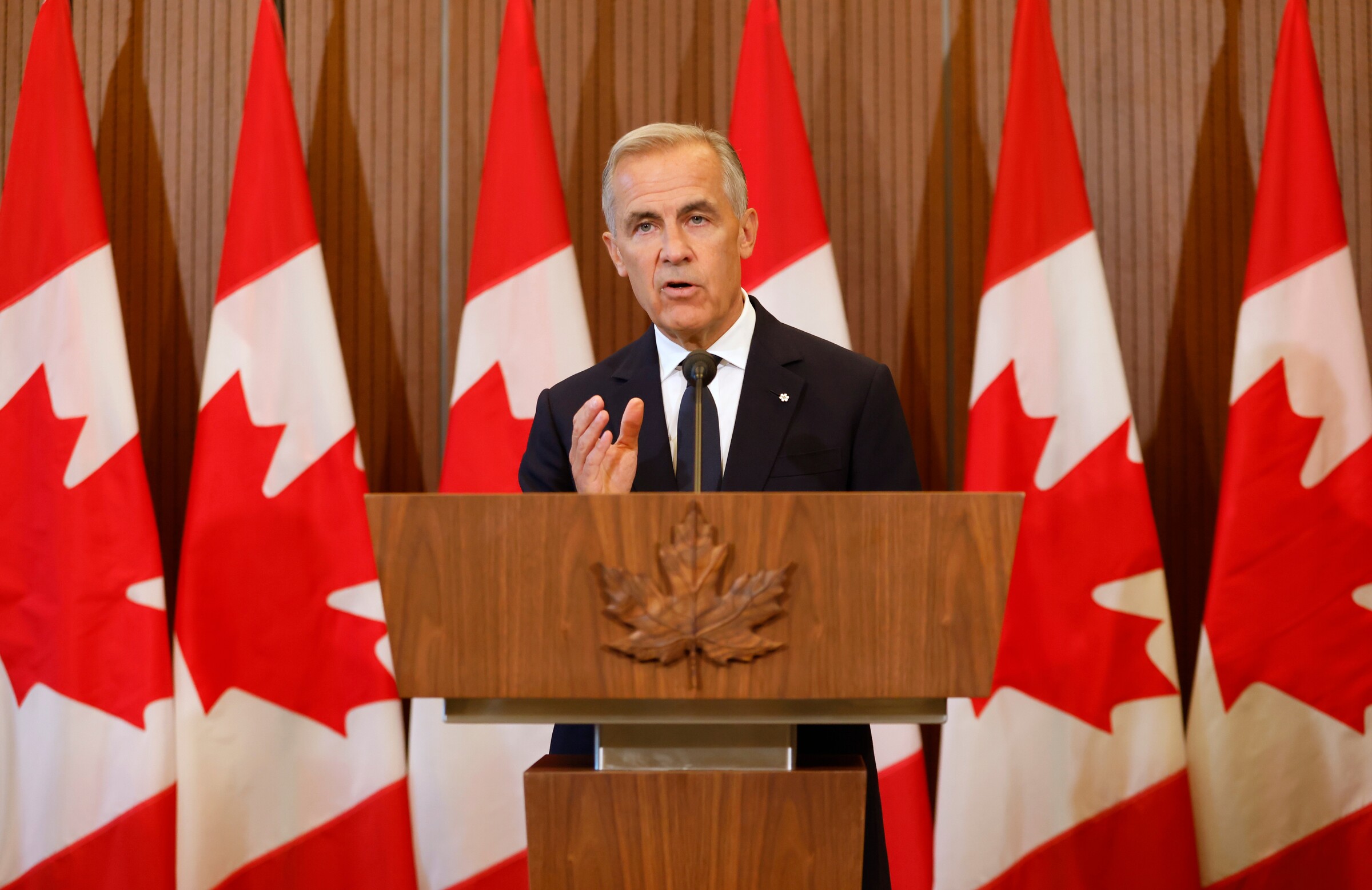 |
Canadian Prime Minister Mark Carney speaks on 22/8 in Ottawa about plans to respond to US tariffs. *AP* |
French language becomes a 'red line'
For Canada, the issue of protecting its language and culture against pressure from the US is one that is difficult to concede. Stewart Prest, a lecturer in Political Science at the University of British Columbia, stated that the US demanding Canada relax French language regulations "is not a reasonable proposal" in negotiations.
"Canadians speak French. Not everyone in this country speaks English, and some people prefer to learn more French", he said.
In Montreal, it is common for service staff to greet customers in both languages, reflecting the parallel existence of English and French in daily life.
US Trade Representative Jamieson Greer denied Washington's accusation of wanting to interfere with French language protection in Canada. "That is a fabricated and ridiculous excuse", Greer said in an interview with CNBC, arguing that the core disagreement was not about the French language but about Canada forcing US technology companies to use a portion of their profits to support Canadian competitors.
He stated that Washington understands why Quebecers want French-language content and considers it reasonable for nations to protect their national identity. However, the US opposes how Canada applies these regulations to American businesses.
Prime Minister Carney dismissed this interpretation, stating that the comments from the US Trade Representative revealed a "significant gap" between each side's perspectives.
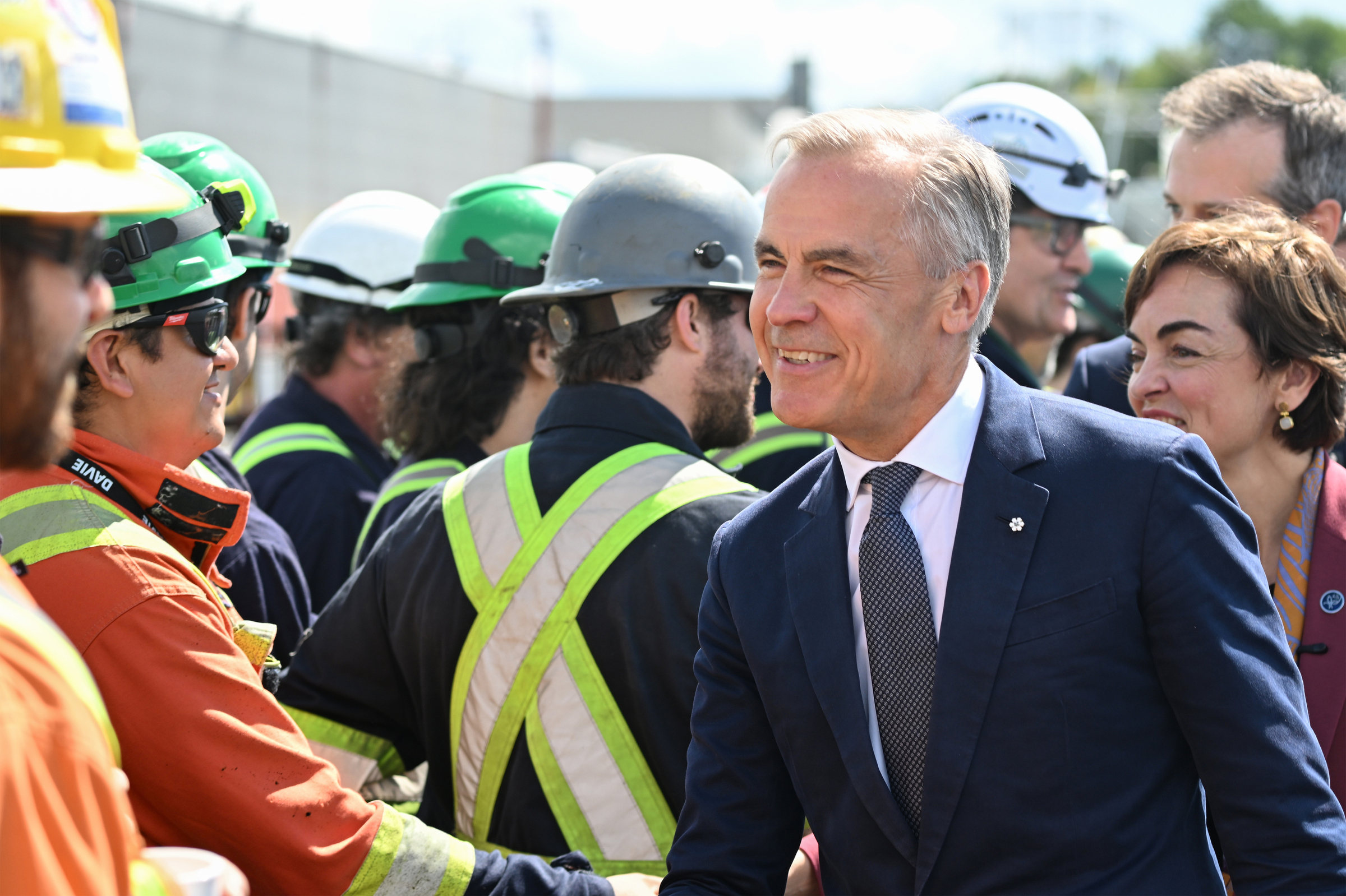 |
Canadian Prime Minister Mark Carney visits a shipyard in Quebec on 24/8. *AP* |
The Quebec political challenge
The issue of French language protection is particularly sensitive in Quebec, a region that has long sought to safeguard its distinct linguistic and cultural identity within predominantly English-speaking North America.
Quebec has held two referendums on separating from Canada. In the most recent vote in 1995, the anti-independence side won by a margin of only 1,16 percentage points.
In recent years, Quebec has continued to implement policies to strengthen the position of the French language. Law 96, one of the controversial regulations, increases the requirement for French language use on products, equipment, packaging, and signage. The US Trade Representative's office in 2025 identified this law as one of the global trade barriers.
Another Quebec regulation, known as Law 109, passed in 12/2025, mandates that streaming platforms prioritize French-language content. The US considered this law a potential trade barrier in its trade report last March.
Stephanie Chouinard, a professor of political studies at the Royal Military College and Queen's University in Kingston, Ontario, suggested that Prime Minister Carney cannot concede on the French language issue to avoid political damage, especially as Quebec prepares for a provincial election.
The separatist Parti Quebecois is gaining ground in polls. According to Chouinard, any concession on French language regulations could "ignite separatist sentiment" in Quebec.
Quebec leader Christine Frechette supported Prime Minister Carney's decision to withdraw from negotiations with the US.
"Our culture and language are central to our identity, and it is important to take this issue off the negotiating table", she said. "Even if we are threatened with various tariffs, that will not change. We will remain ourselves".
By Thanh Danh (Source: CNN, Guardian, NY Times)