Russian media reported that Dalia Shipilova, 28, a laboratory technician at the Irkutsk Anti-Plague Research Institute in Shelekhov city, west of Irkutsk, near the Mongolian border, told medical staff she accidentally broke a test tube containing Yersinia pestis bacteria while collecting samples on 25/9.
Two days later, Shipilova's condition worsened. She was hospitalized in Shelekhov on 29/9 with severe pneumonia, requiring a ventilator before dying two days later. About 200 individuals at the Shelekhov hospital are under medical observation, and a maternity hospital is under quarantine.
 |
Dalia Shipilova, a laboratory technician at the Irkutsk Anti-Plague Research Institute. Photo: Novayagazeta |
Rospotrebnadzor, Russia's infectious disease monitoring agency, implemented special measures "in connection with the case of an employee of the Irkutsk Anti-Plague Institute." Alexei Tsydenov, head of Russia's Buryatia Republic, said the employee "may have died from plague" but affirmed "there is no plague outbreak in the republic, even in areas bordering Mongolia." He did not specify the type of plague, but Russian media reported it as pneumonic plague, the only form transmissible from person to person.
Igor Kobzev, Governor of Irkutsk region, said the regional anti-epidemic committee convened an emergency meeting after receiving reports of a suspected case of a dangerous infectious disease. He urged residents to remain calm, adding that none of those who had contact with the deceased woman showed symptoms, and all test results were negative.
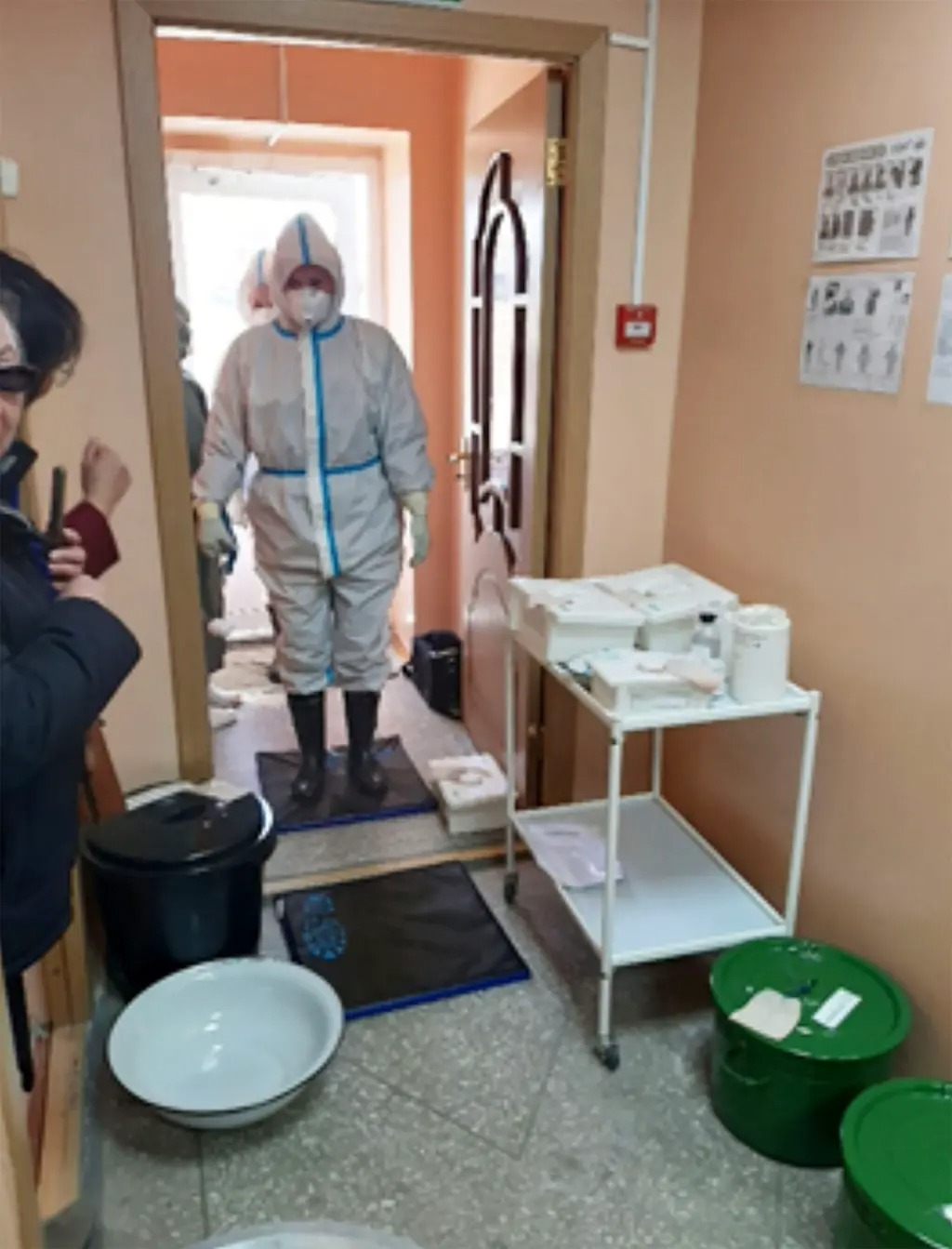 |
Medical personnel conduct checks in Shelekhov city. Photo: New York Post |
Meanwhile, Gennady Onishchenko, former head of Rospotrebnadzor, stated on 2/10 that this infection "is most likely not plague, but even if confirmed, the disease will not spread." He noted that plague vectors, such as rodents and fleas, in the Siberia region typically begin hibernation in early October.
All public events in Irkutsk were canceled. Russian law enforcement agencies launched a criminal investigation into potential safety violations linked to the woman's death.
Pneumonic plague, one of three forms of the disease caused by Yersinia pestis bacteria, is the most severe type of plague. It develops when a person inhales airborne droplets containing the pathogen, or when bacteria from untreated septicemic or bubonic plague spread to the patient's lungs.
Hong Hanh (According to Telegraph, Euro News)