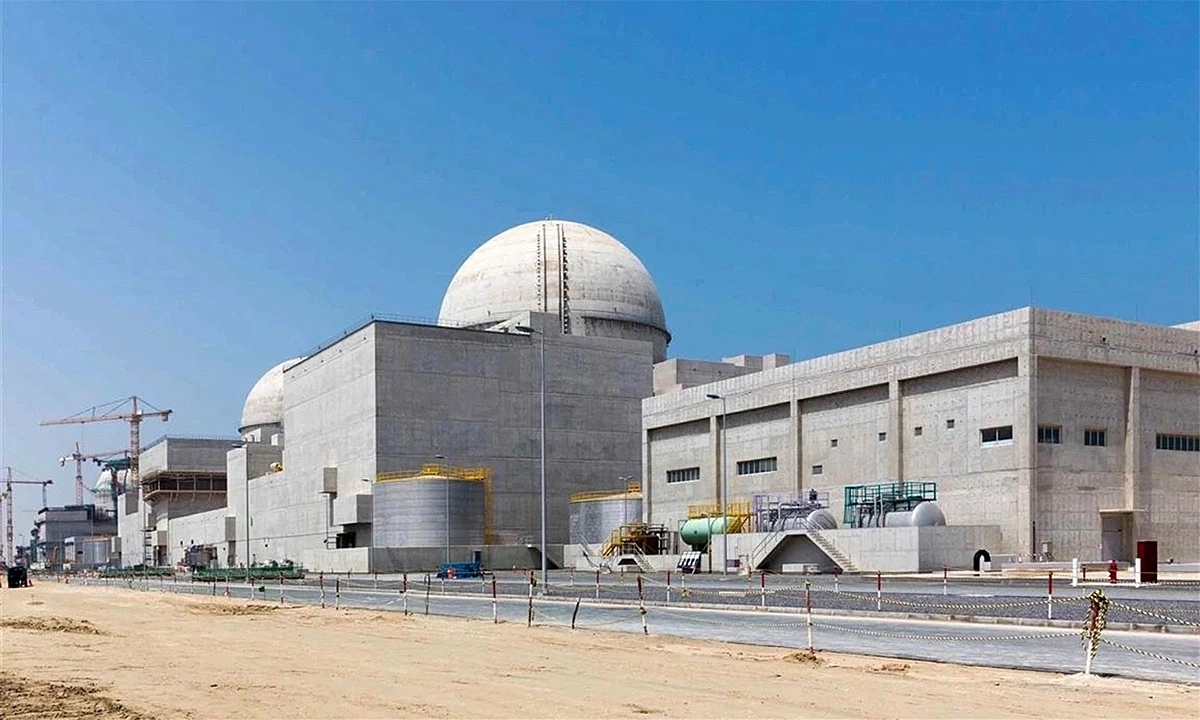
Satellite images from the European Space Agency's (ESA) Sentinel-1, captured last week and analyzed by the Financial Times on 19/5, reveal a significant oil slick southwest of Iran's Kharg Island. Approximately 20 old oil tankers were seen anchored near the island, a notable increase from the six vessels observed there a month prior.
United Against Nuclear Iran (UANI) reported that around 39 Iranian oil tankers are currently in the Persian Gulf, up from 29 before the US blockade took effect on 13/4. A large number of these vessels are positioned near Kharg Island, a vital oil hub.
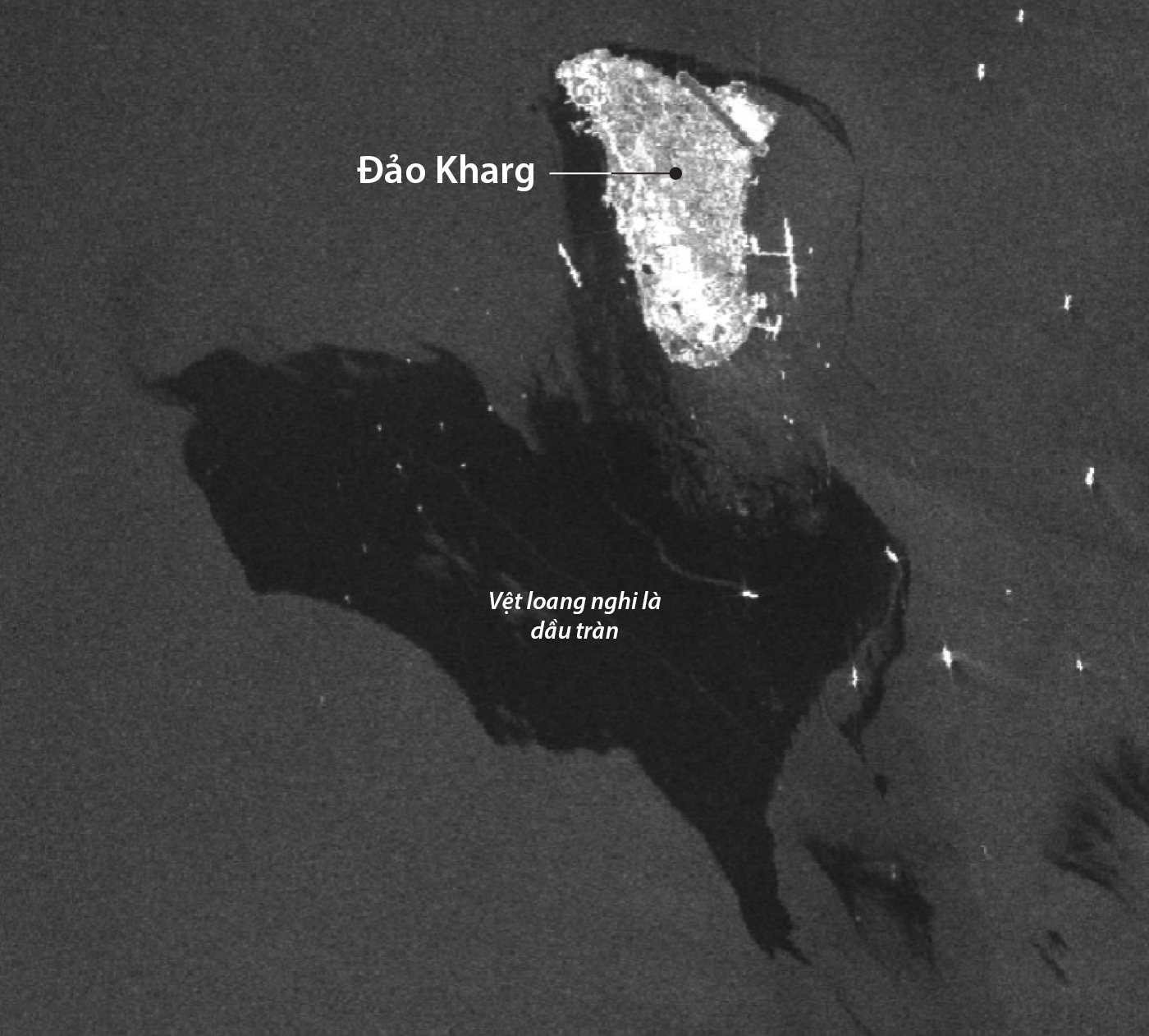 |
Iran's Kharg Island and its vicinity in an image taken on 13/5. Photo: FT, ESA |
Iran's Kharg Island and its vicinity in an image taken on 13/5. Photo: FT, ESA
These tankers have turned off their automatic identification systems (AIS), preventing civilian maritime data trackers from gathering information on their movements. However, the Sentinel-1 satellite was able to detect the suspected oil slick and the vessels around Kharg Island using synthetic aperture radar technology.
Further complicating Iran's maritime activities, 13 additional oil tankers are anchored in the Gulf of Oman, off Iran's Chabahar port. These vessels are situated within the US-imposed blockade zone, highlighting the impact of operations to interdict, board, search, and seize Iranian ships or those suspected of carrying Iranian cargo.
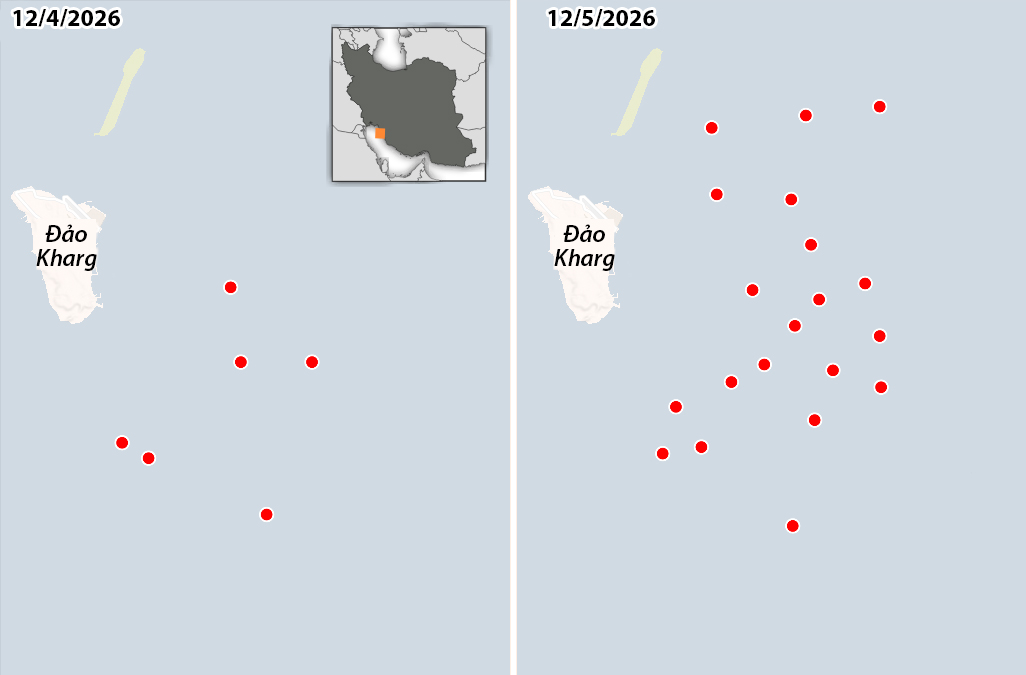 |
Location of Iranian oil tankers anchored near Kharg Island (red dots) on 12/4 and 12/5. Graphic: Open Street Map |
Location of Iranian oil tankers anchored near Kharg Island (red dots) on 12/4 and 12/5. Graphic: Open Street Map
The majority of Iran's crude oil is currently stranded, forcing the country to repurpose old oil tankers into floating storage facilities. Kpler, a maritime data and analytics provider, estimates that 42 million barrels of Iranian oil are now stored on ships in the Middle East, representing a 65% increase since the conflict escalated.
Antoine Halff, an expert at energy data firm Kayrros, explained that Iran is employing various methods to store crude oil to avoid halting production. Onshore oil storage in Iran has increased by approximately 10 million barrels, bringing total reserves to about 64% capacity. This strategy allows the country to sustain extraction for several more weeks.
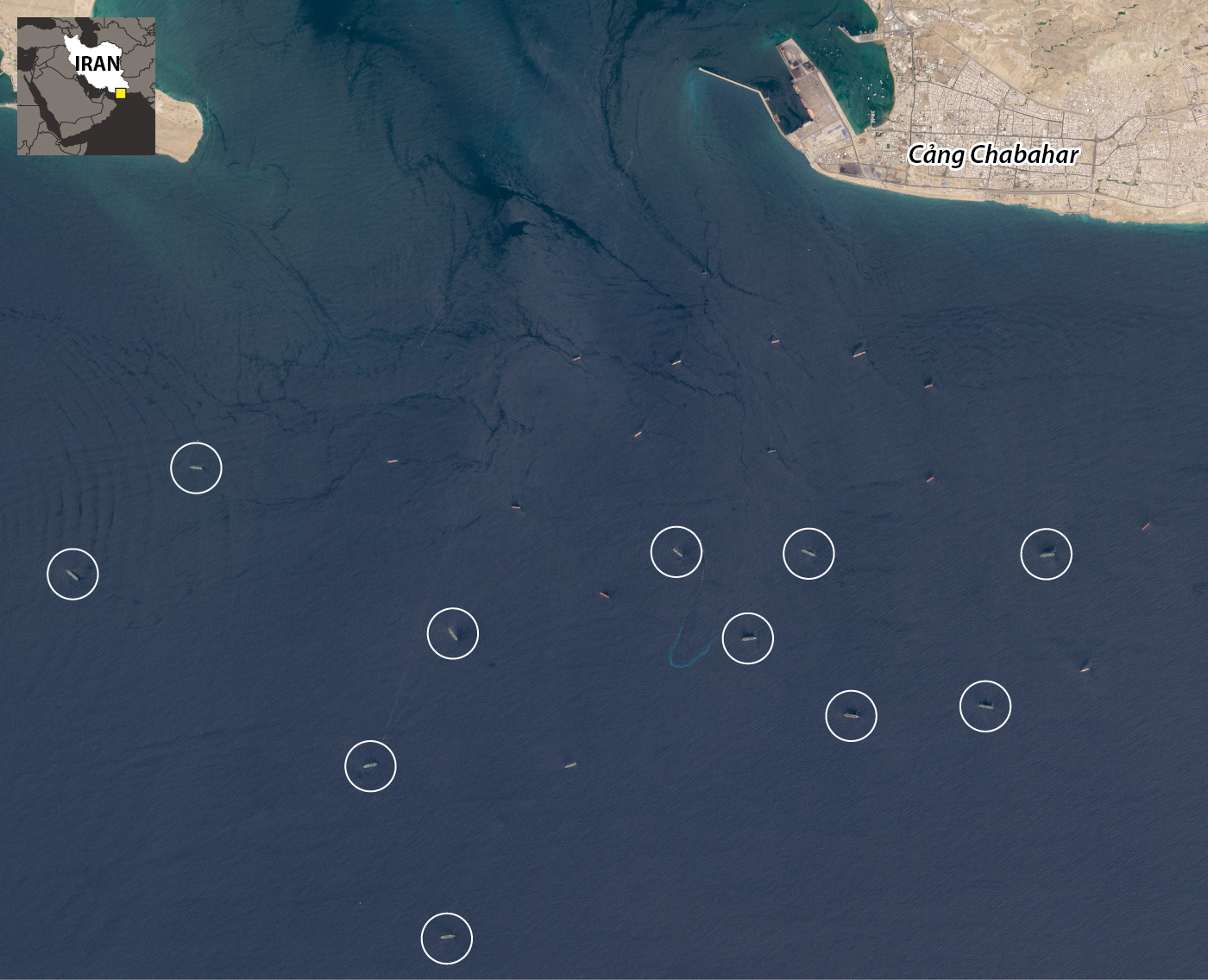 |
Oil tankers (white circles) anchored off Chabahar port, Iran in an image taken on 12/5. Photo: UANI, ESA |
Oil tankers (white circles) anchored off Chabahar port, Iran in an image taken on 12/5. Photo: UANI, ESA
Kpler suggests that Iran possesses additional empty oil tankers within the US blockade zone that could be converted into floating storage. These vessels could accommodate an estimated 24 million more barrels of oil.
Maritime intelligence data firm Windward AI reported no oil tankers loaded cargo from Kharg Island between 6-14/5. A large suspected oil slick, spanning approximately 65 square kilometers, was observed west of Kharg Island. This slick later separated and drifted towards the south-southwest area of the island.