Commercial satellite images taken in April-May and analyzed by CNN this week show Iran has cleared 50 of 69 tunnel entrances at 18 bases previously targeted by US-Israel strikes. The country also repaired other parts of the bases, including roads that were airstruck to prevent evacuation efforts.
At a base near Isfahan city, at least 18 large craters appeared outside two tunnel entrances, indicating that the US-Israel expended significant ordnance in this effort. Images taken in early May show two tunnel entrances cleared, and roads damaged by bombing were repaved.
Satellite images of a base on the outskirts of Khomeyn city in mid-April showed at least 10 construction vehicles working to reopen a tunnel entrance.
President Donald Trump repeatedly cited Iran's ballistic missile arsenal as the reason for the US-Israel attacks. He stated that "completely degrading Iran's missile capabilities and everything associated with them" was one of five objectives in the campaign.
From the early days of the conflict, both countries targeted tunnel entrances at bases to prevent Iran from moving missiles and launchers out, significantly reducing Tehran's firing capability. This was done in parallel with efforts to locate and destroy exposed launchers.
During the fighting, Iran attempted to clear access to its bases. This was done under dangerous conditions, as US-Israel forces were consistently present overhead, targeting excavation equipment.
Since the ceasefire took effect on 8/4, Iran has intensified its efforts to restore underground missile bases.
Timur Kadyshev, a senior researcher at the Institute for Peace Research and Security Policy at the University of Hamburg in Germany, noted that Iran used simple construction equipment to repair damage caused by advanced weapons. This highlights the challenge the US-Israel faces when pursuing military options.
"They had to use sophisticated and expensive equipment to inflict damage, but the recovery effort only required low-tech solutions like bulldozers," he said.
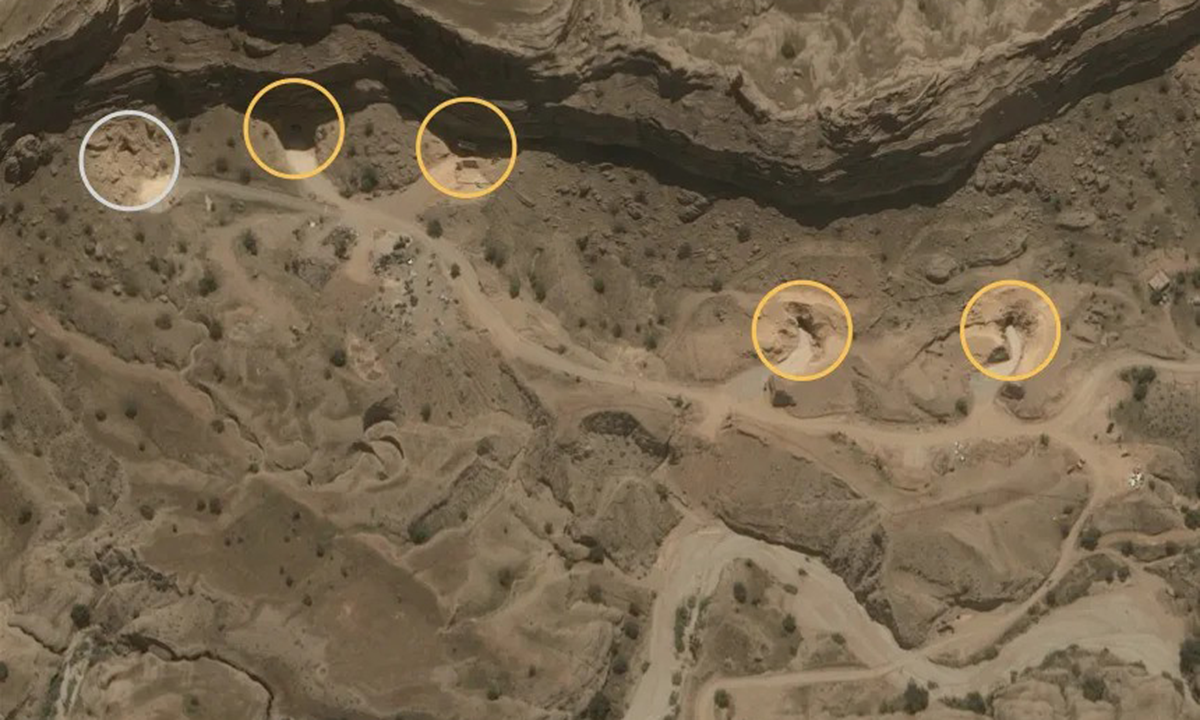 |
Four of five tunnel entrances (circled in yellow) at a missile base in Dezful were reopened by Iran in a satellite image taken on 12/5. *Airbus* |
Western experts estimate Iran has about 1,000 missiles inside underground bases. It is unlikely this arsenal suffered significant damage in the US-Israel campaign, especially as they were targeted with similar methods during the 12-day conflict in 6/2025.
"Iran's missile capabilities cannot be destroyed simply by collapsing tunnel entrances to underground bases. They have prepared for such a conflict for 20 years," Kadyshev stated.
As Iran retrieves missiles and restores operations at its underground bases, analysts warn that the threat from this arsenal is being underestimated, particularly as US and Middle Eastern allies' air defense missile stockpiles are dwindling.
Sam Lair, a researcher at the US-based James Martin Center for Nonproliferation Studies, said Iran could continue to launch missiles as long as it has launchers and personnel, even if production ceased.
"Nothing prevents them from installing their abundant missile stockpiles onto launchers," he noted.
The US-Israel also launched a large-scale effort to dismantle Iran's missile supply chain. This targeted facilities from small electronic component manufacturers to fuel and missile body factories. However, this campaign also failed to halt Tehran's weapons manufacturing for as long as Washington and Tel Aviv desired.
Some Iranian defense factories were also attacked during the 6/2025 conflict, but satellite images indicate Tehran has rebuilt some facilities, despite the much larger scale of this US-Israel campaign.
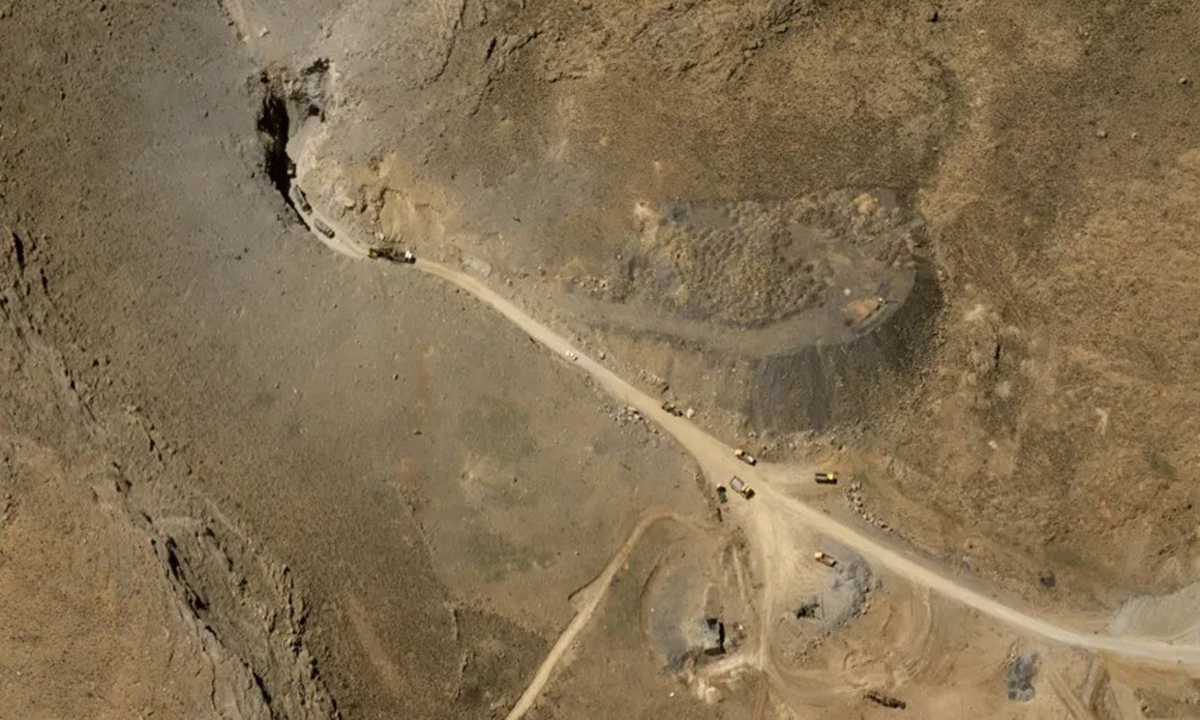 |
Construction vehicles clearing a tunnel entrance at a base near Khomeyn, Iran in a satellite image taken on 15/4. *Airbus* |
CNN reported in April, citing US intelligence, that Iran had begun restoring key military capabilities, including restarting drone production lines and replacing missile launchers.
"Iran has far surpassed all timelines the US intelligence community previously predicted for its military recovery process," a US official admitted to CNN.
Sean Parnell, a Pentagon spokesperson, did not comment directly on CNN's analysis. He reiterated the previous statement that "the US has the strongest military in the world and everything necessary to act at a time and place chosen by the President."
Expert Lair stated that the US military excels at achieving tactical victories, adding that Washington's ability to "bury and suppress" Tehran's missile forces is a prime example. "However, without a sound strategic objective in the war and a viable plan for victory, it could ultimately become a strategic failure," he opined.
Pham Giang (According to CNN)