"On 18/6, we observed 25 commercial vessels confirmed to have passed through the Strait of Hormuz, the highest single-day figure since 18/4 and more than five times the average for the first 10 days of June," maritime data platform AXSMarine announced today.
AXSMarine noted that the actual number of vessels traversing the Strait of Hormuz could be higher, as some ships had switched off or adjusted their automatic identification system (AIS) signals to avoid revealing their positions.
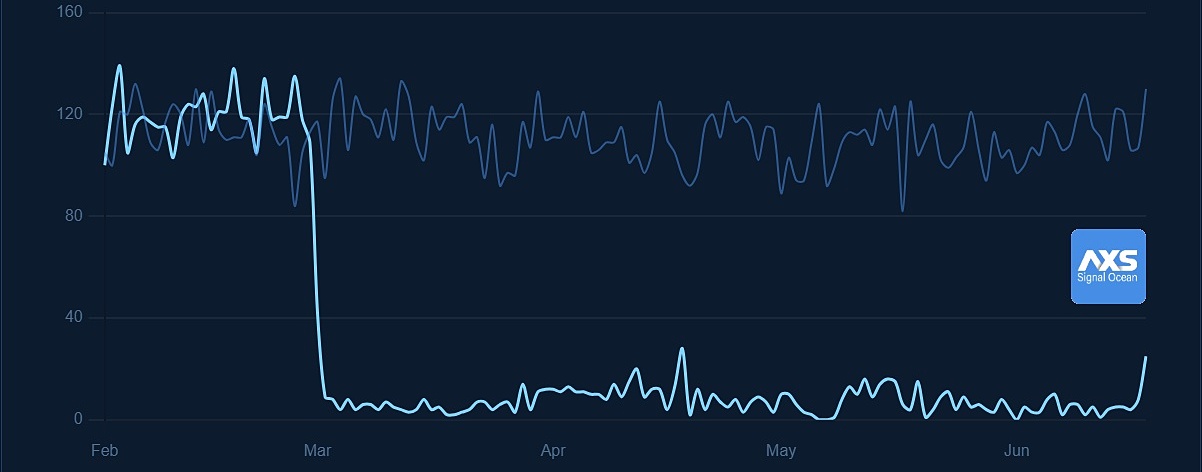 |
Daily commercial vessel traffic through the Strait of Hormuz in 2026 (light line) compared to the same period in 2025. Graphic: AXSMarine |
This surge in traffic followed Iran's signing of a 14-point memorandum of understanding with the United States on 18/6, aimed at ending the conflict and reopening the Strait of Hormuz.
The Persian Gulf Strait Authority (PGSA), a new organization established by Iran to oversee the Strait of Hormuz, announced today that Iran will not levy fees on vessels transiting Hormuz for 60 days, as stipulated in the memorandum. However, the PGSA requires vessels to submit their movement proposals to the authority 48 hours before reaching the strait and to follow provided routes to ensure safety.
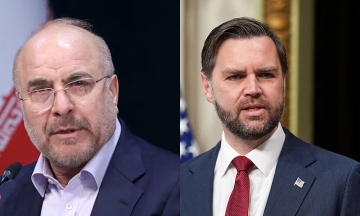
Iran's Parliament Speaker and chief negotiator, Mohammad Bagher Ghalibaf, previously stated that "the Strait of Hormuz will not return to its previous state." He declared that Iran would impose transit fees on vessels after the 60-day period.
Prior to the US and Israel attacking Iran on 28/2, vessels navigated Hormuz freely without any fees or conditions. Iran subsequently declared a blockade, seeking to assert control over the strait in retaliation. This development reduced vessel traffic by 90% compared to the 120 vessels per day seen before the conflict, according to maritime magazine Lloyd's List.
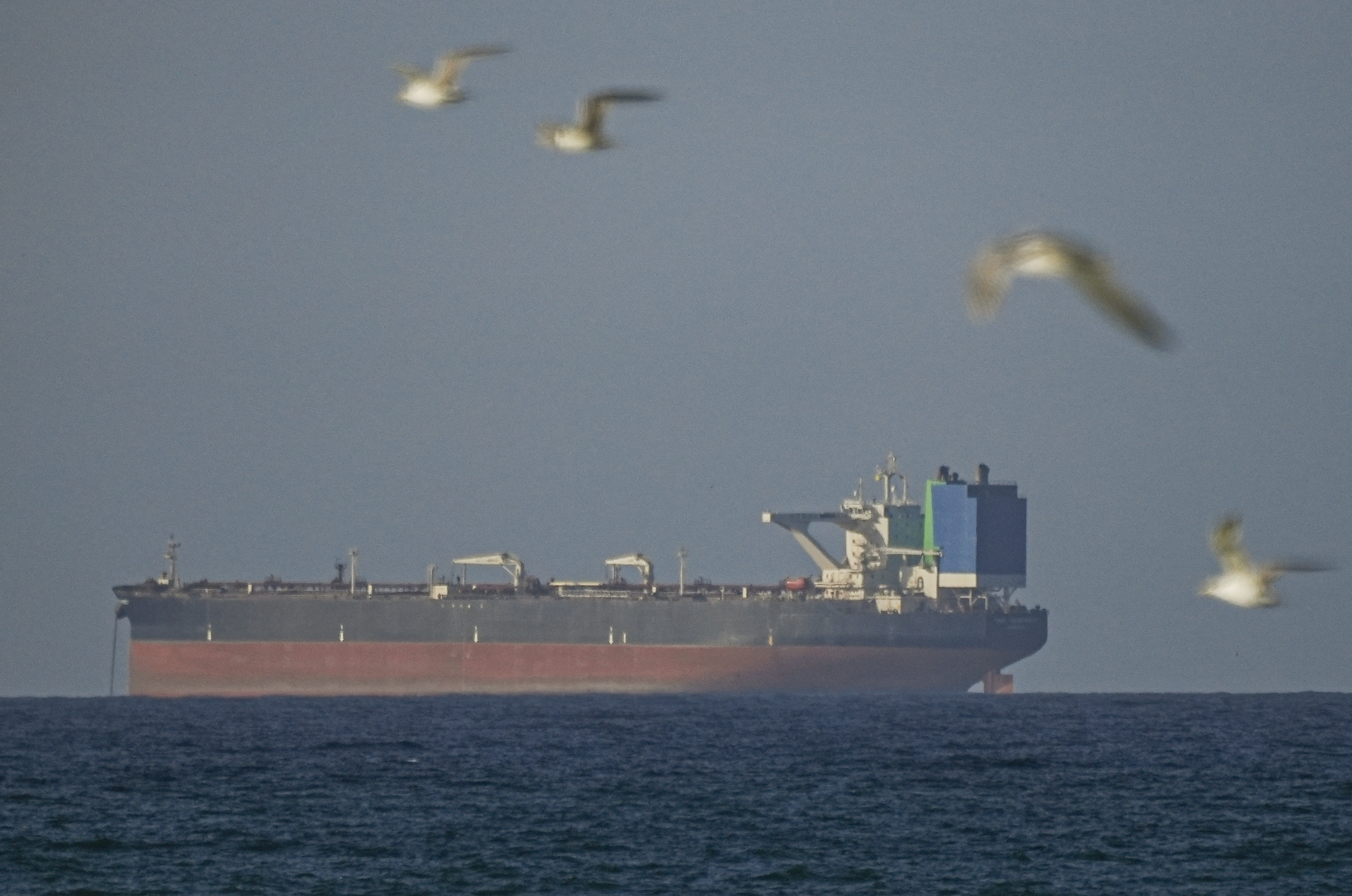 |
A commercial vessel awaiting transit through the Strait of Hormuz on 8/4. Photo: AFP |
Despite positive signals from the US-Iran peace talks, many maritime industry organizations urge caution, arguing that it is not yet safe enough for cargo ships to depart the Persian Gulf via the Strait of Hormuz. Jakob Larsen, security director for BIMCO, a leading global maritime lobbying organization, stated that they "expect parties to soon establish an international coordination mechanism to support transits."
In April, Arsenio Dominguez, Secretary-General of the International Maritime Organization (IMO), announced that the agency is developing a plan to ensure safe passage for vessels stranded in the Persian Gulf due to the conflict. According to the IMO, over 500 commercial vessels remain stranded in the Persian Gulf, with approximately 11,000 crew members onboard. The organization also reported that a total of about 20,000 seafarers working in the region have been affected by the conflict.
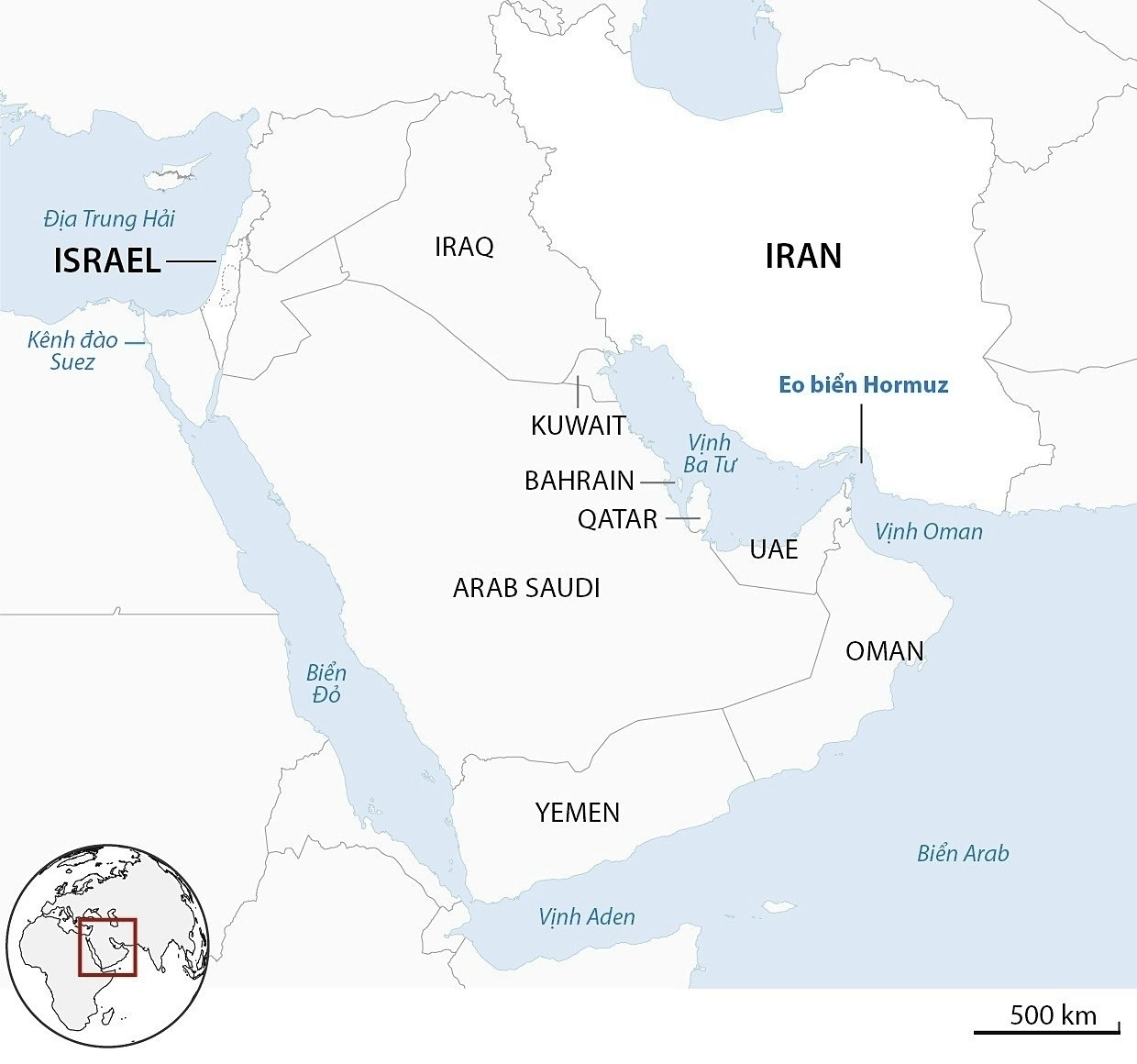 |
Location of the Strait of Hormuz. Graphic: Guardian |
By Nhu Tam (According to AFP, Reuters)