The incident occurred when applicants for driver's licenses or identification cards selected "no" when asked if they were U.S. citizens, yet the system automatically added them to voter rolls. These incorrect registrations took place between june 2023 and june 2024.
"Our preliminary analysis shows that fewer than 400 individuals among the 6,600 mentioned actually cast ballots," New Jersey Governor Mikie Sherrill said in a statement on july 21. The incorrectly registered list included both democratic and republican supporters. The error was corrected in june 2024.
She added that it is currently unclear which elections they participated in, while asserting, "There is no evidence that the results of any election were altered due to this incident."
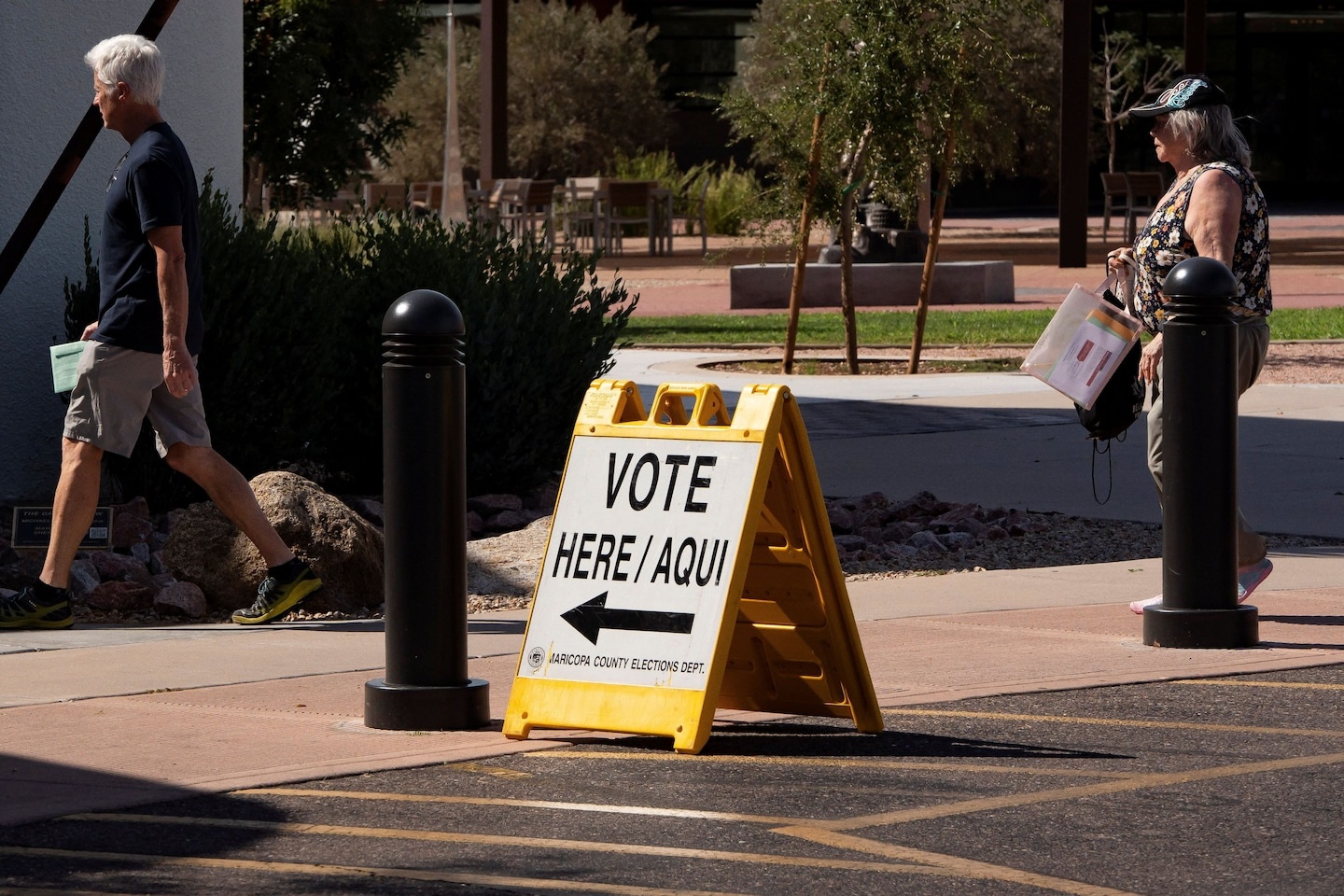 |
Voters arrive at a polling station during Arizona's primary election on july 21. Photo: *Reuters*. |
Although a small number of invalid votes could sway close elections, state officials have not recorded any such cases. Sherrill herself was re-elected in 2025 by a margin of nearly half a million votes. Out of a total of 3.3 million voters who cast ballots at that time, 400 invalid votes accounted for approximately 0.01% of the total votes.
Sherrill stated that this error occurred before she took office and the vendor responsible for managing the identity verification system will be replaced. The U.S. Department of Justice is opening an investigation and has requested New Jersey submit the list of 6,600 individuals.
This information comes as the Trump administration is pushing for the passage of the SAVE America (Secure America) bill, which introduces strict new regulations on identification documents and proof of citizenship for voting. Laurel Lee, a republican representative for Florida, called this error a "catastrophic failure."
Last week, Secretary of Homeland Security Markwayne Mullin told states that their voter lists "need to be screened" to remove ineligible individuals. He warned that the Trump administration could halt federal election funding for non-compliant states. In the U.S., states manage their own elections, not the federal government.
The Department of Homeland Security has urged states to use its newly expanded national database to check for non-citizens registered to vote. However, investigations by ProPublica and ABC News found that this system has the potential to incorrectly flag eligible U.S. citizens.
*Hoang Lan (according to Washington Post, NBC News)*.