The Strait of Hormuz has become a flashpoint in the conflict between the US-Israel and Iran, which erupted on 28/2. This vital shipping lane, through which 20% of the world's oil supply passes, was blockaded by Iran in retaliation as hostilities escalated between the parties.
Following President Donald Trump's ultimatum, which set a deadline for Iran to reopen Hormuz or face severe US action, Washington and Tehran reached a temporary ceasefire agreement on 7/4. Under the agreement, the US would halt bombings and attacks on Iran for two weeks, while Tehran would permit vessels to transit Hormuz during that period.
However, US and Iranian officials subsequently issued conflicting messages, making the situation on the ground unpredictable.
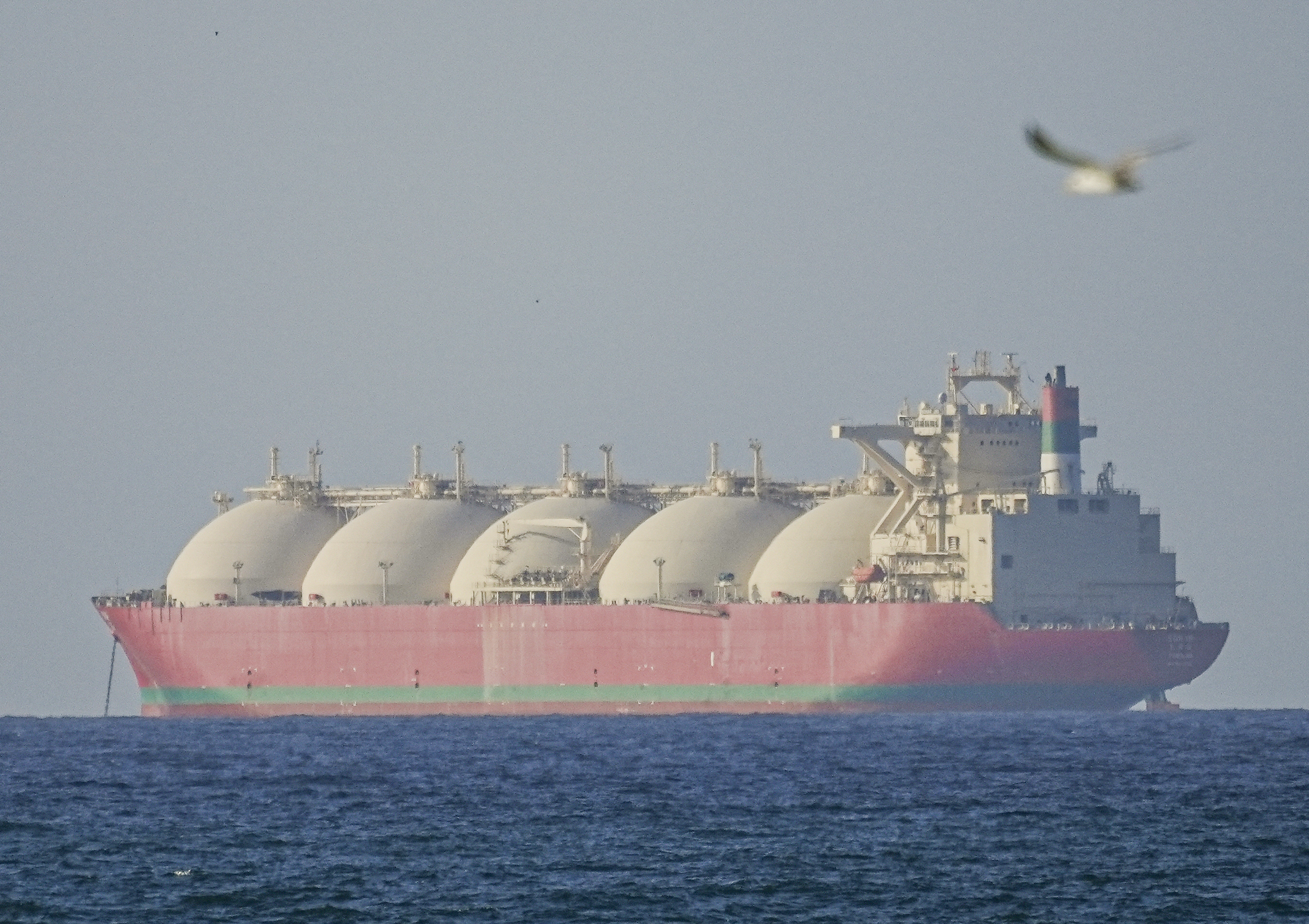 |
A vessel transiting the Strait of Hormuz seen from Oman on 8/4. *Photo: AFP*
Announcing the ceasefire agreement, President Trump stated that Pakistan had requested he delay deploying destructive power on the condition that Iran agreed to reopen the Strait of Hormuz "completely, immediately, and safely."
Iranian Foreign Minister Abbas Araghchi later stated, "During these two weeks, safe passage through the Strait of Hormuz will be ensured through coordination with the Iranian Armed Forces, taking into account technical restrictions," he said, without specifying what those restrictions were.
White House Press Secretary Karoline Leavitt emphasized on 8/4 that the ceasefire agreement "depended on the Strait of Hormuz being reopened immediately, safely, and freely." According to Leavitt, this meant the shipping lane must be fully open, "without any restrictions, including fees." She also affirmed that the US would compel Iran to reopen the strait without imposing any barriers.
However, Iran signaled that it would continue to collect fees and seek to maintain control over the maritime route off the southern coast of the Islamic nation.
A senior Iranian official told Reuters that the country might reopen the strait in a "limited way, under Iranian control" on 9/4 or 10/4, ahead of a meeting with US officials in Pakistan on 11/4.
Meanwhile, a spokesperson for the Association of Iranian Oil, Gas, and Petrochemical Exporters, an organization linked to the Iranian government, stated that Tehran expected to impose a fee of 1 USD per barrel of oil, payable in cryptocurrency, for vessels transiting the Strait of Hormuz.
The Wall Street Journal reported that Iran had informed intermediaries that during the ceasefire, Tehran would limit transit to about 12 vessels per day through Hormuz, while also collecting fees from those vessels.
The situation escalated when Iran's Tasnim news agency later reported that Tehran was suspending permission for vessels to pass through the Strait of Hormuz and might withdraw from the ceasefire agreement because Israel continued to attack Lebanon.
The Israeli military stated it had conducted airstrikes on over 100 Hezbollah-related military targets on 8/4. The Israeli Prime Minister's Office affirmed that Lebanon was not included in the ceasefire agreement, a stance supported by US Vice President JD Vance. Vance warned Tehran to uphold its word, or face serious consequences.
At a press conference at the White House on 8/4, Leavitt refuted reports of the strait's closure, calling them "untrue." "The President was briefed on this information before I came to the podium. That is completely unacceptable. What the Iranian side says publicly differs from what they discuss privately," Leavitt stated. "We have observed an increase in vessel traffic through the strait today."
The White House Press Secretary did not directly answer questions regarding which party controlled the Strait of Hormuz.
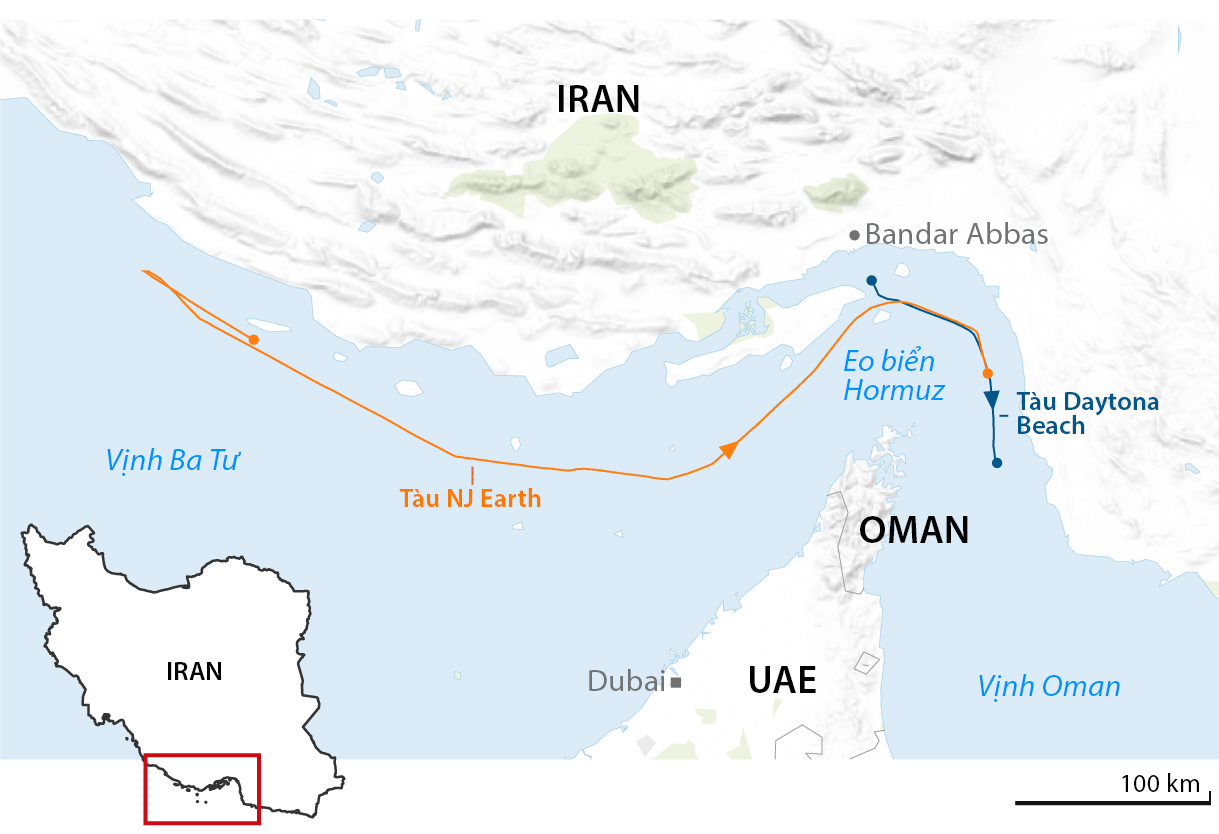 |
The transit of two cargo vessels through the Strait of Hormuz on 8/4. *Graphic: Guardian*
The statements reflect a mixed and unclear picture regarding the actual status of the oil shipping route off Iran's coast. "Both sides have yet to find common ground on the shape of a future negotiated agreement," Andrew Lipow, president of Lipow Oil Associates consulting firm, told AP.
In the energy market, oil prices fell sharply on 7/4 following the ceasefire announcement. US WTI crude prices decreased by about 15%, while Brent crude prices dropped by approximately 12%. "The oil market declined with the expectation that the ceasefire would initiate a process to bring more supply back into trade," Lipow stated. "But this could also just be a temporary lull, not necessarily leading to a real solution for the conflict."
According to market data platform S&P Global Market Intelligence, four vessels transited the Strait of Hormuz on 8/4, a sharp decrease compared to over 100 vessels per day before the conflict erupted.
Whether the strait can safely resume operations still requires more time to verify, even though stranded sailors and idle shipowners eagerly await the resumption of their journeys. Currently, at least 1,000 vessels are stranded in the Persian Gulf, according to marine insurance companies. Even if these vessels begin moving again, insurers believe that transit traffic is unlikely to quickly recover to pre-conflict levels.
Nhu Tam (According to WSJ, The Hill, ABC News)