United States President Donald Trump announced that discussions on 4/8 were "very positive". He emphasized the importance of action, noting Iran's desire for a deal. "We'll see what happens. I have plenty of time", Trump stated, suggesting an agreement could be signed "as early as tomorrow or the day after". United States Treasury Secretary Scott Bessent had previously indicated that a deal regarding Hormuz could be reached soon.
Axios, citing sources, reported that the United States, Iran, and Oman are close to reaching an interim agreement to reopen the Strait of Hormuz. Washington hoped to announce the document on 5/8. The agreement does not include transit fees and can be extended if both parties reach a consensus.
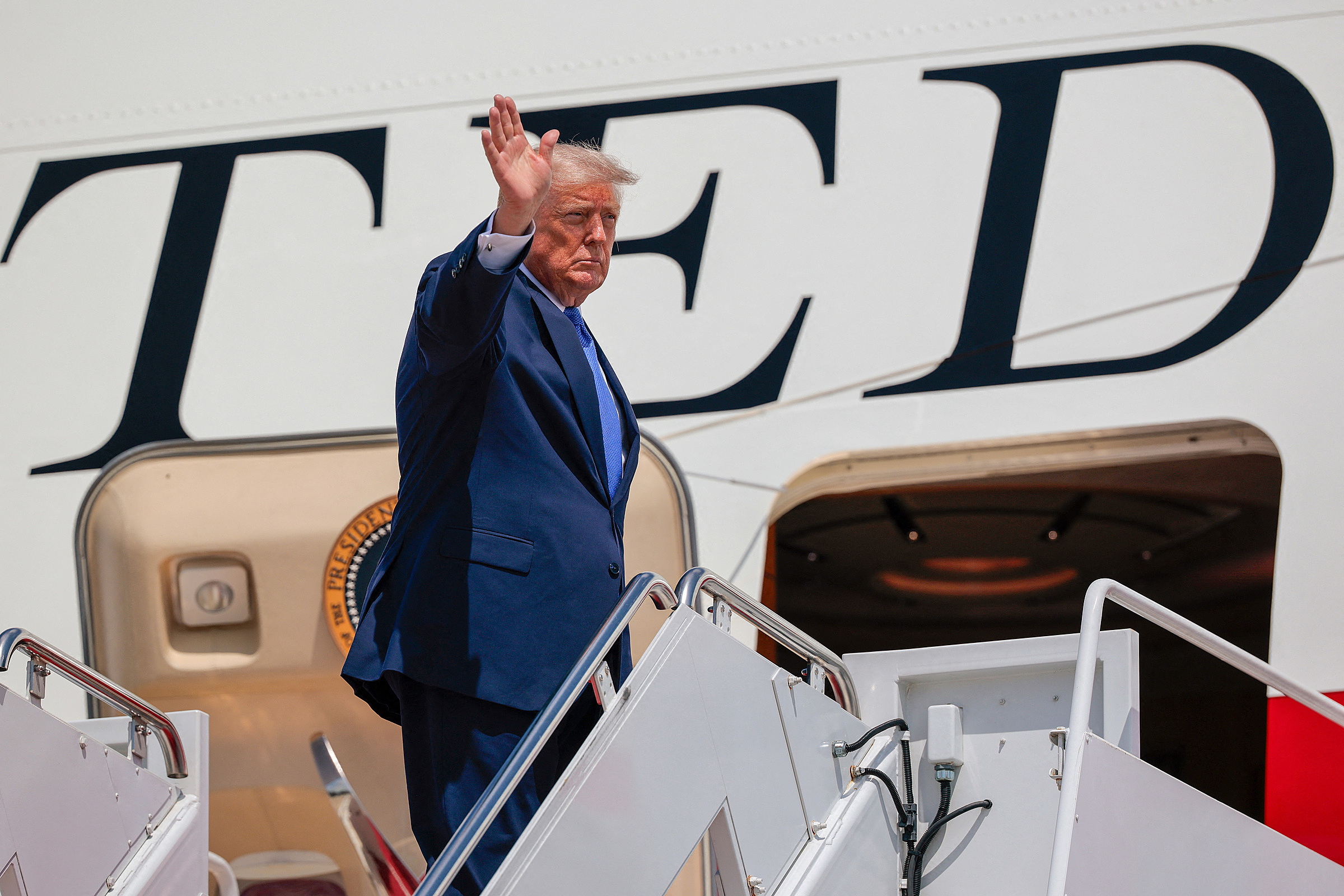 |
United States President Donald Trump boarding Air Force One at Joint Base Andrews, Maryland, on 4/8. AFP
The proposed plan outlines that vessels entering the Persian Gulf will navigate the northern shipping lane, closer to Iran, while departing vessels will use the southern shipping lane, passing through Omani territorial waters.
"The Strait will be reopened soon. If not, they will face severe consequences, and then the Strait will be reopened anyway", Trump warned during his visit to California.
Iran has not yet commented on Trump's latest statement. On 3/8, Iranian Foreign Ministry spokesperson Esmaeil Baqaei denied reports that the country was negotiating with the United States, following Trump's earlier assertion that "a deal was imminent".
According to Baqaei, Iran has only been negotiating with Oman "over the past 7-8 days" concerning the establishment of a temporary safe passage through the Strait of Hormuz, and both sides have made some progress.
The flow of goods through Hormuz has been disrupted since the US-Iran ceasefire agreement collapsed in mid-July. Both sides have since repeatedly launched retaliatory attacks against each other.
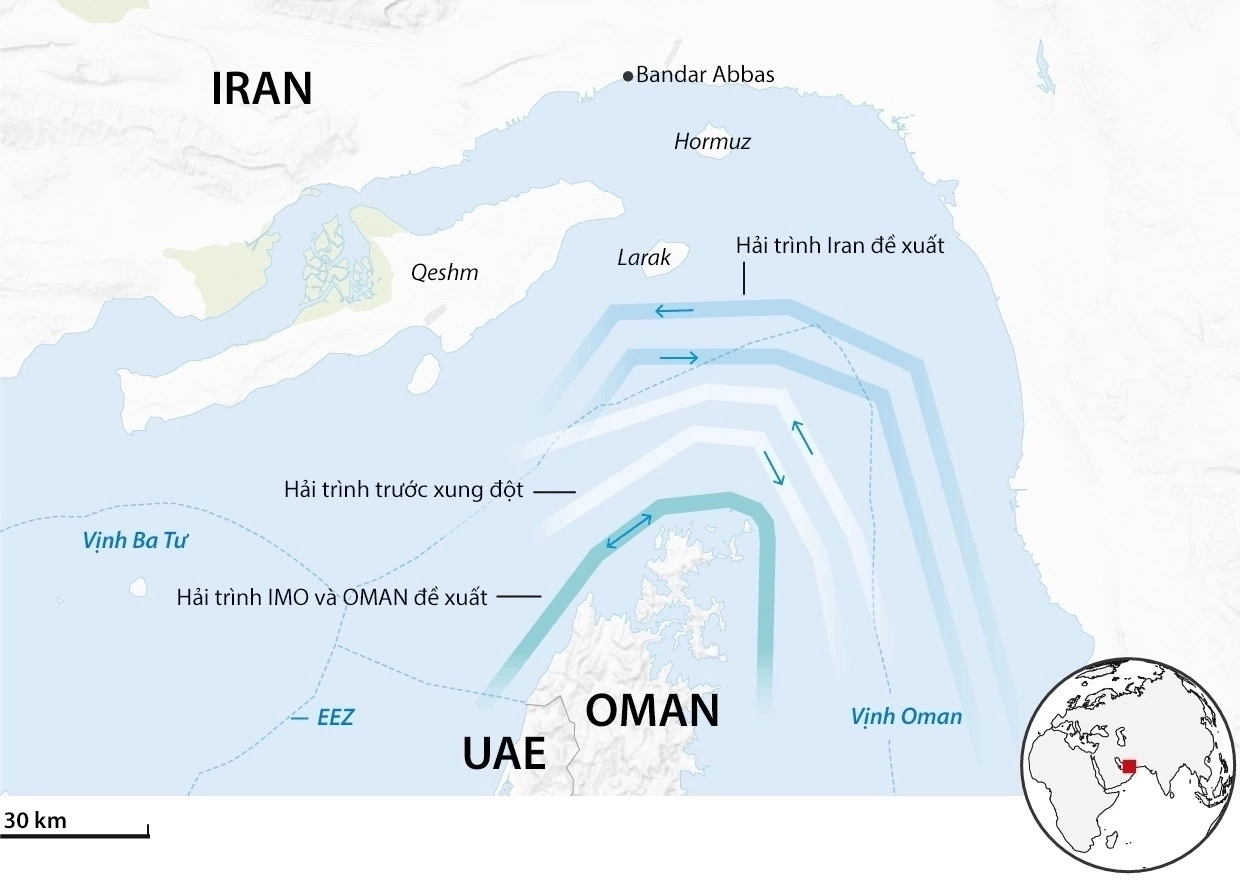 |
Shipping routes through the Strait of Hormuz published by Iran. Guardian
Qatar indicated that the immediate goal of the mediators is to find a short-term solution to bring the United States and Iran back to the negotiating table. While there are currently no plans for direct talks, Qatari Foreign Ministry spokesperson Majed al-Ansari expressed hope that a resumption of dialogue in the near future will pave the way for a broader agreement and restore regional peace.