Iran's Foreign Ministry stated on July 25 that the attack on its commercial vessel in the Caspian Sea was an "aggressive, hostile, and criminal act". The ministry accused Kyiv of seeking to expand the scope of the Ukraine conflict and declared that Tehran would do everything to protect its national security.
The ministry summoned Ukraine's charge d'affaires in Tehran to issue a protest note regarding the attack. Iran's Foreign Ministry added that Ukrainian leadership admitted the attack, emphasizing that Kyiv's action reflects a "continuous irrational and hostile approach" towards Tehran, violating the United Nations Charter.
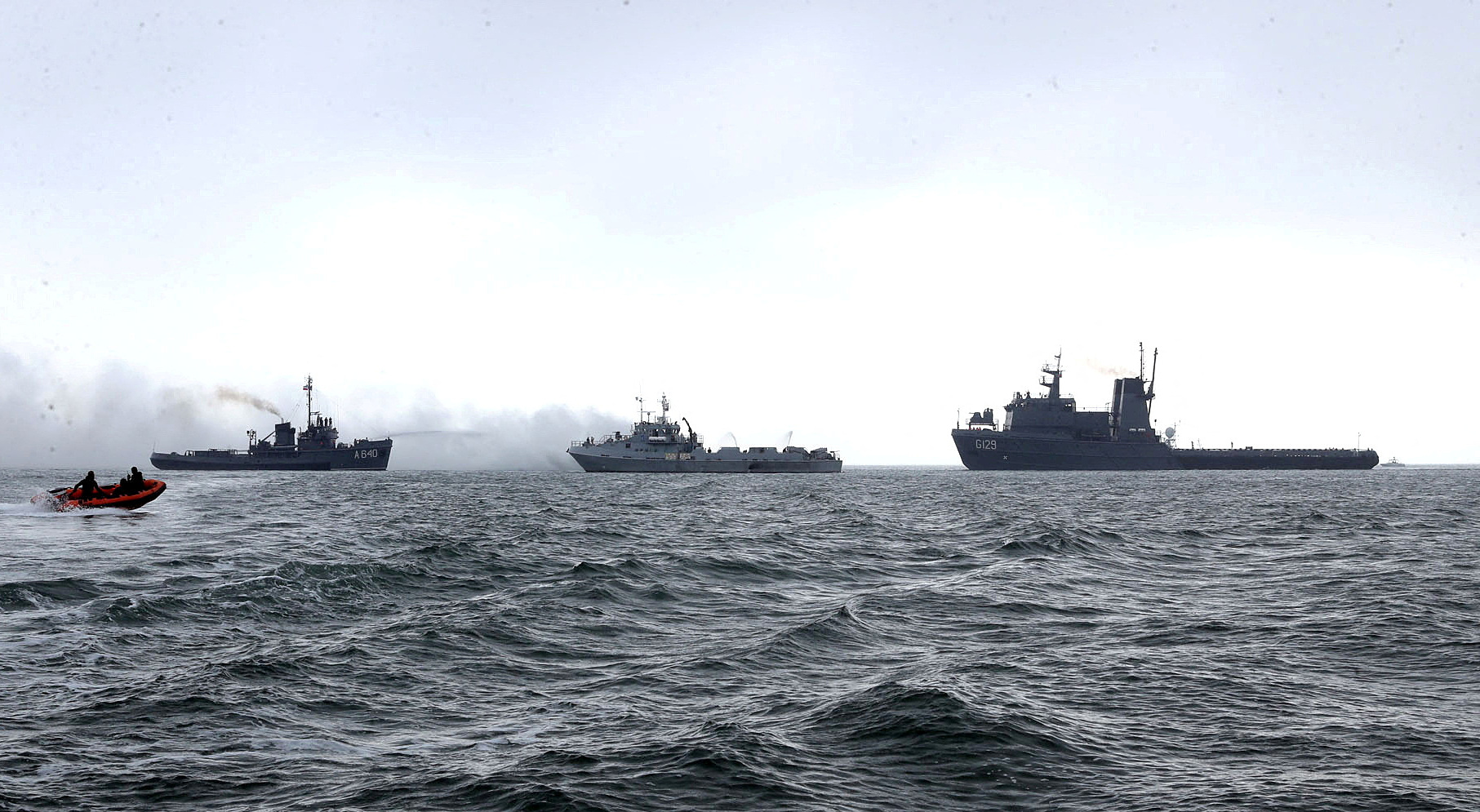 |
Iranian and Azerbaijani naval ships conduct exercises in the Caspian Sea in 11/2024. *Photo: Reuters* |
Iranian Foreign Minister Abbas Araghchi also discussed the issue in a phone call with Kaja Kallas, the European Union's (EU) High Representative for Foreign Affairs.
"Foreign Minister Araghchi called on the United Nations Security Council, the EU, and the international community to respond decisively, demanding that those responsible for and supporting this criminal act be held accountable," the Iranian Foreign Minister's Office stated.
Ukrainian officials have not yet commented on the information.
Iran's move followed President Volodymyr Zelensky's announcement that Ukraine had achieved "very significant results" in a long-range attack in the Caspian Sea. This operation targeted "ships used for transporting Iran-related military goods, as well as a warship."
However, Mr. Zelensky did not confirm whether the commercial ship mentioned by Iran was among the targets attacked.
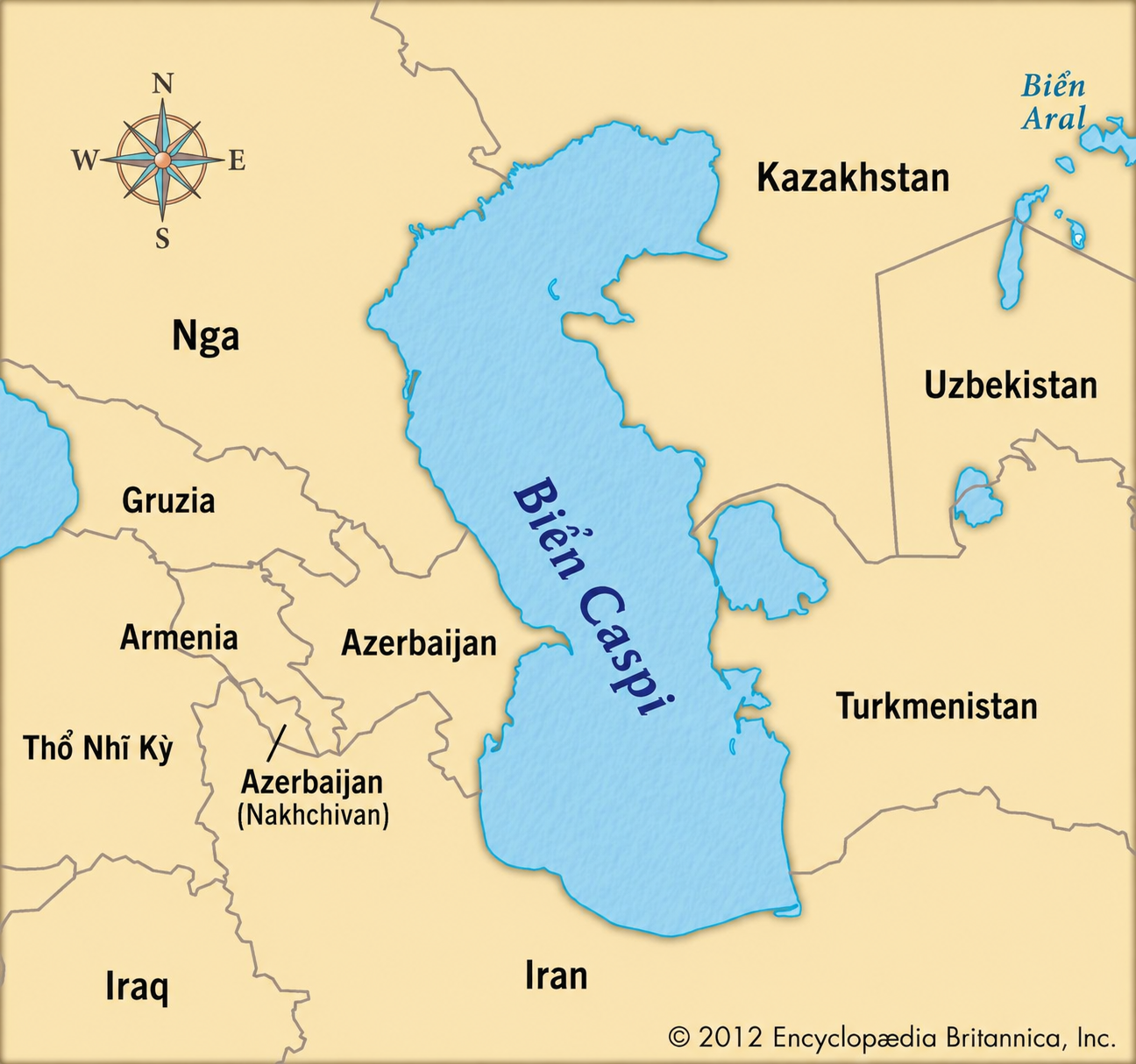 |
Location of the Caspian Sea. *Graphic: Britannica* |
Mr. Zelensky also accused Russia of providing Iran with satellite images of Gulf states and US military bases.
Relations between Tehran and Kyiv have been strained since 2022, when Russia began using Geran-2 suicide unmanned aerial vehicles (UAVs), based on the Iranian-developed Shahed-136 model, to strike targets in Ukraine.
Ukraine also offered to provide UAV interception systems and expertise to Gulf countries facing Iranian retaliation in the Middle East conflict. It deployed anti-UAV experts to Qatar, the United Arab Emirates (UAE), Saudi Arabia, and Kuwait.
Huyen Le (According to Al Jazeera, Reuters)