In a letter sent to a federal court in Manhattan on 24/4, Southern New York federal prosecutor Jay Clayton announced that the US Department of the Treasury had issued a modified license. This license permits defense lawyers for Venezuelan president Nicolas Maduro and his wife, Cilia Flores, to receive payments from the Venezuelan government.
The US government had previously prohibited such payments, arguing they could undermine sanctions imposed on Venezuela. Venezuelan officials have not yet commented on this development.
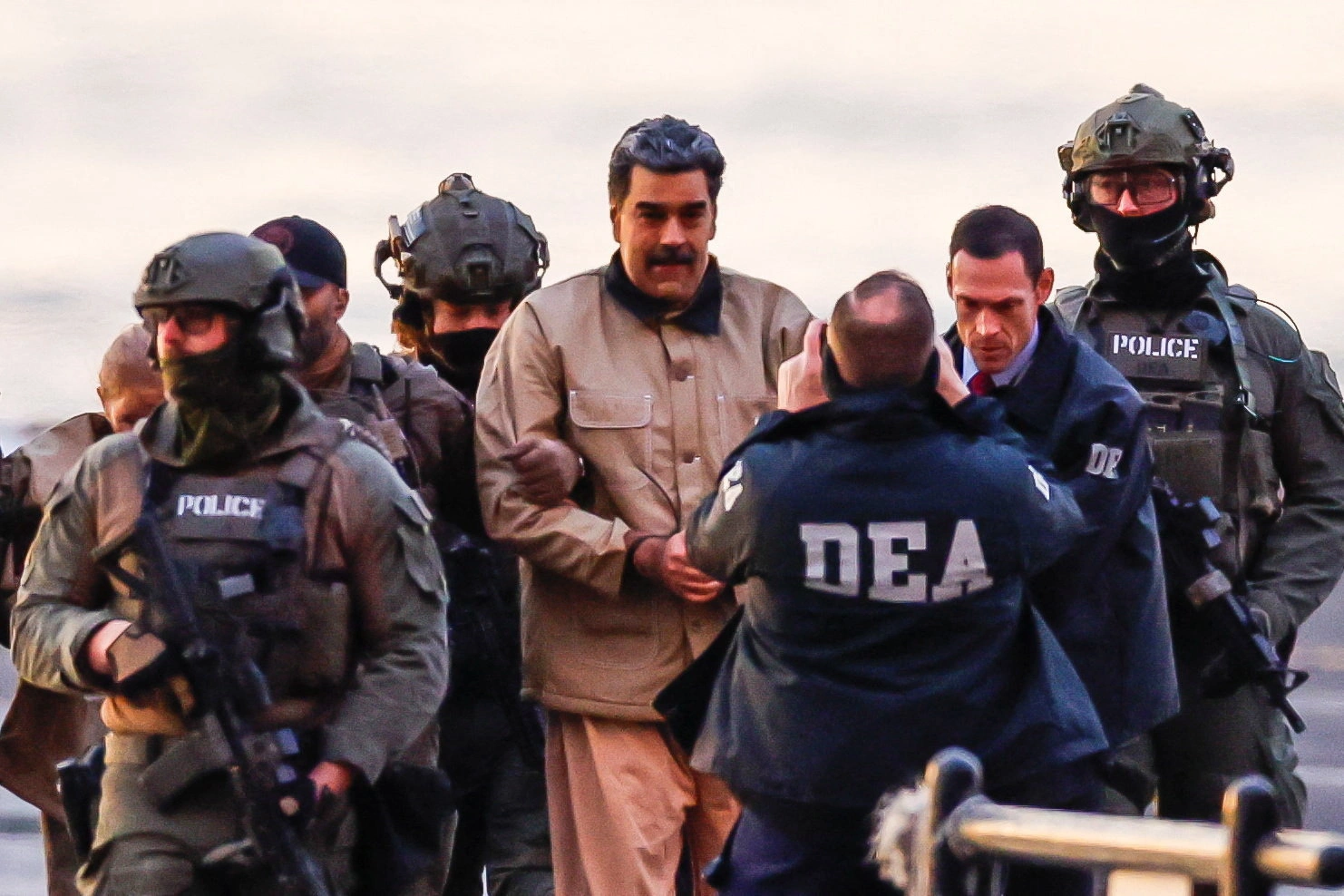 |
Maduro was brought to a New York court by helicopter on 5/1. Photo: Reuters
The decision follows a series of events beginning in the early hours of 3/1, when US forces attacked multiple targets in Venezuela's capital, Caracas. This action facilitated special forces' helicopter movement to arrest president Maduro and his wife. Both were subsequently taken to New York, where they face drug-related criminal charges. They have pleaded not guilty and are currently being held in Brooklyn awaiting trial.
During their appearance at a federal court in New York on 26/3, president Maduro and Ms. Flores stated they lacked sufficient personal funds to cover their legal costs. US sanctions had also prevented the Venezuelan government from making these payments.
In February, Barry Pollack, Maduro's lawyer, requested that federal judge Alvin Hellerstein in Manhattan dismiss the case. Pollack argued that US sanctions were hindering the Venezuelan government from paying legal fees, asserting that the payment ban violated the right to choose defense counsel as stipulated in the US Constitution. The lawyers clarified that neither Maduro nor Ms. Flores could afford to pay themselves, while the Venezuelan government was willing to cover the cost. US law stipulates that all defendants in criminal cases have constitutional rights, regardless of their citizenship.
During a hearing on 26/3, Judge Hellerstein had stated he had no intention of dismissing the case. However, he emphasized he might reconsider if he found that president Donald Trump's administration arbitrarily prevented Venezuela from paying legal costs. In such an event, Maduro's lawyers could continue to request dismissal of the case.
Prosecutor Kyle Wirshba argued in court that the sanctions were imposed based on legitimate national security and foreign policy interests. He also stressed that the court lacked authority to compel the US Department of the Treasury to modify sanctions, as foreign policy falls under the purview of the executive branch, not the judiciary.
Judge Hellerstein noted that the US had eased some sanctions on Venezuela since Maduro's arrest, and relations between Caracas and Washington had also improved. He stated, "The defendant is here, Ms. Flores is also here. They no longer pose any national security threat. The most important right here, above all others, is the constitutional right to counsel."
By Huyen Le (According to Reuters, NY Times)