US Central Command (CENTCOM), the agency responsible for US forces' operations in the Middle East, announced today it destroyed five Iranian crude oil tankers on 8/9. The strikes came after the Islamic Revolutionary Guard Corps (IRGC) twice targeted a US Navy warship with ballistic missiles over the past two days.
The US military stated the warship evaded both attacks and continued patrolling the region's waters, with no personnel injured.
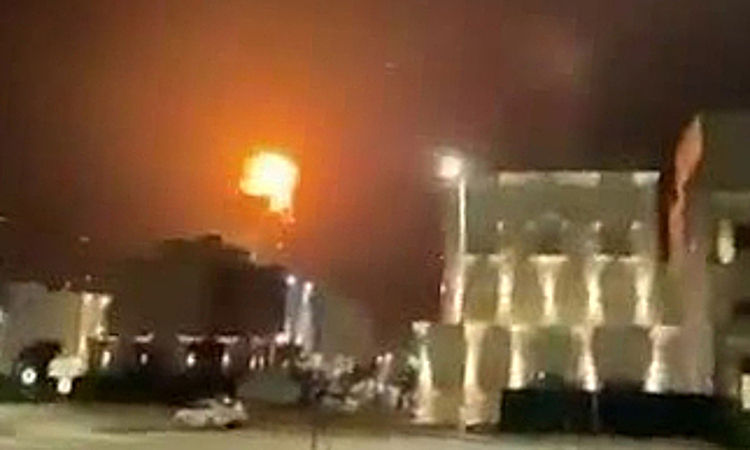
Four Iranian oil tankers—Kaviz, Charminar, Horizon 1, and Riesco—were struck in the Gulf of Oman. The Derya was hit near Kharg Island in the Persian Gulf. US forces ensured crews left the ships before the attacks, then neutralized the targets.
The US views these vessels as part of a multi-billion USD underground network funding the IRGC and its regional proxies. CENTCOM stated Iran is "incapable of defending these vessels."
Iran's Tasnim news agency reported one tanker was hit approximately 6,5 km from Kharg Island, a central oil export hub for Iran. President Donald Trump had previously threatened to seize the island.
This follows previous US actions; last weekend, Washington also attacked three Tehran oil tankers after the IRGC launched ballistic missiles, forcing a US aircraft carrier and a destroyer to maneuver for evasion.
Secretary of State Marco Rubio warned Iran would pay a price whenever it attempts to attack US warships. "Iran continues to try to attack US warships, and each time they do, or attempt to do so, they will lose more oil tankers," he said.
In response, Iran announced it would retaliate against the latest attacks by targeting oil tankers near Bahraini and Kuwaiti ports.
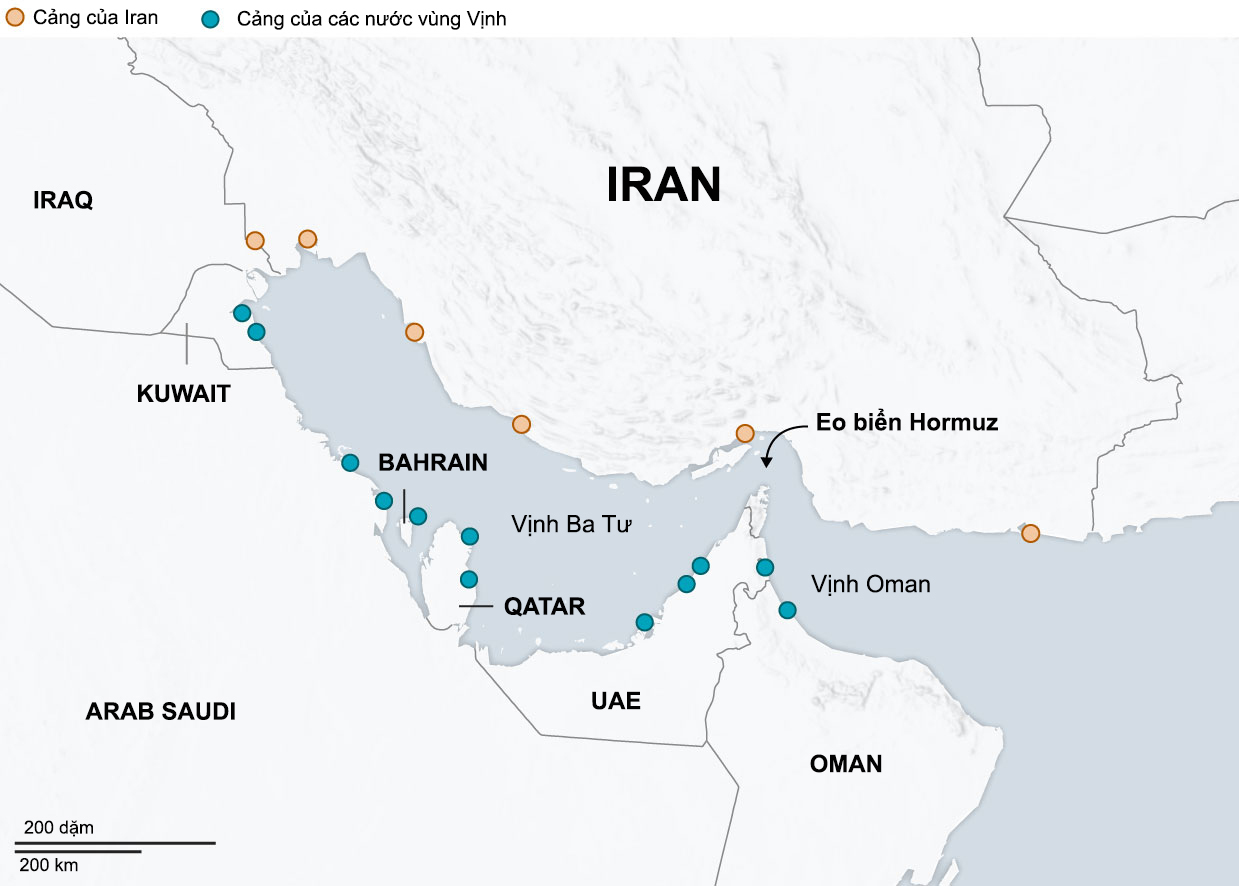 |
Location of the Strait of Hormuz and seaports in the Gulf region. Graphic: WSJ |
The IRGC issued warnings to oil tankers near these ports, urging crews to immediately leave their vessels, whether anchored or docked. Iran also accused Bahrain and Kuwait of allowing US forces to use their bases, implying both countries support hostile actions against Tehran.
The Strait of Hormuz, a shipping lane through which approximately 20% of the world's oil once passed, has become a critical battleground as both the US and Iran repeatedly attack oil tankers.
This week, the Trump administration imposed new sanctions on Iran's aviation industry, targeting over 20 commercial and private airlines and foreign cargo service providers.
In recent months, the US Navy has blockaded Iranian seaports, pressuring the country's economy by impeding oil exports. The US military also provided support to a limited number of commercial vessels passing through the Strait of Hormuz along the route near the Omani coast.
Thanh Danh (According to CNN, Al Jazeera, NBC)