President Donald Trump announced the deployment on the Truth Social network today, citing his personal relationship with Polish President Karol Nawrocki. US officials have not yet clarified if this force is the unit whose deployment was previously postponed.
Last week, Defense Secretary Pete Hegseth announced the suspension of plans to deploy soldiers from the 2nd Armored Combat Brigade to Poland. The decision surprised US defense officials, as well as some officials in Poland and other European countries.
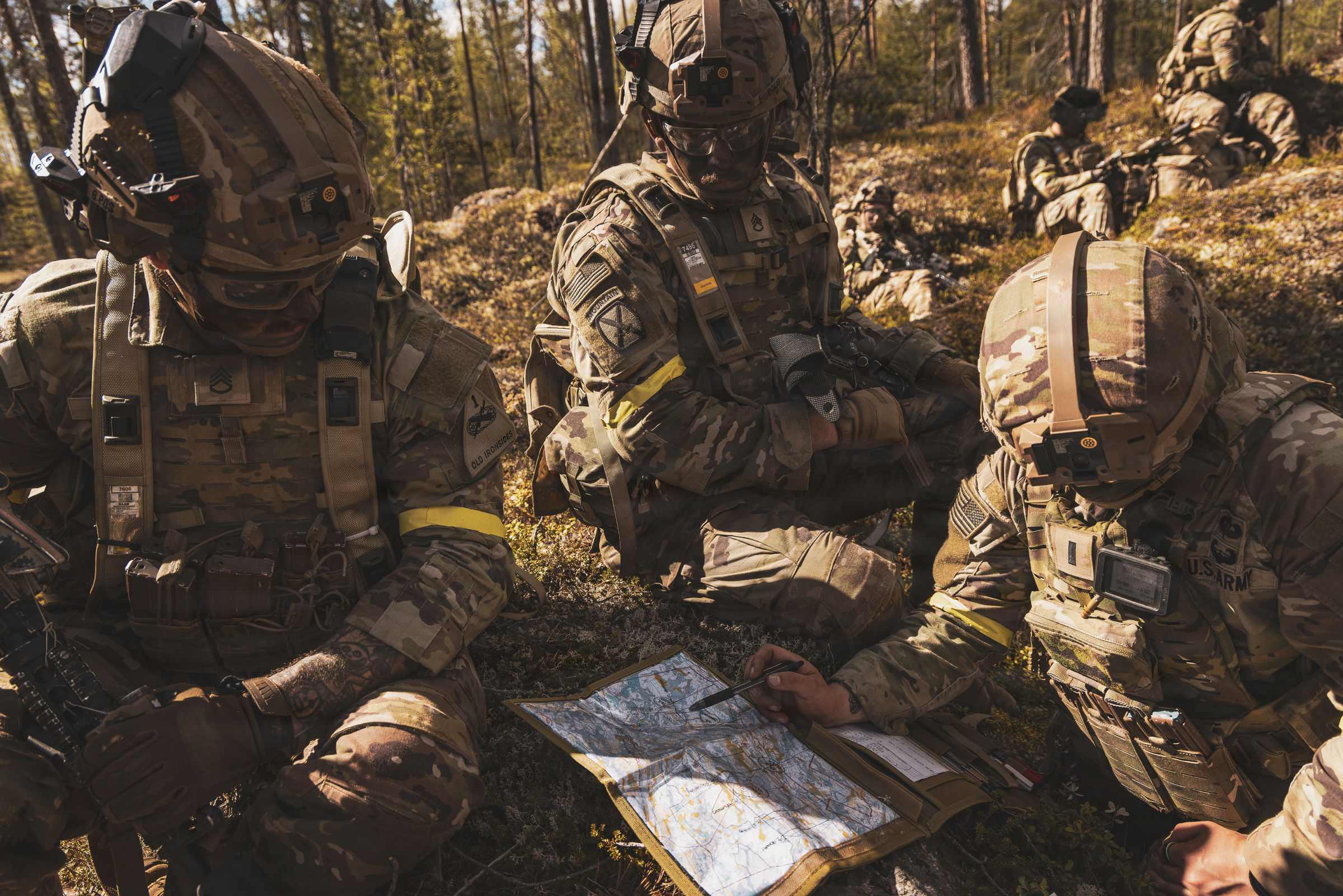 |
US soldiers participate in the Saber Strike exercise in Poland on 18/5. US Army.
The Pentagon stated it had planned the decision to postpone the deployment in advance, but the move still drew criticism from hardline Republican lawmakers in the US House of Representatives. House Armed Services Committee Chairman Mike Rogers said the committee was "not satisfied" with not being consulted beforehand about the decision.
Vice President JD Vance on 19/5 defended the decision to halt troop deployment, calling it a minor issue. He also criticized European media for overreacting, emphasizing that Europe should bear more responsibility for continental security.
"We are not cutting 4,000 troops in Poland. What we are doing is postponing a deployment to Poland. This is not a cut, it is just a normal delay in the process of force rotation, which sometimes happens," he said at a White House press conference.
Currently, about 10,000 US soldiers are stationed in Poland, mostly on a rotational basis in deployments lasting several months. The Eastern European nation considers the US military presence a key factor in its security deterrence strategy aimed at Russia.
Elbridge Colby, a senior Pentagon policy official, said there was an "effective meeting" with Polish Deputy Foreign Minister Pawel Zalewski, reaffirming the message that Washington wants Europe to contribute more to conventional defense capabilities.
Colby called Poland a "model ally" and one of the alliance's leaders. Poland did not criticize the US campaign against Iran and is currently NATO's highest defense spender as a percentage of GDP, at 4,8% this year.
Thanh Danh (According to Hill, Reuters)