On 3/6, the US House of Representatives voted on a resolution proposed by Democrats to prevent President Donald Trump from ordering further attacks on Iran and to demand the withdrawal of US troops from the conflict. This marked the third time a resolution to curb Trump's war powers was brought to a vote in the House.
Previous attempts by Democrats failed to secure the necessary majority. In the first vote on 5/3, the resolution received 212 votes in favor and 219 against. The second vote on 16/4 saw an increase to 213 "yes" votes and a decrease to 214 "no" votes.
Undeterred, Democrats brought the resolution forward again on 21/5, proposed by Representative Gregory Meeks, a senior Democratic member of the US House Foreign Affairs Committee. However, House Speaker Mike Johnson suspended the vote hours before it began, angering Democratic lawmakers.
Speaker Johnson could not prevent the 3/6 vote, and the resolution limiting the President's war powers passed with 215 votes in favor and 208 against. Four Republican representatives—Thomas Massie, Tom Barrett, Warren Davidson, and Brian Fitzpatrick—sided with Democrats, reflecting growing public disapproval of the Iran conflict.
"I think people are certainly very frustrated with the war," Barrett stated when asked about US voters' sentiments regarding the conflict, now in its 4th month.
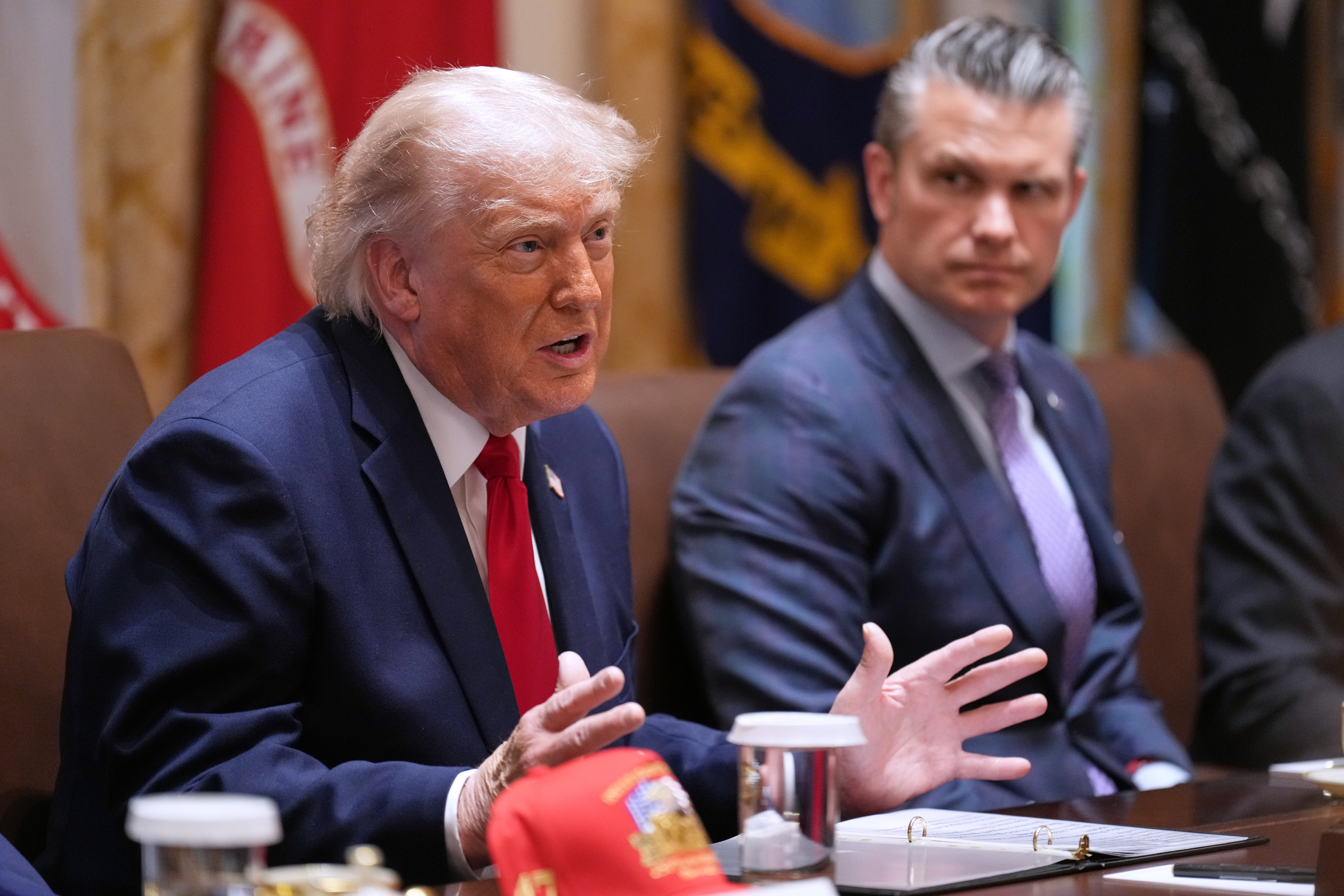 |
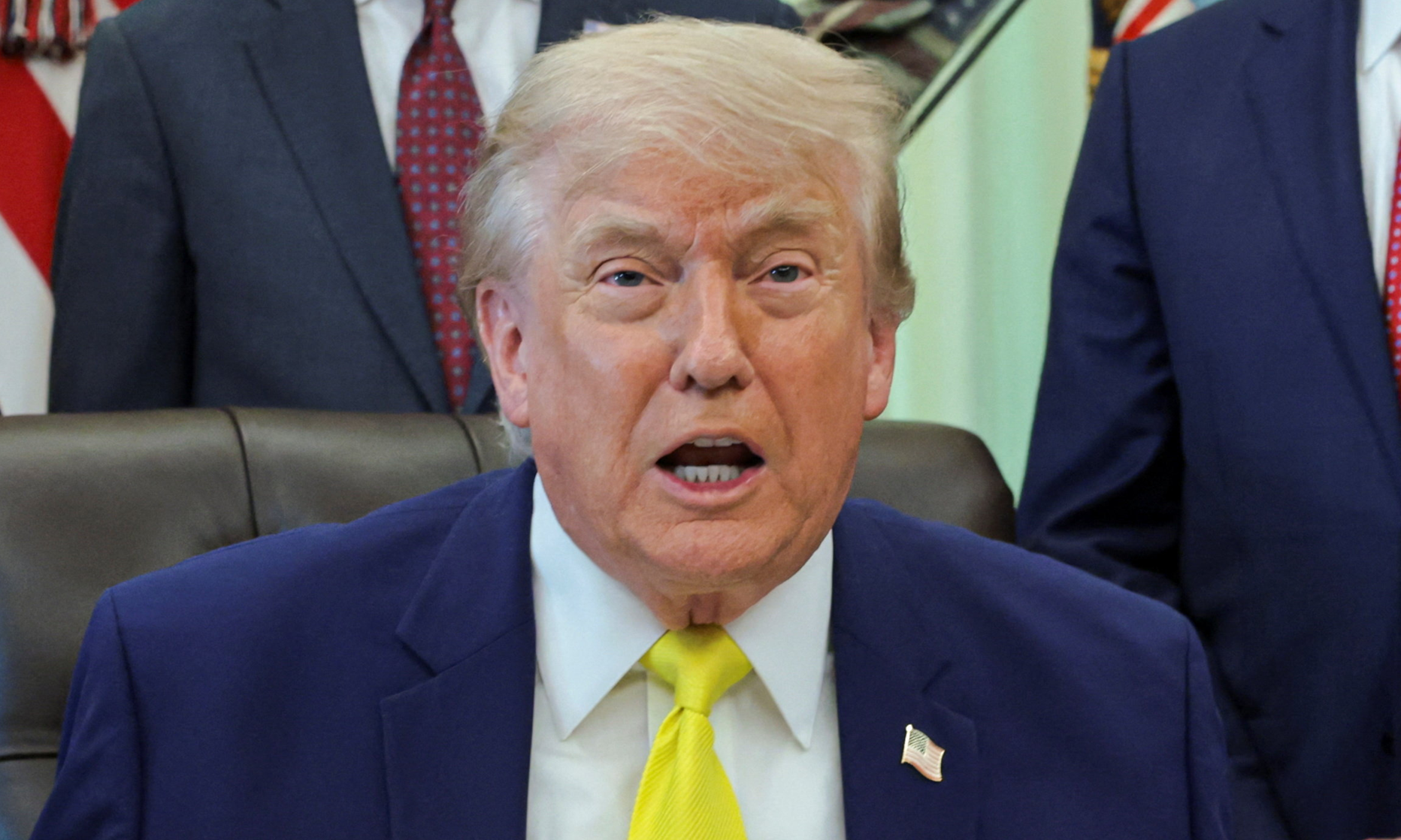
President Donald Trump at a White House meeting on 27/5. Photo: AP |
A New York Times/Siena University poll conducted in mid-May indicated that 64% of US voters believed Trump made a wrong decision by initiating the conflict, while 30% thought he was correct.
Representative Massie of Kentucky has long criticized Trump for engaging in conflict in Iran without congressional authorization.
"People are tired of this," he said, adding that the vote "sent a good message that the House, representing the people, is tired of the war."
During a 3/6 hearing before the House Foreign Affairs Committee, Secretary of State Marco Rubio argued that congressional approval of the resolution could diminish Iran's interest in negotiations.
"They think if the resolution passes, it means the President won't be able to pursue them anymore. So he won't have any leverage," Rubio stated.
Rubio added that the vote would also lead Iranian negotiators to believe the Trump administration "will be tied down and we won't be able to do anything to them, so why sign a deal?"
However, with increasing pressure from voters and midterm elections approaching, Republican lawmakers appear to be more receptive to the Democratic message regarding an exit strategy for the conflict.
 |
US A-10 attack aircraft participate in an airstrike campaign in Iran. Photo: US Air Force |
"We are stuck in a war with no end because the President only thinks of his own ego and fails to prepare for the consequences," Representative Meeks, a Democrat, declared when presenting the resolution to the House.
Meeks emphasized that diplomacy is the "only way out" of the conflict, not "more bombing or aggressive rhetoric."
Under the War Powers Act, the President has a 60-day limit to seek congressional approval after deploying troops into conflict. This deadline passed weeks ago, leading Democrats to argue that Trump is violating the law. The White House, however, contends that the deadline is met because the US and Iran reached a ceasefire agreement on 8/4.
Republican Representative Brian Mast, chairman of the House Foreign Affairs Committee, reiterated Trump's argument that the conflict has effectively ended. "We are not in a state of hostility. US forces there are nearly equivalent to the number of troops we consistently maintain in the region," he said.
Despite its passage in the House, the resolution faces significant hurdles before Congress can compel Trump to end the conflict. Even if it passes the Senate, the resolution is almost certain to be vetoed by President Trump, according to Theodoric Meyer, a commentator for the Washington Post. "No war powers resolution has ever overcome a presidential veto," Meyer noted.
Nevertheless, Democratic Senator Tim Kaine, who leads the war powers vote effort in the Senate, believes that congressional passage of the resolution limiting war powers could pressure Trump to negotiate an end to the conflict.
Leo Shane III, a commentator for Politico, suggests that while the House's passage of the resolution is currently symbolic and has no immediate impact on Trump's Iran campaign, it is the latest sign that members within the Republican Party are ready to oppose him.
The Republican Party recently rejected several Trump administration initiatives, such as the President's multi-billion dollar proposal to support a ballroom dancing project and a Justice Department fund to compensate allies he deemed unjustly prosecuted.
"These moves indicate increasing tension between the White House and Republican lawmakers on Capitol Hill," Connor O'Brien, a commentator for Politico, remarked, adding that they also expose divisions within the Republican Party.
 |
Smoke and flames rise from an oil depot in Tehran, Iran, after an Israeli airstrike on 7/3. Photo: AFP |
Senate Majority Leader John Thune stated that the course of the conflict with Iran will influence whether more Republican lawmakers will oppose it.
"Our members are asking reasonable questions and trying to understand the strategy moving forward," Thune told reporters last month.
Trump boasted last month that a deal with Iran was imminent, but it ultimately did not materialize. In a 1/6 interview with CNBC, referring to the negotiations, he said, "frankly, I don't care if they end."
Yet, when responding to reporters at the White House on 3/6, Trump stated that negotiations with Iran were progressing well and expressed optimism that a deal "could be reached by the end of this week."
Trump's comments contradict statements from Iran, where Foreign Minister Abbas Araghchi reported "no significant progress" in negotiations. These conflicting messages make predicting when the conflict will end difficult.
Thanh Tam (According to Washington Post, Politico)