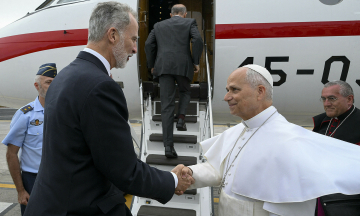
The US Treasury Department revealed on 15/4 that these entities are part of a network operated by Mohammed Hossein Shamkhani, son of Ali Shamkhani, a senior political advisor to Supreme Leader Ali Khamenei, who was killed in a US-Israel attack. The sanctions list targets 9 vessels, among them oil and liquefied petroleum gas (LPG) tankers, alongside several companies based in the United Arab Emirates (UAE).
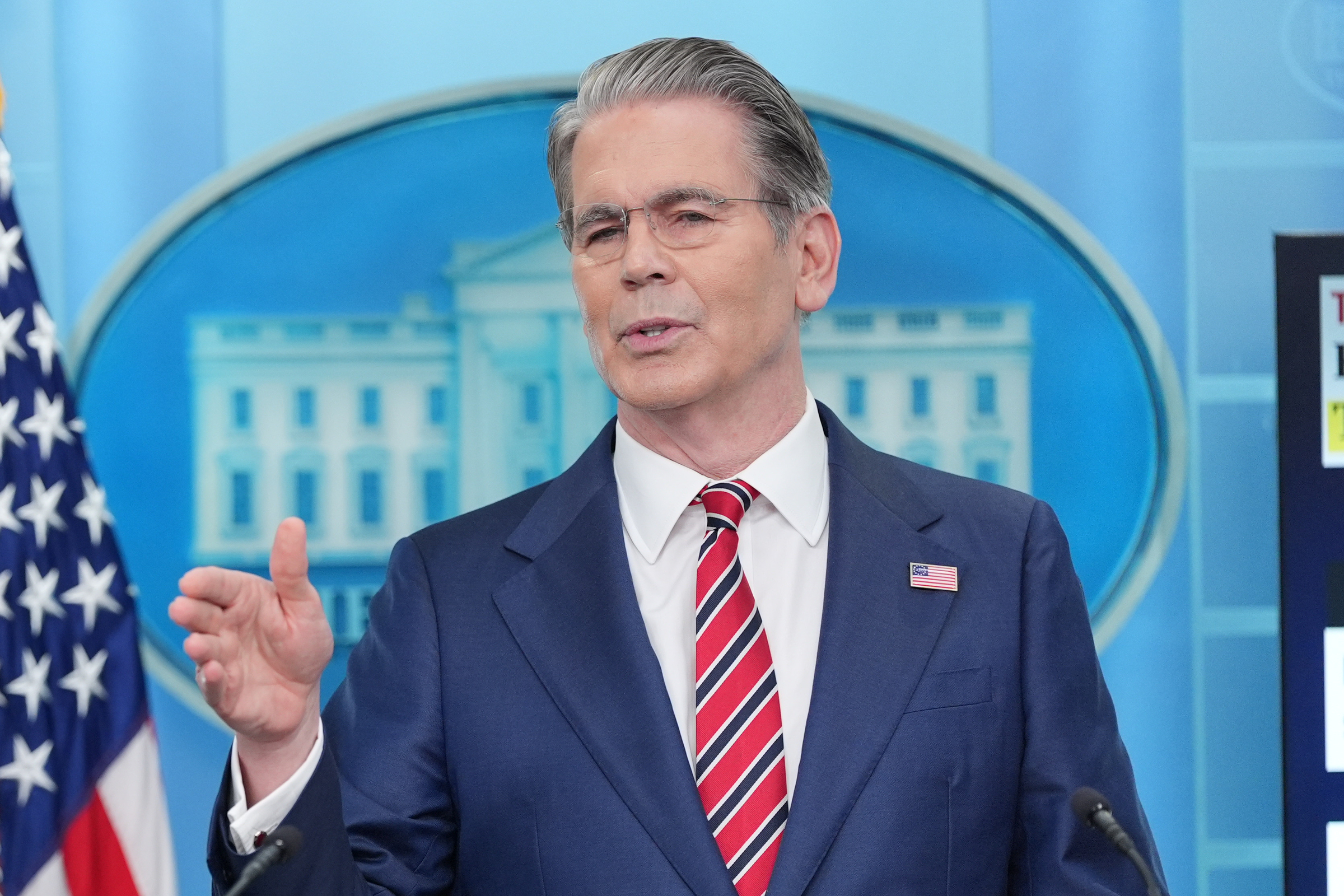 |
US Treasury Secretary Scott Bessent at the White House on 15/4. *AP*.
This move follows the Treasury Department's 14/4 announcement to fully re-impose sanctions on Iran's oil sector. This decision came as a one-month waiver, granted by Washington to allow Tehran to sell stranded offshore oil, was set to expire on 19/4.
Treasury Secretary Scott Bessent issued a strong warning, emphasizing the US's readiness to escalate pressure. He stated that Washington is prepared to impose "secondary sanctions" on any country continuing to purchase oil from Iran. "We want to tell countries that if you are buying Iranian oil or if Iranian money is in your banks, we are ready to impose secondary sanctions", Bessent declared.
Complementing these financial measures, the US imposed a naval blockade on Iranian ports starting 13/4. This action aims to interdict any vessel traveling to or from Iranian ports in the Persian Gulf and Gulf of Oman, including ships that have paid fees to Iran for passage through the Strait of Hormuz.
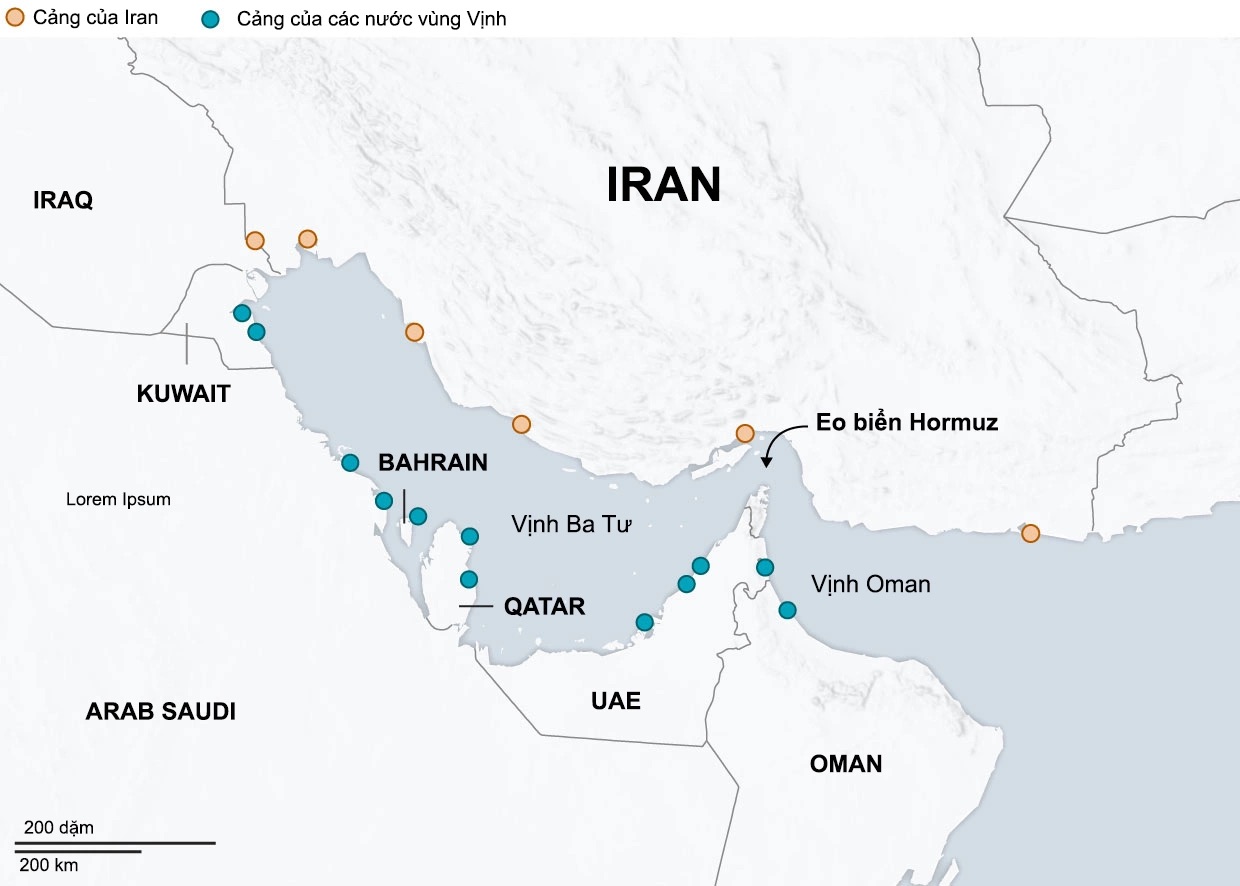 |
Ports in the Gulf region. *WSJ*.
The US Central Command (CENTCOM), overseeing the blockade, reported on 15/4 that it had intercepted 10 vessels attempting to depart Iranian ports within the initial 48 hours. In response, Mohsen Rezaei, a military advisor to Supreme Leader Mojtaba Khamenei, warned on the same day that Iran would sink US ships in the Strait of Hormuz if Washington attempts to control the strategic waterway.