On the evening of 17/4, General Secretary and President To Lam and his spouse returned to Vietnam via an international train service from Nanning to Hanoi, VTV reported. Earlier, Liu Haixing, Head of the International Liaison Department of the Central Committee of the Communist Party of China, along with other officials, accompanied and saw off General Secretary and President To Lam and his spouse at Nanning East Station.
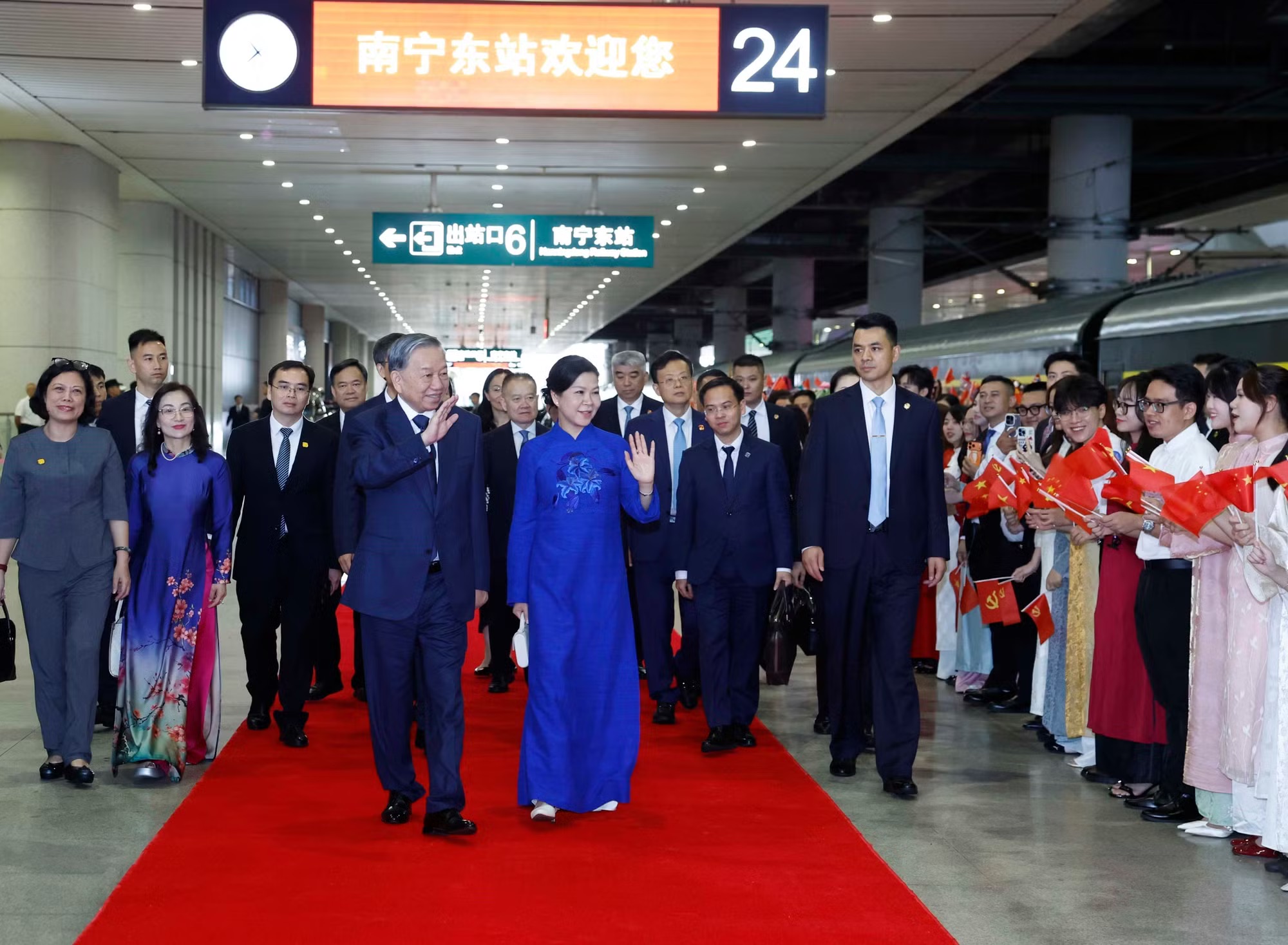 |
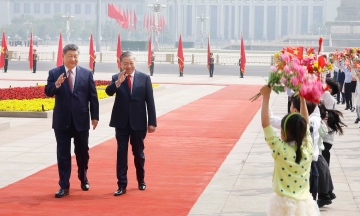
A send-off ceremony for General Secretary and President To Lam and his spouse at Nanning East Station, Nanning city on 17/4. *Photo: VNA* |
A significant part of the visit included General Secretary and President To Lam's experience traveling by high-speed train from Beijing to Nanning on 16/4, a journey of about 2,400 km. The Vietnamese leader expressed his impression of China's high-speed rail network development. He also requested Chinese railway industry leaders and enterprises to share experience, provide support, and participate with Vietnam in the construction and technology transfer for key railway projects in Vietnam. This aligns with Vietnam's desire for both nations to strengthen cooperation in transport connectivity, including railways, for green development and national growth.
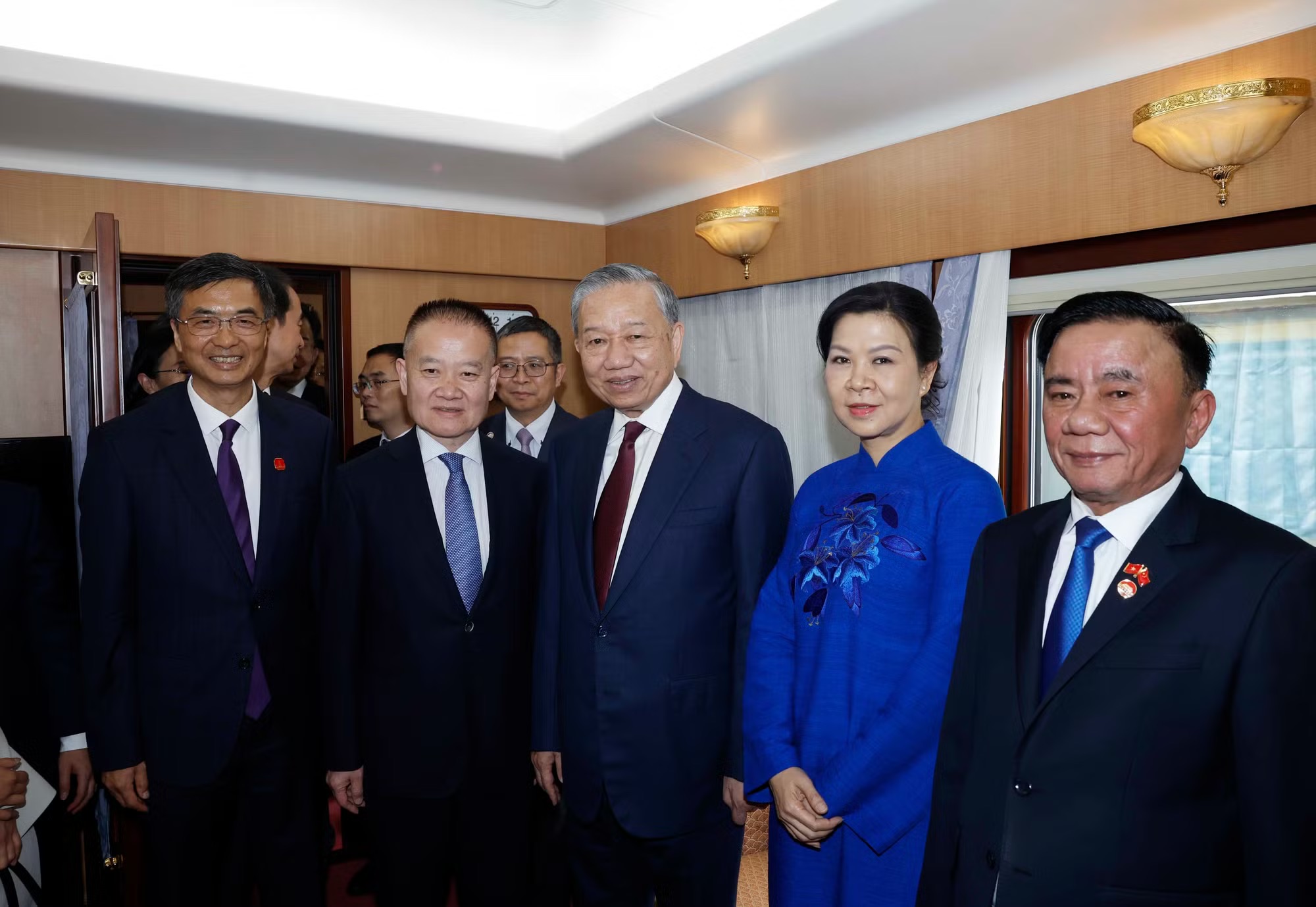 |
Chinese officials seeing off General Secretary and President To Lam and his spouse at Pingxiang Station, China. *Photo: VNA* |
During his visit from 14-17/4, General Secretary and President To Lam held talks with General Secretary and President of China Xi Jinping and met with other key Chinese leaders. These high-level discussions focused on deepening bilateral relations and promoting cooperation across various sectors.
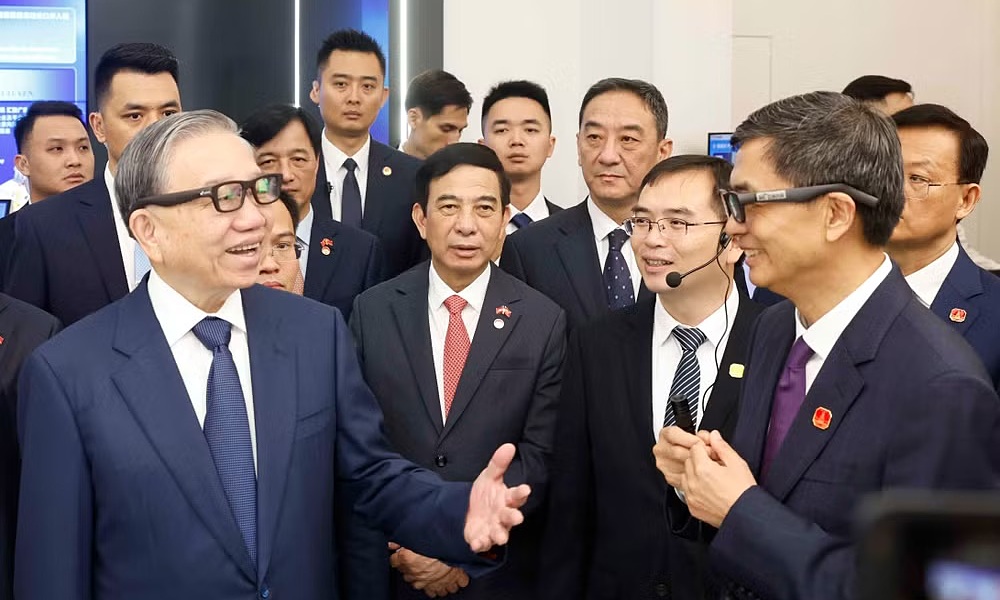
Beyond official meetings, General Secretary and President To Lam also engaged in a range of activities. He delivered a speech at Tsinghua University, visited Xiong'an New Area in Hebei province, and toured the China-ASEAN Artificial Intelligence Innovation Cooperation Center. He also met with the Vietnamese community in China, held meetings with relatives of former Chinese experts and advisors who had assisted Vietnam, visited the former Central Campus historical site in Guangxi, and attended the launching ceremony for the Vietnam-China Border People's Exchange Festival.
The visit concluded with Vietnam and China issuing a joint statement on continuing to deepen relations and promote cooperation in various fields, including strategic development alignment. The two sides signed 32 cooperation documents, covering areas such as: Party-to-Party exchanges, public security, justice, economy, railways, agricultural product trade, production chains, supply chains, customs cooperation, science and technology, livelihoods, human resource development, media, and local-level collaboration.
Thanh Tam