"We are negotiating with Iran and there is a possibility that an agreement will be reached today or tomorrow to open the strait, moving towards a more normal state of the conflict," US Treasury Secretary Scott Bessent said in an interview with CNBC on the morning of 4/8 (evening of 4/8 Hanoi time).
When asked if Iran would be allowed to charge tolls for vessels passing through the Strait of Hormuz, Bessent only responded that the agreement would ensure freedom of navigation.
Bessent's statement aligns with previous remarks from US President Donald Trump about canceling plans for a large-scale attack on Iran to facilitate diplomatic efforts. The Iranian Foreign Ministry still denies engaging in negotiations with Washington.
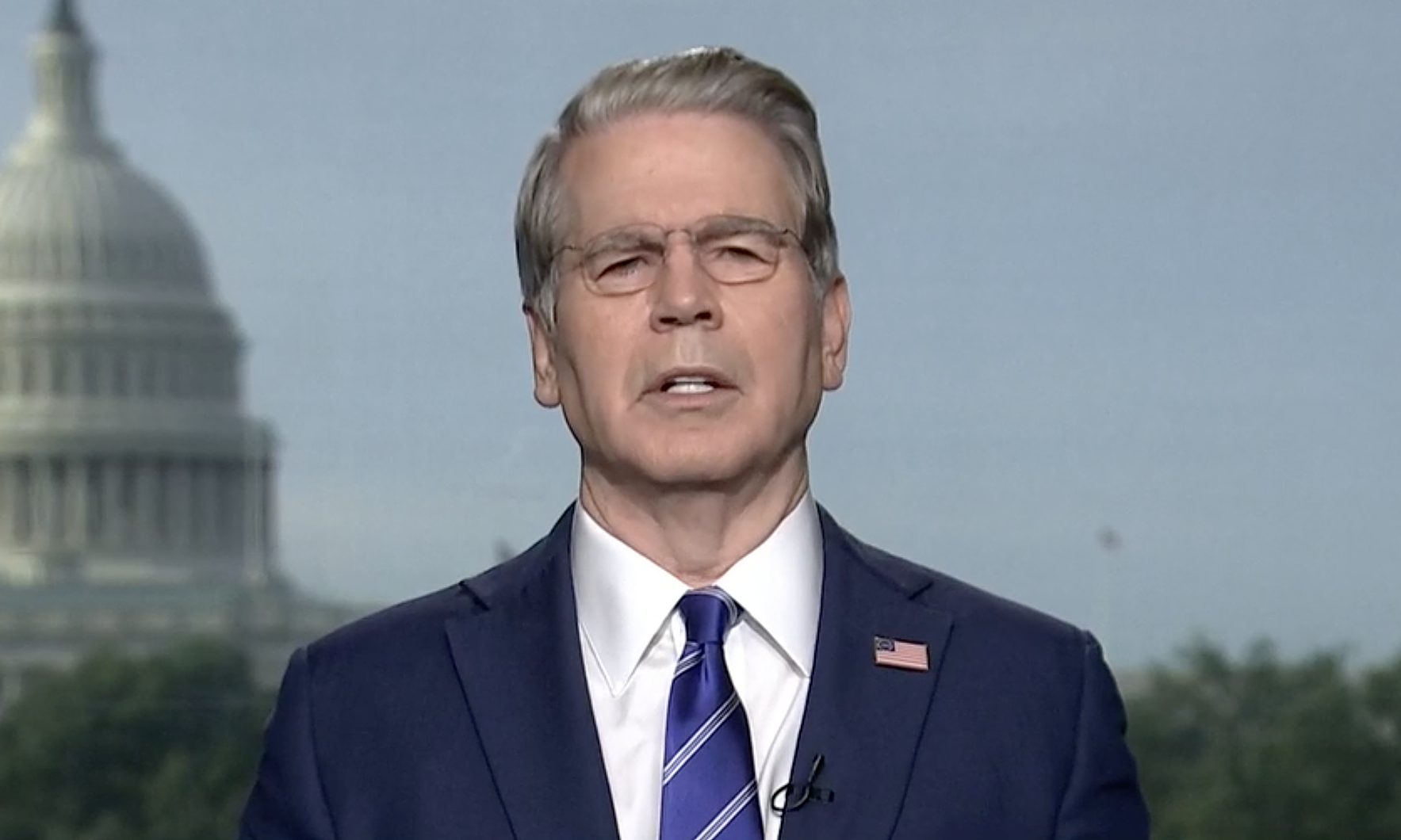 |
US Treasury Secretary Scott Bessent during an interview with CNBC on 4/8. Photo: *CNBC* |
Secretary Bessent remains optimistic about the prospect of reaching an agreement and its impact on energy markets. He noted that despite the volatility of the past few days, many ships have started departing, though hundreds of vessels remain stranded in the Persian Gulf.
Bessent expects energy prices to cool down once maritime activity is restored, which he believes is "good for the entire world." The positive impact will extend beyond the oil and gas sector to fertilizers, petrochemical products, and various industrial gases.
On the same day, Qatar Foreign Ministry spokesperson Majed al-Ansari stated that mediation efforts between the US and Iran are in a "very positive phase." He confirmed that intermediaries are maintaining contact with all parties involved and are collectively working towards a diplomatic solution.
Qatar is closely coordinating with Oman to facilitate communication and exchange ideas and documents between Washington and Tehran. Al-Ansari confirmed that the parties are continuously exchanging drafts and that the content of a potential agreement has been drafted and is circulating among them.
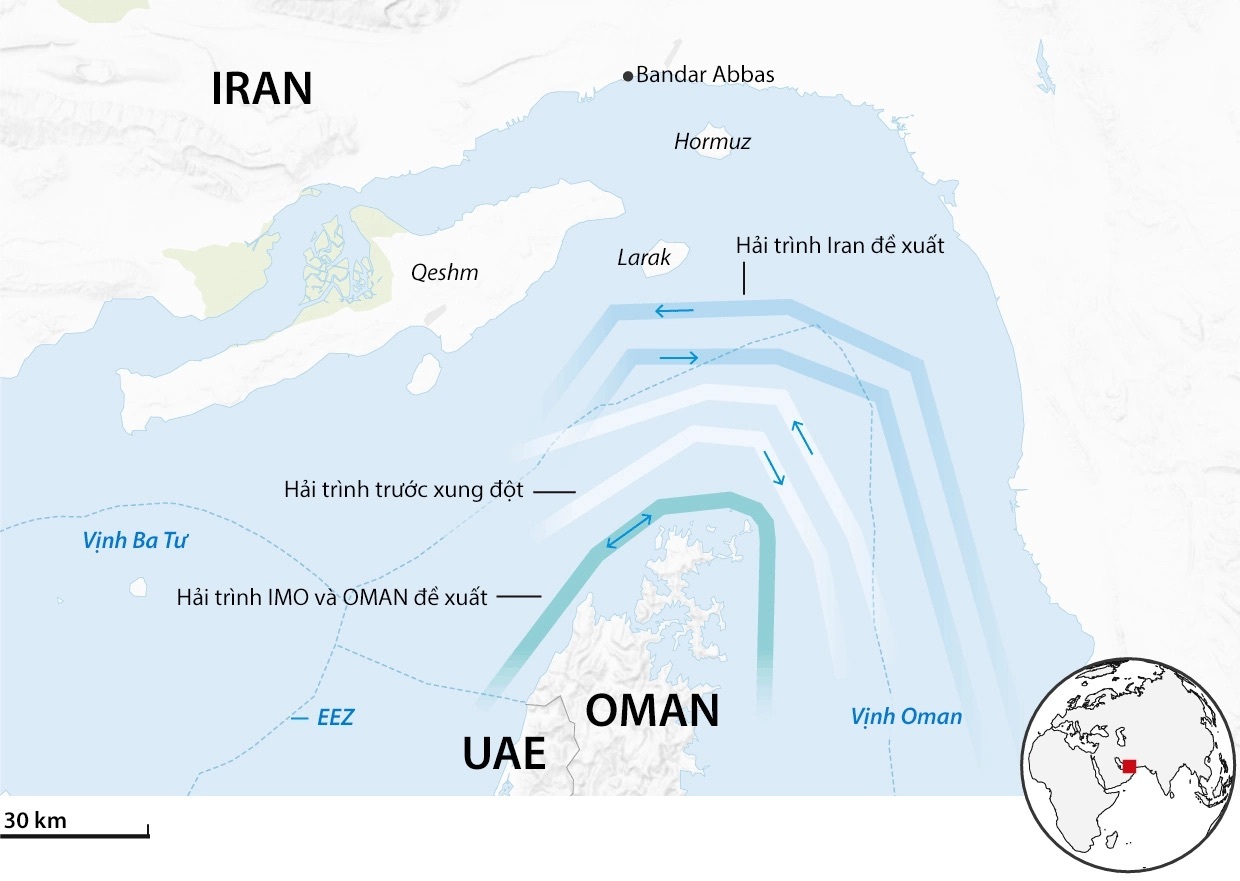 |
Shipping routes through the Strait of Hormuz. Graphic: *Guardian* |
Qatar indicated that the immediate goal for the mediators is to find a short-term solution to bring the US and Iran back to the negotiating table. While there are no current plans for direct talks, Majed al-Ansari hopes that the resumption of dialogue in the near future will pave the way for a broader agreement and restore regional peace.
The US and Iran signed a memorandum of understanding on 17/6 aimed at reopening the Strait of Hormuz. Vessel traffic through Hormuz briefly recovered before the agreement collapsed due to disagreements between Washington and Tehran over the demarcation of shipping lanes that vessels were permitted to use.
Following the collapse, Iran resumed attacking vessels transiting Hormuz along the Omani coast, asserting that this activity was illegal and demanding that ships navigate within Iran's territorial waters when passing through the strait. Washington responded with a series of airstrikes and reimposed a blockade on Iranian ports.
Thanh Danh (According to CNBC, AFP, CNN)