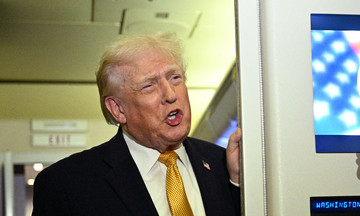
During a press conference on the afternoon of 3/1 at the Mar-a-Lago resort in Florida, US President Donald Trump announced that the country's military, over 9 hours earlier, had conducted "an unprecedented show of force since World War II", raiding Venezuela to capture President Nicolas Maduro and his wife.
Standing beside President Trump, General Dan Caine, Chairman of the US Joint Chiefs of Staff, stated that the operation, code-named "Absolute Resolve", was prepared and planned since 8/2025, with a team of Central Intelligence Agency (CIA) agents covertly infiltrating Venezuela.
Tasked with gathering intelligence on President Maduro, CIA agents moved undetected throughout Caracas for several months, collecting information on the Venezuelan leader's daily schedule.
General Caine revealed that thanks to these agents, the US gained detailed knowledge of Maduro's movements, daily meals, and even his pets. Combined with information from informants and a fleet of stealth drones, the CIA could create a minute-by-minute profile of Maduro's habits and activities.
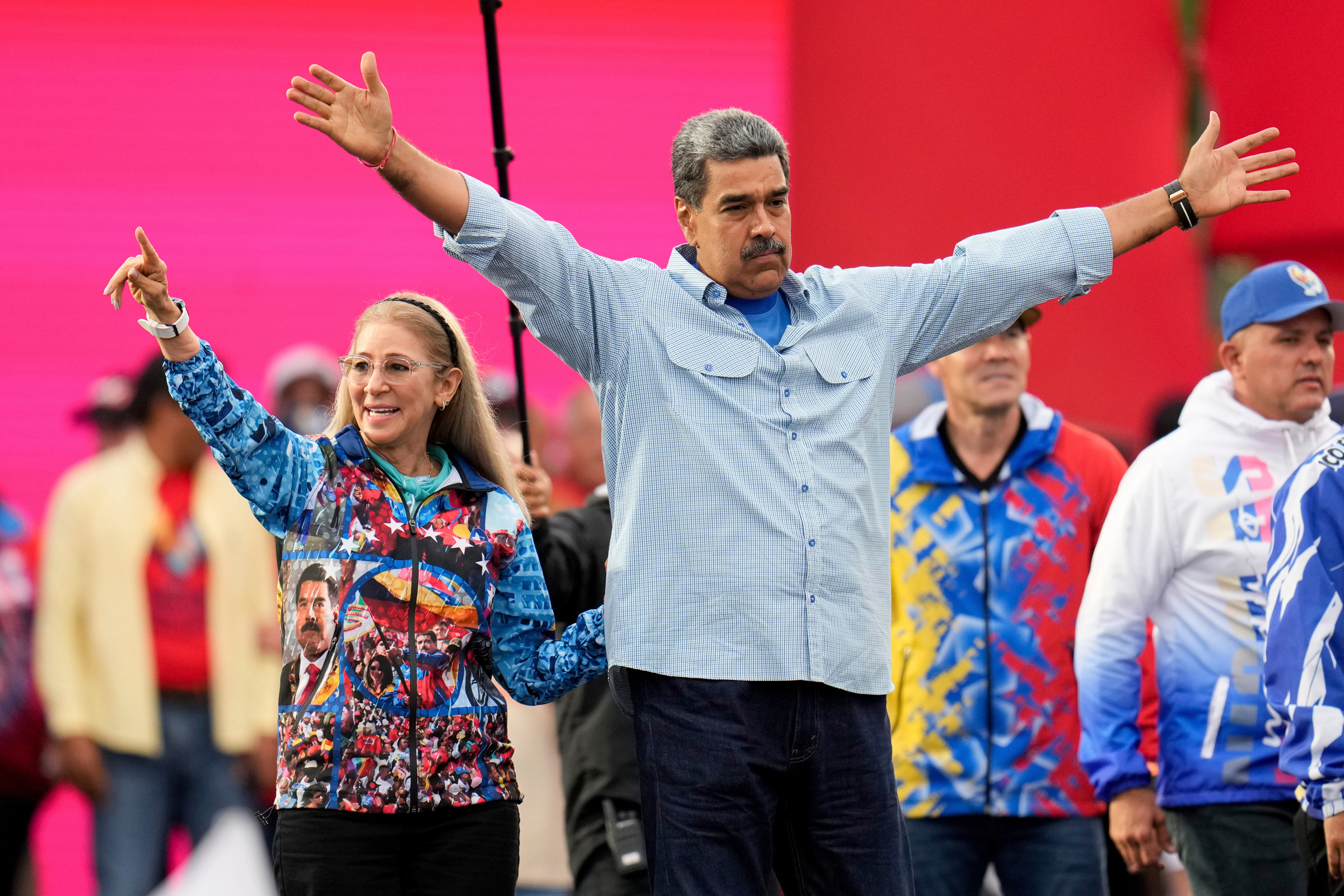 |
Nicolas Maduro and his wife, Cilia Flores, at a campaign rally in Caracas, Venezuela in 7/2024. Anh: AP
This intelligence was a prerequisite for the US decision to launch the raid into Venezuela, spearheaded by the elite Delta Force of the US Army, a unit that regularly undertakes the most high-risk missions in foreign territories.
Delta Force repeatedly rehearsed "capture and evacuation of target" scenarios at a training ground in Kentucky that fully replicated Maduro's residence, built by the Special Operations Command. They practiced breaching steel doors with increasing speed.
The US military was ready to act, but awaited favorable weather conditions and a time when the risk of civilian casualties was lowest.
During this period, the US assembled a powerful fleet of warships, modern fighter jets, and approximately 15,000 troops in the waters off Venezuela, aiming to increase political and military pressure for Maduro to resign. Washington accused Maduro of "running a drug trafficking ring", a claim Caracas denied.
As tensions with the US escalated, Maduro constantly changed his residence across 6-8 different locations. The US did not always know his exact whereabouts until late evening. To launch the operation, the US military needed firm confirmation that Maduro was present at the compound they had trained to raid.
Days before the raid, the US increased deployment of reconnaissance aircraft, electronic warfare planes, armed Reaper drones, along with search and rescue helicopters and fighter jets to the region.
Washington also took other steps to intensify pressure on Maduro and prepare for the capture operation. The US launched an anti-drug operation that destroyed dozens of "drug boats" and resulted in at least 115 deaths in the Caribbean Sea and the eastern Pacific Ocean. The CIA recently conducted a drone attack on a Venezuelan port.
President Donald Trump stated that in 12/2025, Maduro sought negotiations, offering Washington access to Venezuela's oil resources. An agreement reached by both sides on 23/12/2025 would have allowed Maduro to leave the country for Turkey.
However, the Venezuelan president later rejected the agreement, and the breakdown of negotiations paved the way for the raid. Trump authorized the US military to deploy the operation starting 25/12/2025, but granted the Pentagon and military commanders the authority to decide the specific timing.
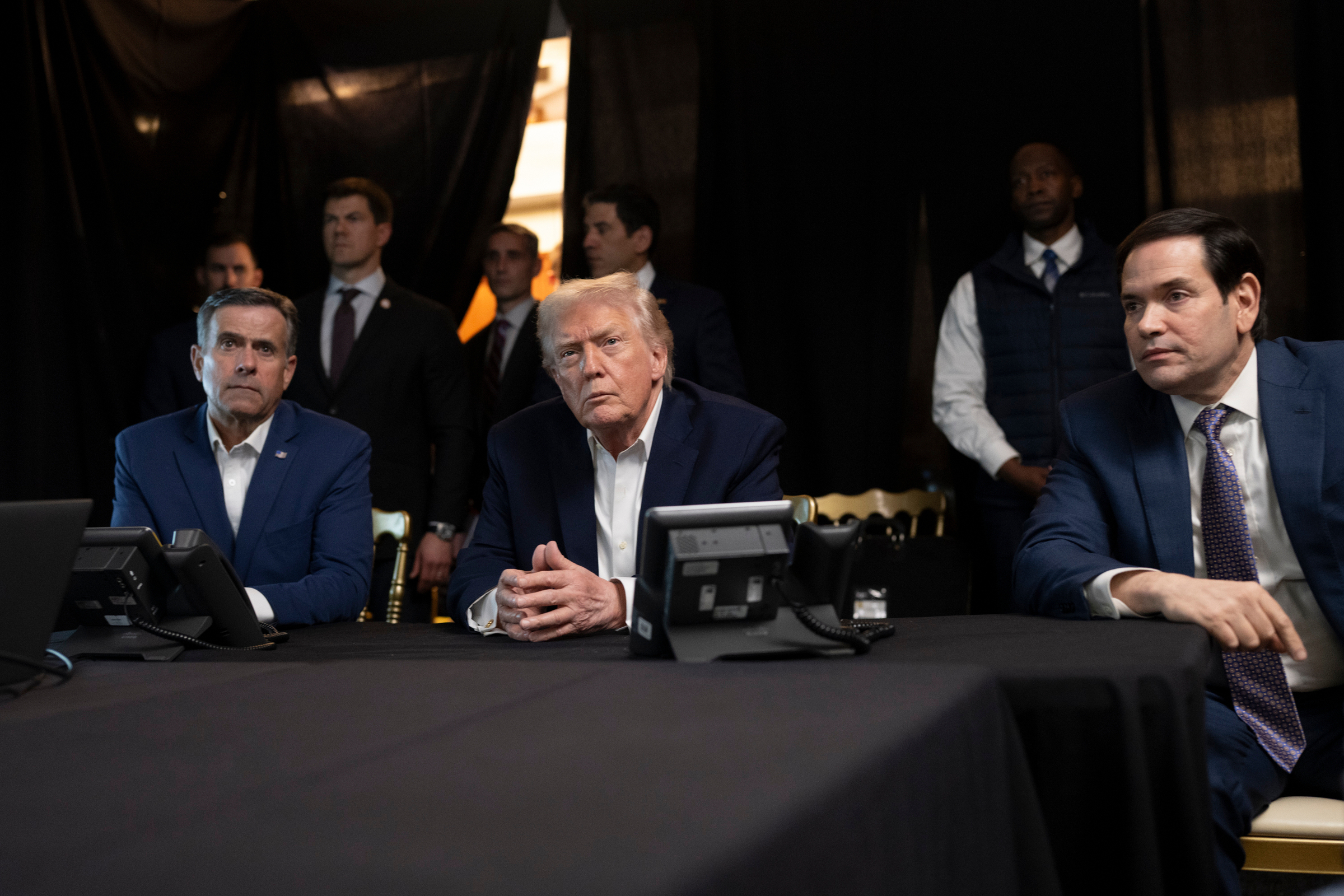 |
Donald Trump (center) in a room at Mar-a-Lago with officials monitoring the Venezuela raid on 3/1. Anh: AP
An unnamed US official reported that Washington wanted to conduct the operation during the Christmas and New Year holidays, as many Venezuelan government officials would be on vacation and many soldiers on leave. However, unusually bad weather in Venezuela at that time delayed the operation by several days.
By early this week, the weather gradually improved. The operation commenced around 16h30 on 2/1, when US officials approved the deployment of certain assets. For the next 6 hours, they continued to monitor the situation closely, including weather conditions and Maduro's location.
That evening, Trump was at the Mar-a-Lago resort in Florida, dining with aides and cabinet members. At 22h30, an aide called him to request approval for the raid. At 22h46, the US president approved.
"Good luck and Godspeed," Trump said as he and senior national security officials gathered in a room at Mar-a-Lago, equipped with multiple screens to remotely observe the daring US raid.
Over 150 military aircraft, including drones, fighter jets, and bombers, took off from 20 military bases and naval vessels heading towards Caracas. As the first aircraft entered Caracas, US military and intelligence agencies confirmed they maintained the element of surprise: Maduro had not been warned. He and his wife were resting in their residence at the Fort Tiuna military base in the capital, Caracas, a heavily guarded location with Buk-M2E air defense systems and numerous soldiers.
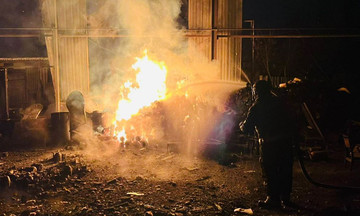
Around 2h on 3/1, loud explosions echoed across Caracas as US fighter jets launched missiles to strike Venezuelan radar stations and air defense systems. According to an unnamed senior Venezuelan official, at least 40 people were killed, including soldiers and civilians.
Venezuelan air defense systems, including the Buk-M2E system protecting Fort Tiuna base, were destroyed. General Caine stated that the US preemptive strike neutralized enemy air defenses, clearing the way for helicopters of the 160th Special Operations Aviation Regiment, an elite US Army unit, to fly in formation into Caracas carrying special forces.
US raided Venezuelan military base with rockets launched from helicopters and long-range missiles on the morning of 3/1. Video: X/Sentdefender
Nicknamed "Night Stalkers", the 160th Special Operations Aviation Regiment specializes in high-risk missions at night and low altitudes, such as insertions, extractions, and raids. In recent months, they had conducted training flights near the Venezuelan coast.
Although air defense systems were suppressed, US helicopters still faced ground fire as they approached Maduro's residence around 2h01. General Caine reported that US helicopters responded with "overwhelming firepower".
One helicopter was hit but did not crash. Two US officials stated that several soldiers were wounded during the entire operation.
Delta Force was deployed to the target, located within Fort Tiuna base. Upon landing, Delta personnel quickly entered the building to locate Maduro.
Meanwhile, Trump and key aides watched the raid live via cameras mounted on an overhead aircraft. As General Caine narrated the events on screen, the president continuously asked questions about the operation's progress.
"I watched it literally like I was watching a television show," Trump later told Fox News.
Delta special forces used explosives to breach the building's doors and took only three minutes to reach Maduro's location. Trump recounted that as US special forces approached Maduro's room, the Venezuelan leader and his wife tried to run into a reinforced steel room, but could not close the door in time.
"He tried to run for cover. The door was very thick, very heavy. He got to the door, but couldn't close it," Trump said.
Approximately five minutes after entering the building, Delta special forces reported Maduro's capture.
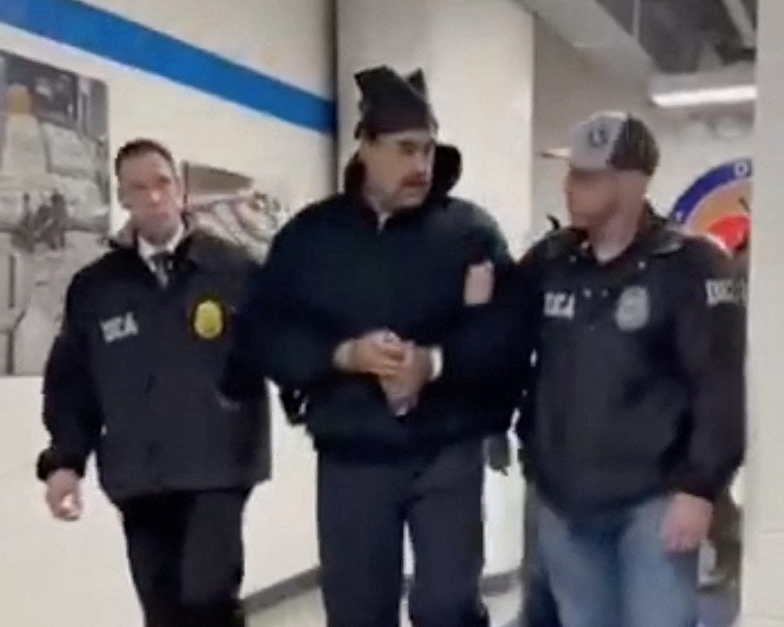 |
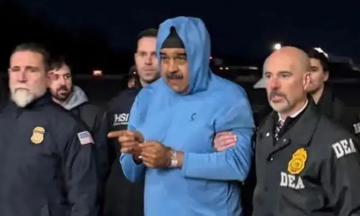
Maduro (center) escorted at the US Drug Enforcement Administration (DEA) office in New York, US on 3/1. Anh: AFP
The operation included an FBI hostage negotiator, in case Maduro barricaded himself or refused to surrender. However, their services were not needed.
Delta forces quickly transported Maduro and his wife onto a helicopter. By 4h29, they were transferred to the US Navy's amphibious assault ship USS Iwo Jima, which had been stationed approximately 160 km off the Venezuelan coast throughout the operation.
The Venezuelan leader and his wife were then taken from the ship to a naval base in Guantanamo Bay, where the FBI had a Boeing 757 aircraft ready to transport Maduro to a military-controlled airport north of Manhattan, New York. According to an official, Trump continued to monitor the operation's developments until all Delta special forces had exited Venezuelan airspace and flown out over the ocean.
"The speed, the ferocity... It was an amazing thing, an incredible job," Trump said of the operation.
However, the operation faced strong opposition from the international community and even from US citizens. United Nations Secretary-General Antonio Guterres expressed concern that the operation set a "dangerous precedent" for the disregard of international law.
A number of countries also condemned the US military action. Within the US, protests took place in cities, opposing the Trump administration's military intervention in Venezuela and demanding Maduro's release.
Thanh Tam (According to CNN, WSJ)