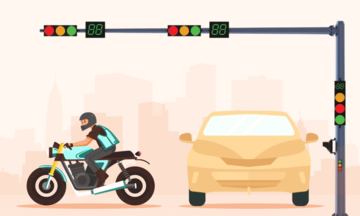
Many believe a stationary car is safe, assuming the driver will surely see them. However, this often leads to a blind spot, encounters with complacent drivers, or sudden unintended acceleration.
The accident on Kham Thien street on 28/1 serves as an example. A 7-seater car reversed into two middle-aged women walking with and preparing to board their motorbikes. In seconds, the driver's failure to observe the rear, combined with an incorrect reaction, resulted in one fatality and one injury.
 |
Accident scene on the afternoon of 28/1. Photo: Viet An |
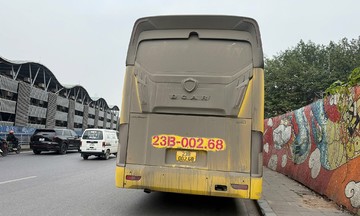
Blind spots always exist at the front and rear of vehicles, even in modern cars equipped with cameras and sensors. Cameras have a delay, and sensors might not detect individuals standing too close or in obscured angles. Should a driver lose focus, confuse the accelerator and brake pedals, or react in panic, the vehicle can instantly become difficult to control.
Many pedestrians and motorcyclists maintain the habit of waiting directly behind or in front of parked cars on the roadside, believing the driver will not move unexpectedly. In cramped urban conditions, where vehicles frequently reverse and advance to turn or park, the risk of collision increases. Standing in the wrong position, combined with a momentary lapse of observation from either side, can lead to consequences that offer no chance for correction.
Accidents do not always arise from complex situations. Sometimes, they begin with the simple thought, 'The car is stopped, so it must be safe.' To avoid similar tragedies, everyone needs to develop the habit of standing a safe distance from cars, not in front or behind them. Concurrently, drivers must exercise caution and be observant before moving.
Reader Ngoc Vu