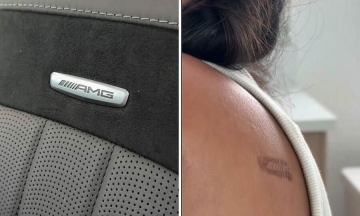
New car buyers increasingly demand in-car amenities and are willing to pay extra for these features. The latest survey from AutoPacific, a specialist in assessing US car owner satisfaction, shows heated seats topping the list of 15 most desired features, surpassing many technologies previously thought to have higher demand.
A study of 19,000 licensed US drivers, who plan to buy a new car within the next three years, found that 47% desire heated seats. This result pushed heated seats past front/rear parking sensors, which led the list in 2025. This year, the percentage of people choosing parking sensors dropped to 45%.
Below are the 15 most desired features among car buyers in the US:
| Feature | Percentage (%) |
| Heated seats | 47 |
| Front and rear parking sensors | 45 |
| Rear automatic emergency braking | 44 |
| Power driver seat | 43 |
| Lane change assist | 43 |
| Night vision system | 43 |
| Adaptive cruise control with lane keeping assist | 43 |
| Blind spot warning camera | 43 |
| Rear cross traffic alert with automatic emergency braking | 42 |
| Automatic parking | 41 |
| Wireless charging | 41 |
| Power front passenger seat | 40 |
| Dash cam | 40 |
| Large animal detection | 39 |
| 4-wheel drive system | 39 |
Many other popular features also garnered significant interest: rear automatic emergency braking (44%), power driver seat (43%), lane change assist (43%), night vision system (43%), and adaptive cruise control with lane centering and stop/go functionality (43%). Additionally, automatic parking (41%), wireless charging (41%), and dash cams (40%) were among the sought-after amenities.
The survey also identified a list of ten "must-have" features for highly engaged buyers. The 4-wheel drive (AWD) system led this category, with 41% of respondents considering it mandatory and 39% deeming it a valuable feature. Wireless Apple CarPlay/Android Auto connectivity was classified as mandatory by 37% of users, followed by a power passenger seat (36%) and a blind spot camera (33%).
Another part of the survey assessed driver readiness for autonomous technologies. Results showed that 56% of participants agreed or strongly agreed that they trust advanced safety systems capable of automatically preventing accidents.
Furthermore, 62% affirmed that they feel comfortable allowing their vehicle to perform basic driving maneuvers such as lane centering or parallel parking.
My Anh