In early august, standard Mazda CX-5 models from the 2026 production year reached customers at prices as low as 666 million VND, with some locations offering them for 663 million VND. These are post-promotion prices, significantly lower than the recommended retail price of 699 million VND set by Thaco, the assembler and distributor of the Mazda brand in Vietnam.
This isn't merely a one million VND difference to create an appealing price point below 700 million VND for marketing. The CX-5's price has effectively set a new low. This strategy is enough to help the CX-5, a model nearing the end of its product lifecycle with a new generation expected in late 2026, continue its sales surge.
King of segment sales
Similar to the Vios in the B-segment sedan category and the Ranger in the pickup truck segment, the Mazda CX-5's sales figures overwhelm its rivals in the C-segment CUV category. Over the past 10 years, the most significant external design changes for the Mazda model have been its headlight and taillight identities. However, its allure and top-selling status in the segment have remained virtually constant.
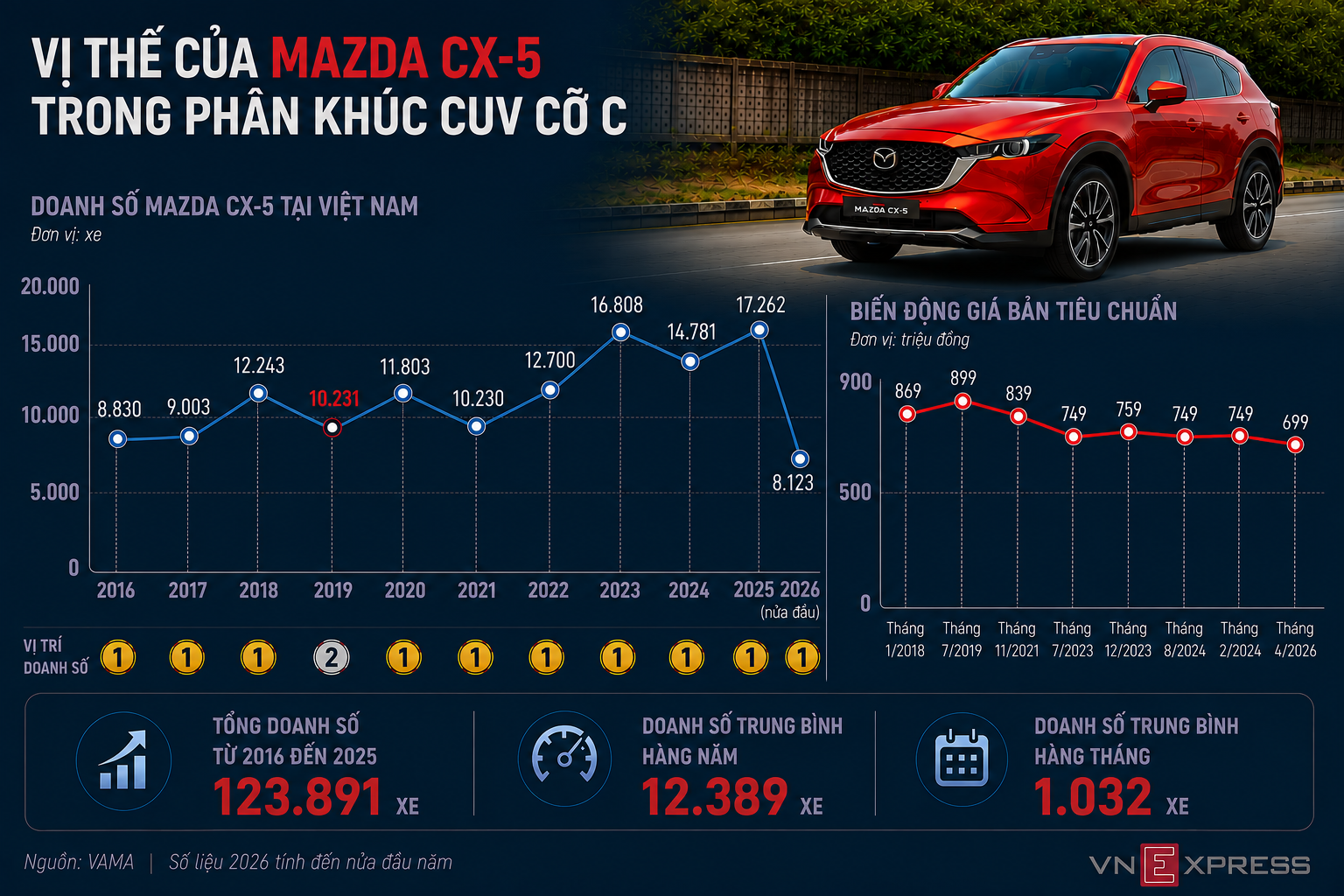 |
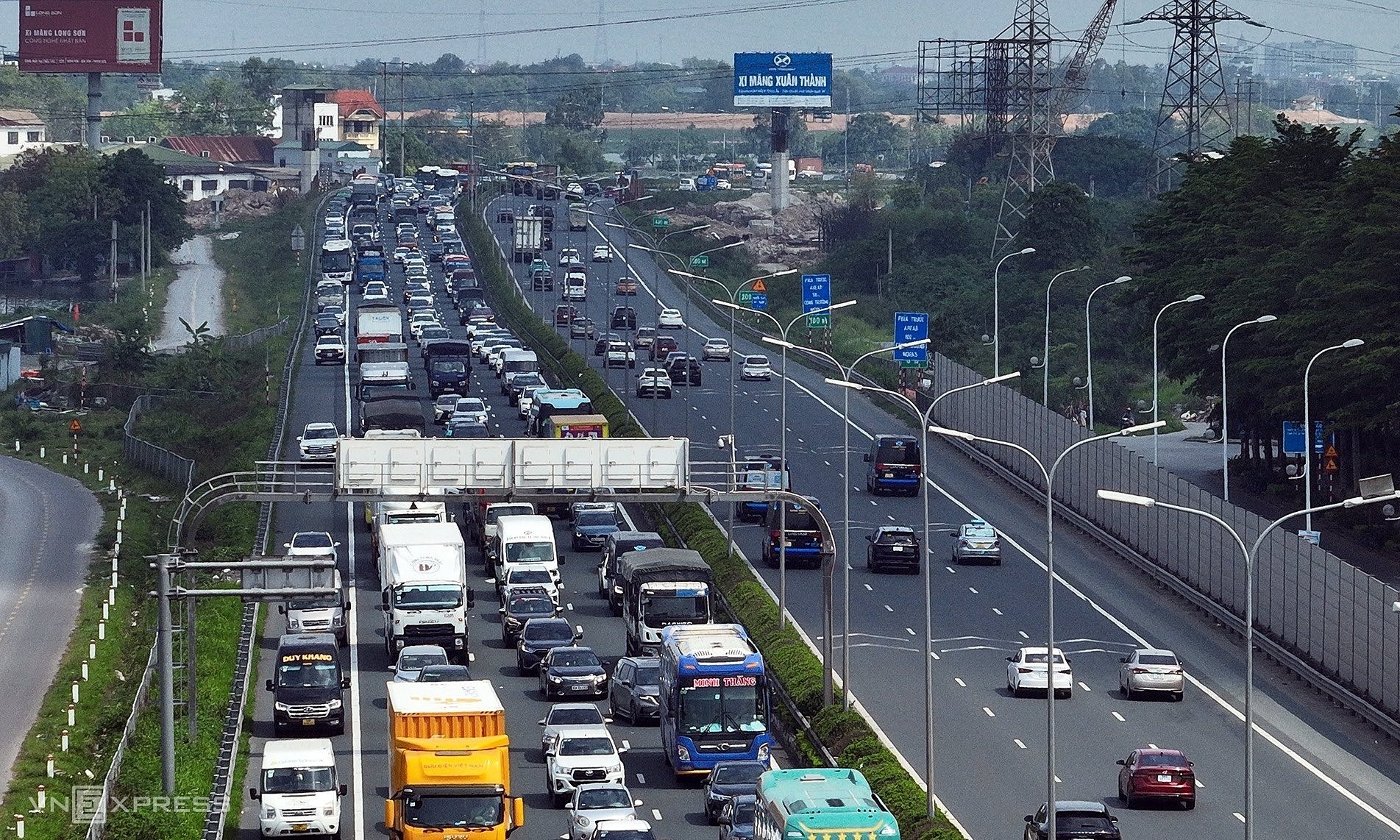
From 2016 until now, with the exception of 2019—the year its competitor, the Honda CR-V, shifted from Thai imports to domestic assembly with more competitive pricing—the Mazda CX-5 has consistently held its position as the segment's sales leader. Selling an average of 1,000 vehicles per month throughout the past 10 years, the CX-5's stable performance is a rare achievement in the Vietnamese market.
The CX-5's market share within its segment consistently hovers around 28-30%. It plays the most crucial role in Mazda's sales in Vietnam. Uniquely for Mazda, unlike brands whose bestsellers are small, low-priced models targeting first-time buyers in segments like B-segment sedans or B-segment CUVs, its top-selling product is a C-segment high-riding vehicle, with its highest trim level approaching one billion VND on the road.
At its peak in 2025, Mazda CX-5 sales reached over 17,200 vehicles, making it the third best-selling internal combustion engine vehicle in the market, behind the Mitsubishi Xpander and Ford Ranger. The year 2025 marked the eighth year of this CX-5 generation's presence in the Vietnamese market, having been launched in November 2017.
In the first half of 2026, the CX-5 sold over 8,000 vehicles, maintaining its position as the best-selling model in its segment. The average monthly sales for this model were approximately 1,350 vehicles. With numerous C-segment high-riding vehicle options available, why is the CX-5 so highly sought after?
"The CX-5 isn't necessarily the best-driving car, nor does it have the most features compared to rivals, but it achieves a harmonious balance across many aspects," explained Trong Thach Nguyen Vu, director of Vuong Trong used car showroom in Dong Nai and a former sales manager at an authorized new oto dealership. "Buying a CX-5 means buying for the husband, the wife, and the children alike."
According to Vu, the Mazda CX-5 boasts an appealing design, reliable nature, stable family utility, and is particularly attractive when considering its price. As a Japanese car with sufficient convenience features and a price comparable to, or even lower than, Korean cars in the same segment, the Mazda model acts like a magnet for customers.
The standard CX-5 variant is currently priced at 699 million VND. Aside from MG HS or Dongfeng Mage, which are among the slowest-selling models in the segment, no other competitor offers a more accessible price than Mazda's product. Furthermore, no rival in the segment boasts as many variants as the CX-5, which offers six options.
"The CX-5's strength lies in its numerous variants, offering a wide price range to choose from depending on one's budget," said Quoc Hao, a Mazda CX-5 owner in TP HCM. "The car's design is almost identical across all variants, with differences in features, so you can pick whichever variant you prefer."
Domestic assembly also allows Thaco to proactively manage supply and diversify variants with configurations tailored to Vietnamese customer preferences. Coupled with an extensive distribution network across all three regions, comprising over 110 showrooms according to Thaco, the CX-5's influence blankets the entire segment.
Controlling the game
From its position as the market share leader, every move made by the CX-5 significantly impacts its competitors. The brand utilizes price adjustments to exert pressure on rival products and maintain the model's momentum.
Each time the Mazda model adjusts its selling price, competitors in the same segment find it difficult to remain passive. They either reduce their retail prices accordingly or legitimize this practice through promotions. If a competitor lowers its price further, the CX-5 can respond by reducing its price even more.
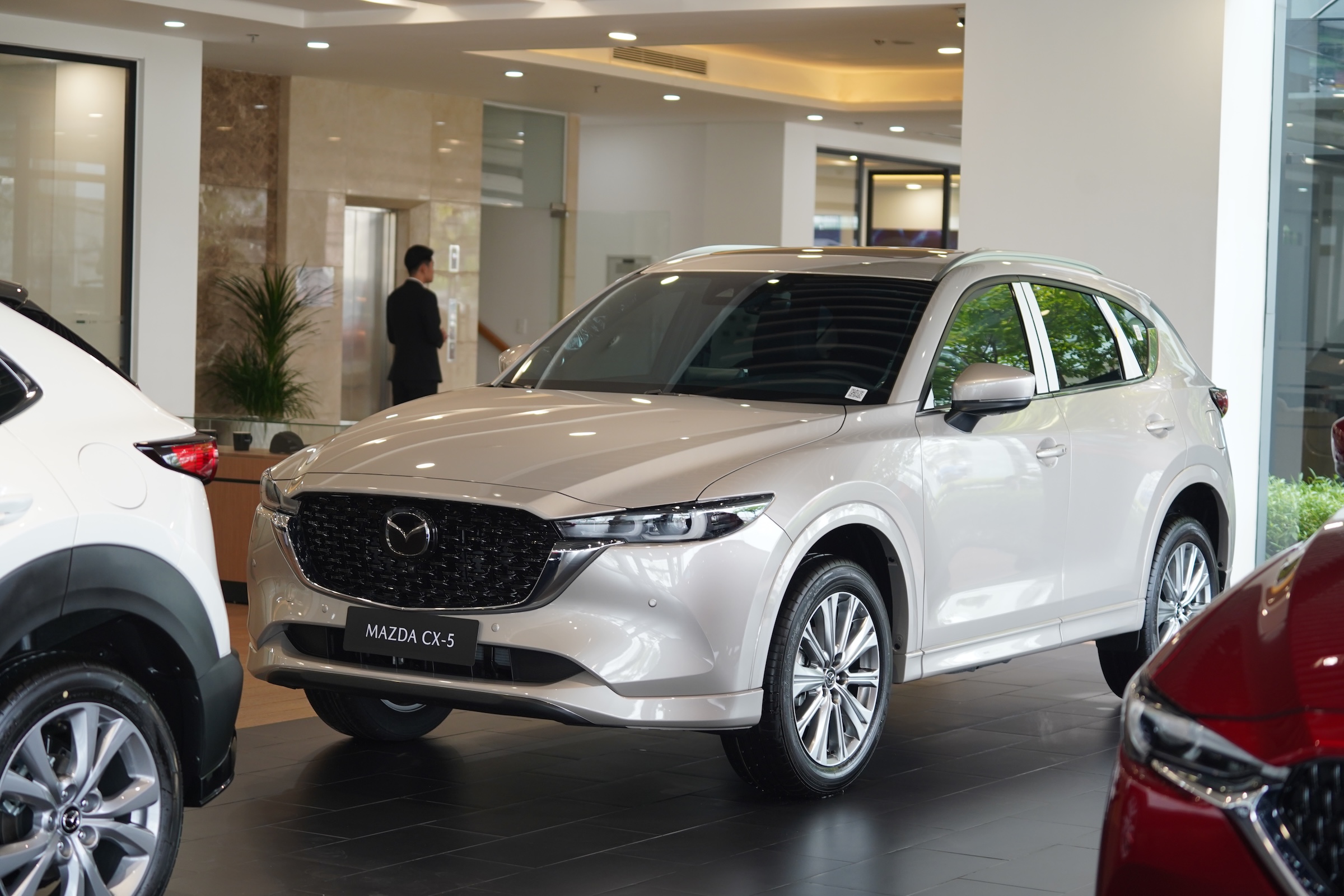 |
CX-5 at a dealership in TP HCM. *Photo: Thanh Nhan*
For instance, in august 2024, two months before the Hyundai Tucson's mid-cycle refresh, the standard CX-5 variant saw a 10 million VND reduction, bringing its price down to 749 million VND. The Tucson subsequently maintained its starting price of 769 million VND despite upgrades to its design and features. In december of that year, the CX-5's biggest sales competitor, the Ford Territory, reduced its price by 40 million VND, reaching 759 million VND.
In 2026, Ford adjusted the Territory's retail price to 739 million VND in april, a 23 million VND decrease compared to the mid-cycle refreshed variant launched in august 2025, which started at 762 million VND. The CX-5 responded immediately that same month by selling its new standard variant for only 699 million VND.
The CX-5's sub-700 million VND price in 2026 is its lowest in the past 10 years. This pricing encroaches upon the B-segment and B+-segment high-riding vehicle categories, indirectly causing these models to also reduce their prices by tens of millions of VND.
Vu believes that the advantage of leading sales means that every time the CX-5 adjusts its price, other competitors must be cautious, regardless of whether their models are new, upgraded, or not. "The CX-5 not only drives sales but also dictates the sales rhythm of the segment," he added.
The CX-5's declining price is partly due to the model approaching the end of its lifecycle. According to experts, beyond market share goals, the depreciation of the production line over time allows the Mazda model to achieve attractive pricing. Lowering prices could also be a move to clear inventory in anticipation of the new CX-5 variant launching in late 2026.
As profit margins on each new vehicle sold in Vietnam's automotive industry generally decrease, consolidating market share or maintaining sales growth can also be seen as a way for automakers to build volume, seeking future revenue from after-sales services. Therefore, Thaco has even more reason to focus its efforts on a golden goose model like the CX-5 amid an increasingly competitive market, especially with the emergence of electric vehicles and the influx of Chinese cars into Vietnam over the past two years.
Thanh Nhan