Capitalizing on rising oil prices and a competitive pricing strategy, BYD, China's largest electric vehicle manufacturer, is making significant inroads into the South Korean market, traditionally dominated by Hyundai and German luxury car brands.
BYD sold 1,664 vehicles in march, ranking 4th among imported brands after Tesla, BMW, and Mercedes, according to data compiled by the Korea automobile importers and distributors association (KAIDA). This marks the highest ranking for a Chinese automaker in South Korea. The company's total sales have now surpassed 10,000 units.
BYD's rapid growth is largely driven by its competitive pricing strategy. The Atto 3, the brand's flagship compact crossover, is priced at around 33 million won (USD 22,200) for the top-tier version before subsidies, making it approximately 7 million won (USD 4,700) cheaper than comparable domestic models like the Hyundai Kona Electric and Kia EV3.
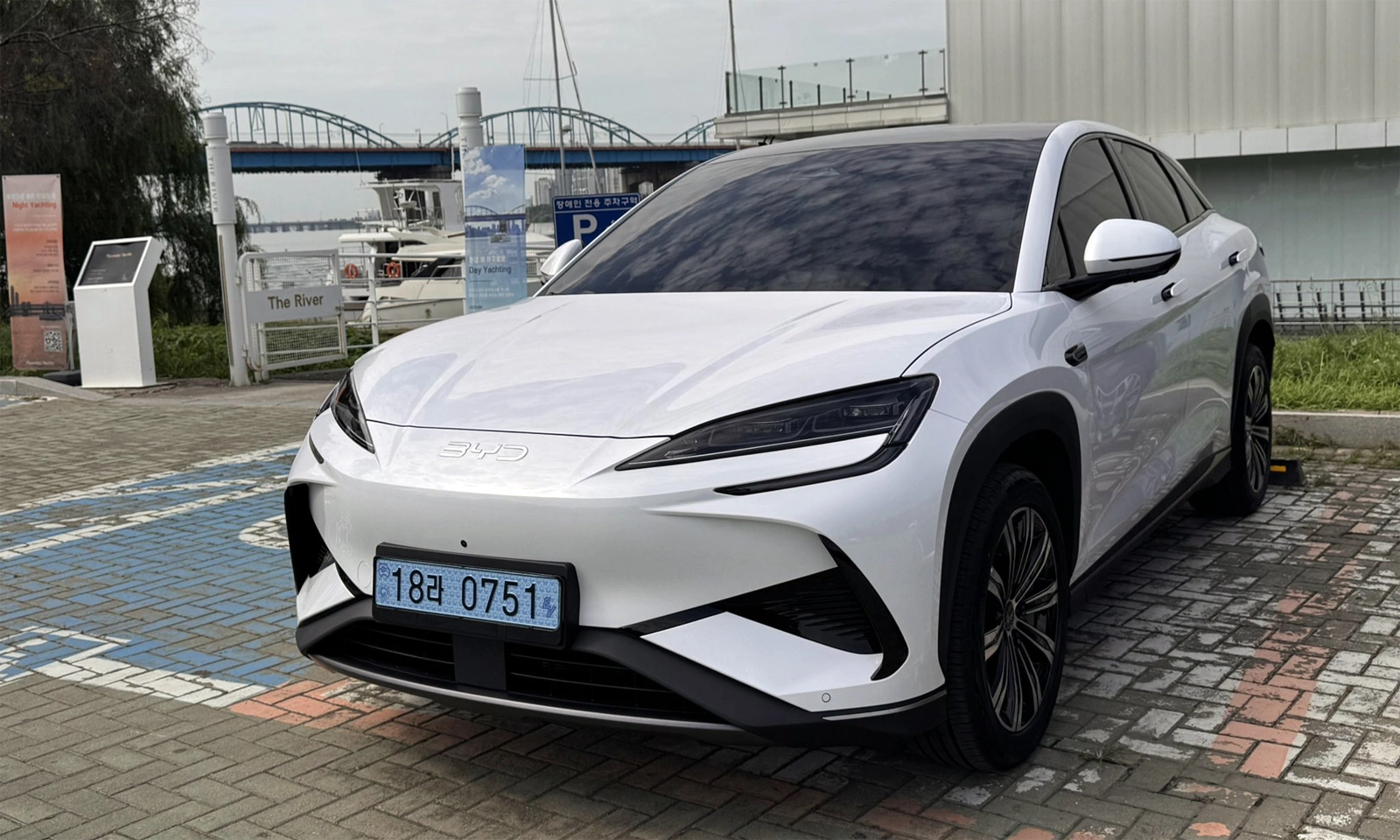 |
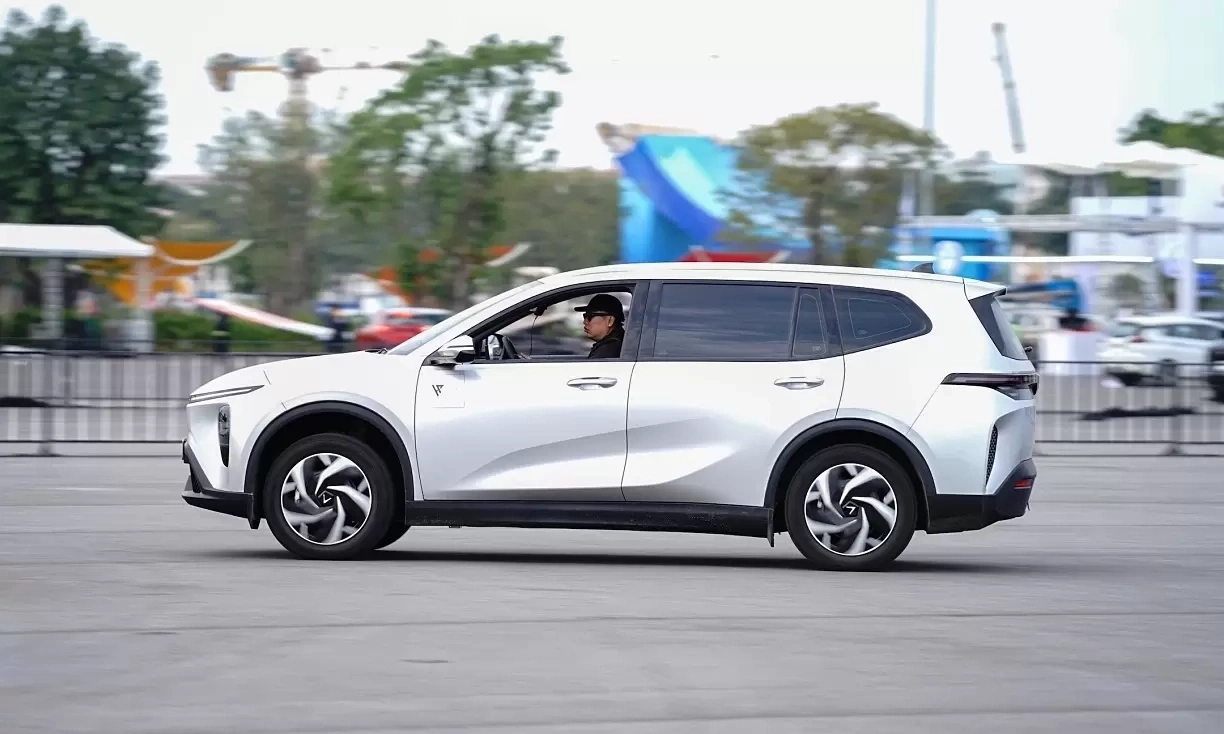
BYD's Sealion 7 model in South Korea. Photo: Jaehwan Cho. |
The Dolphin, a compact hatchback launched in february, boasts an even more impressive price tag of 24,5 million won (USD 16,500). With government electric vehicle subsidies, the price drops to around 20 million won (USD 13,500).
Despite its lower price, the Dolphin includes advanced features such as: advanced driver assistance systems, a large touchscreen display, and ventilated and heated seats, even in its lower trim levels.
"BYD has established its presence in South Korea with the launch of the Dolphin", according to Kim Pil-soo, an automotive engineering professor at Daelim University, who added, "By introducing a highly competitive model, the company will likely continue to increase its market share."
The company's growth rate has accelerated further this year. In the Q1 alone, BYD sold 3,968 vehicles, accounting for nearly 65% of its total sales of over 6,000 vehicles for all of 2025.
The Sealion 7 model led sales during the january-march period with 2,084 units sold, followed by the Atto 3 with 784 units, and the compact SUV Dolphin with 684 units after its february launch.
"Battery safety inspections and an expanded nationwide service network have addressed initial concerns", a BYD Korea official stated.
The company's rapid growth is supported by its showroom expansion strategy. BYD currently operates 32 showrooms nationwide, trailing only BMW, Mercedes, and Volvo among imported brands, and on par with Audi in 4th place. The company expects to expand its dealerships to 35 by the end of this year.
BYD appears deliberate in its showroom location selection, targeting affluent emerging residential areas and regions favored by younger generations. This strategy aims to enhance brand recognition among buyers more open to new technology and less attached to traditional brands.
Recent increases in oil prices may also benefit BYD. Industry officials note that demand for electric vehicles has risen as global crude oil prices escalated following tensions in the Middle East. In South Korea's imported car market, electric vehicles accounted for 47,8% of total new registrations in march, surpassing hybrids for the first time, according to KAIDA.
BYD's growing success is also paving the way for other Chinese electric vehicle brands to enter the South Korean market. Zeekr, a premium electric vehicle brand under the Geely group — which also owns Volvo and Polestar — is entering the market with the launch of its 7X SUV in the first half of the year.
Another electric vehicle brand, Xpeng, is preparing for its launch this year, having established a local branch in june 2025.
My Anh (according to Korea Herald)