The lifespan of an electric motorbike battery can be measured in years, distance traveled, or "charge cycles." Among these, the charge cycle is a common, easy-to-monitor technical metric that clearly reflects battery wear and tear through usage and recharging.
Understanding electric motorbike charge cycles
A charge cycle is counted when the total electricity consumed equals 100% of the battery's capacity. For example, if a user charges from 50% to 100%, then uses it down to 50%, that only counts as half a cycle. Two such charging instances are considered one complete cycle. Therefore, one charge cycle is not merely one plug-in, as many people believe. Charging before the battery is completely depleted does not reduce battery life as quickly as many fear; in fact, it helps optimize battery longevity and performance.
In Vietnam, electric motorbikes currently use two main battery types: lithium-ion and lithium iron phosphate (LFP). Lithium-ion batteries are lightweight, have high energy density, and offer a long travel range. LFP batteries are an improved form of lithium-ion, using iron phosphate (FePO4) at the cathode, making them more durable, safer, and cheaper, but with lower energy density. Additionally, a small number of low-cost electric bicycles and electric motorbikes use lead-acid technology, but this type is not common. Information about the battery type is usually clearly stated by manufacturers in the product specifications.
The lifespan of an electric motorbike battery can be assessed through its number of charge cycles. Each battery type is designed for a specific number of cycles, after which its capacity gradually declines. According to Battery University, typical lithium-ion batteries have a lifespan of about 800-1,500 charge cycles, while LFP batteries can achieve 2,000-5,000 cycles. After exceeding this threshold, the battery does not stop functioning entirely but typically drops to about 70-80% of its original capacity, affecting travel range and operational performance. From the number of charge cycles, the actual battery life can be estimated. If an electric motorbike is charged on average once per day, a lithium-ion battery can last approximately 3-5 years, while an LFP battery can extend from 5-10 years.
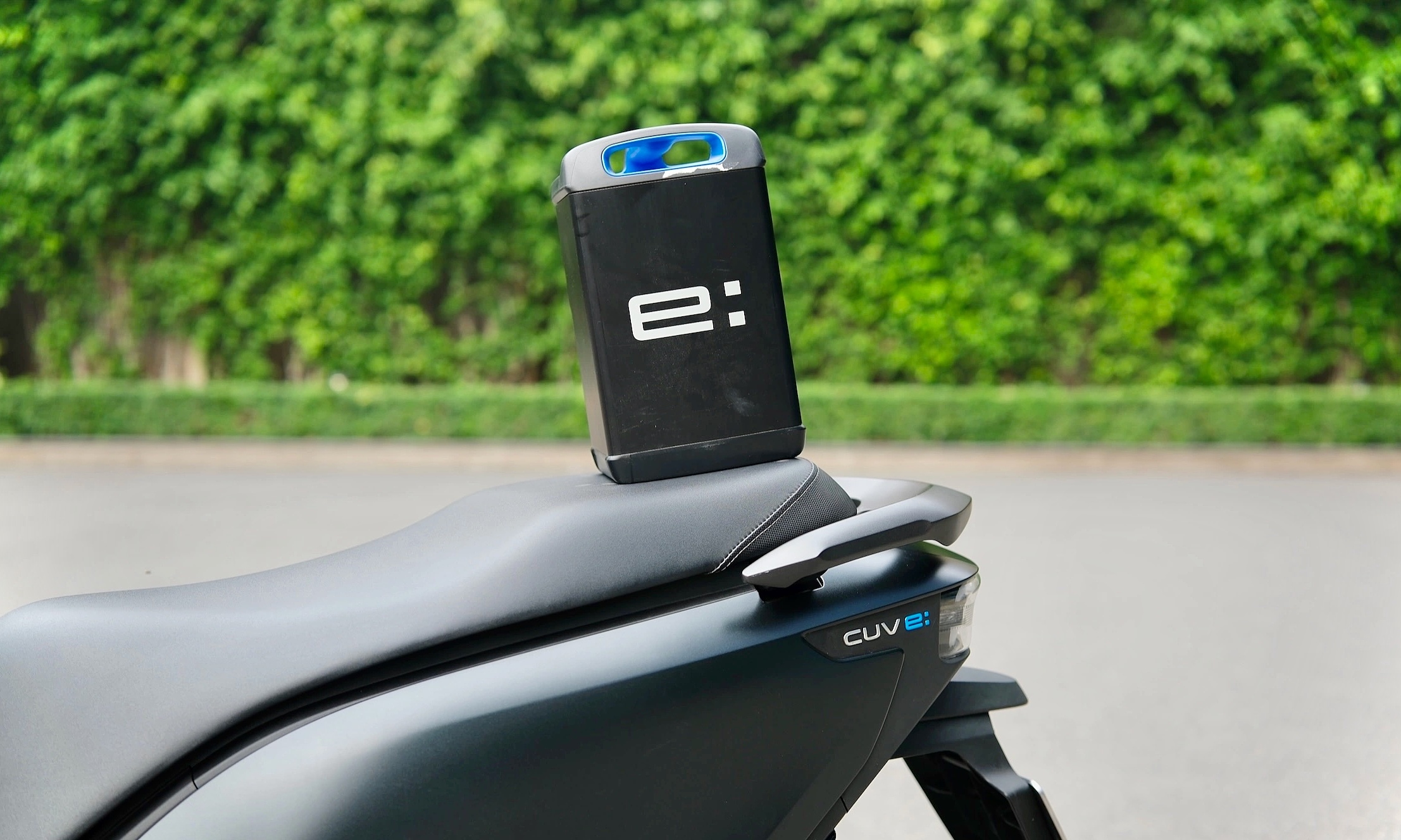 |
The lithium-ion battery pack of a Honda electric motorbike. Photo: Ho Tan |
Signs of battery degradation and replacement costs
Users can identify when an electric motorbike battery needs replacement through clear signs during use. The most common sign is a significant reduction in travel range after each charge compared to the initial performance, even when operating conditions remain unchanged. Additionally, rapid battery drain, unusually prolonged charging times, or weak vehicle performance and poor acceleration also indicate diminished battery capacity.
In some cases, the battery may overheat abnormally, swell, or display error warnings on the dashboard. When battery capacity drops to approximately 70-80% of its original level, users should consider replacement to ensure optimal performance, safety, and a stable riding experience.
Battery replacement costs vary depending on capacity, technology, and manufacturer, typically amounting to about 30-50% of the vehicle's value. For example, the 1.47 kWh lithium-ion battery for the Honda ICON e model costs 10 million VND, while a 1.5 kWh VinFast LFP battery pack for vehicles using battery swap technology is around 5.5 million VND.
The timing of battery replacement depends on many factors. Primarily, user charging habits play a role. Frequent use of fast charging or allowing the battery to fully deplete before recharging can accelerate battery degradation due to high temperatures and current. Conversely, maintaining the battery level between 20-80% helps prolong its lifespan and ensures stable performance.
Environmental temperature also plays an important role. Electric vehicle batteries operating in excessively hot climates will degrade faster. This is a notable factor in tropical countries like Vietnam, where high temperatures can affect performance if the vehicle is not equipped with an effective thermal management system. Furthermore, vehicle operation also significantly impacts battery durability; for instance, sudden acceleration, carrying heavy loads, or frequently allowing the battery to run out can cause it to degrade more quickly.
Battery swap model eliminates battery degradation concerns
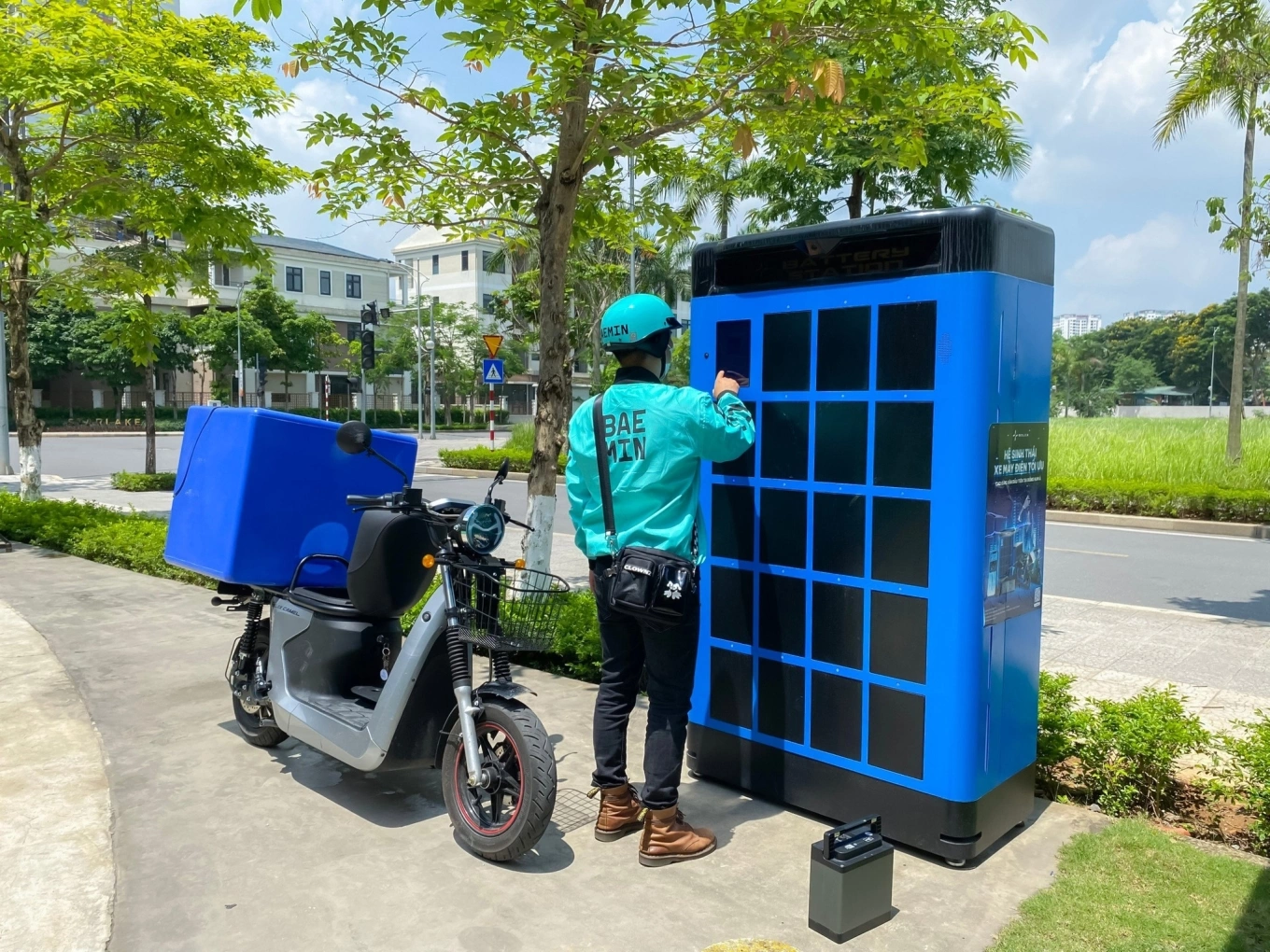 |
A battery swap station for electric motorbikes by Selex in Hanoi. Photo: Selex Motor |
Currently, in Vietnam, the battery swap model is becoming increasingly popular, easing electric motorbike users' concerns about battery lifespan. Many brands, including Honda, Yamaha, Selex Motors, and VinFast, have implemented this ecosystem. With this method, users simply swap batteries at specialized stations instead of traditional charging, eliminating the need to worry about the durability of individual battery packs.
Manufacturers are responsible for inspecting, maintaining, and replacing degraded battery packs that no longer meet technical standards. This makes the user experience more convenient, optimizes costs, and minimizes safety risks.
Pham Hai