Amid fluctuating domestic gasoline prices, Vietnamese consumers are increasingly seeking and purchasing electric motorcycles. VnExpress spoke with Nguyen Ba Canh Son, CEO of Dat Bike Vietnam, to clarify the market shift from traditional gasoline vehicles to two-wheeled electric vehicles.
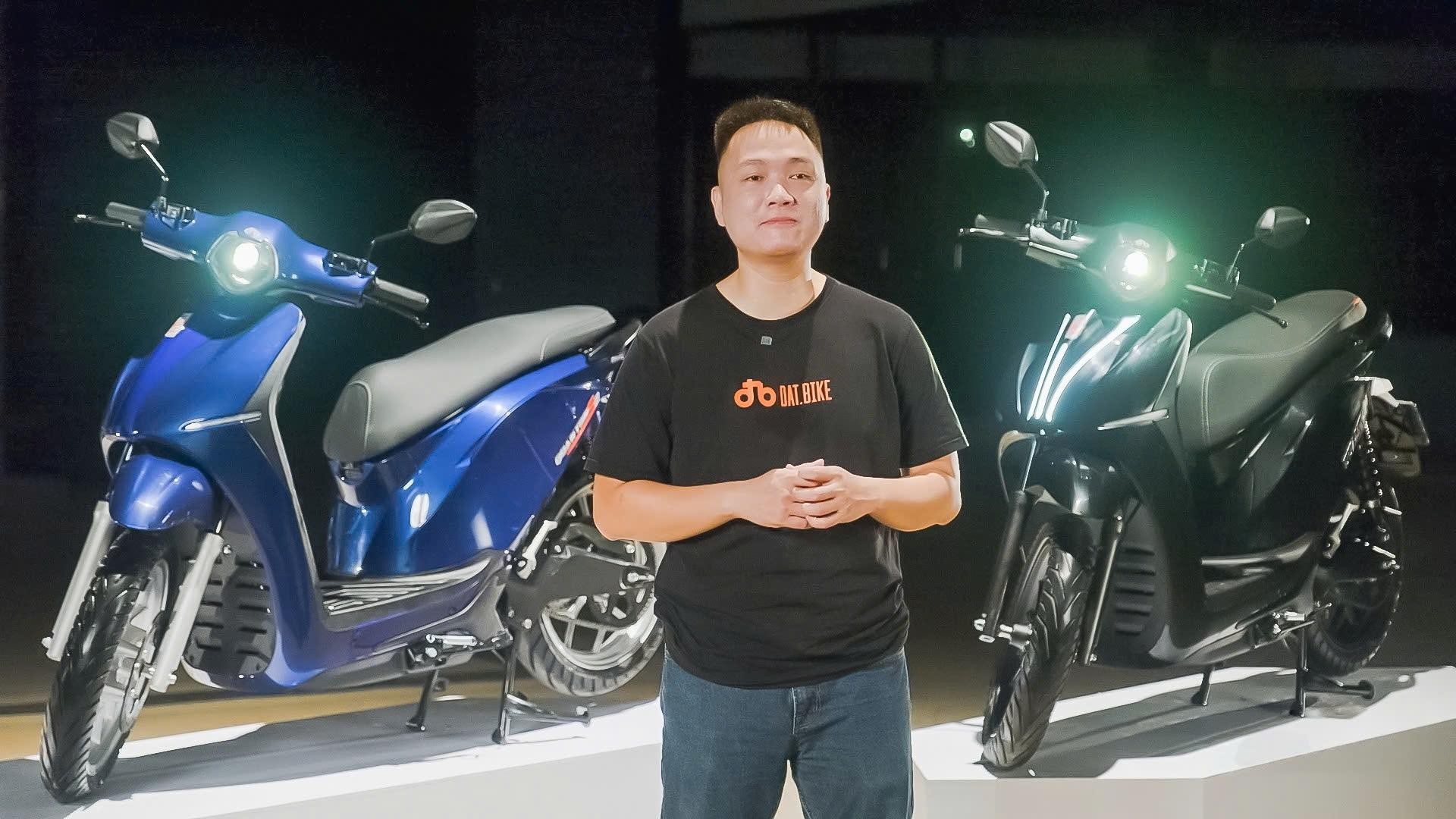 |
Nguyen Ba Canh Son - CEO Dat Bike Vietnam. Photo: Dat Bike |
- How do you assess the shift in Vietnam's two-wheeled vehicle market in recent years? Where is Vietnam in the electrification process of two-wheeled vehicles?
- Vietnam's two-wheeled vehicle market is witnessing a distinct shift, with a growing focus on electrification. This change stems from two key factors:
Electric two-wheeled vehicles have been present in Vietnam for a long time, but only in recent years has the market truly entered a clear transition phase. The reason lies in product quality. Previously, electric motorcycles had low power, often used by students, but now, Vietnam offers many new generation models with good performance and long travel ranges, even surpassing traditional gasoline vehicles. Users have begun to consider electric motorcycles as their primary mode of transport, rather than a backup option.
The second factor is the clear policies and directions from the government to promote vehicle conversion. Examples include: the low-emission zone resolution in Hanoi and the roadmap to restrict gasoline vehicles in major cities, which help reshape long-term consumer behavior.
I believe electric motorcycles are not just a trend, but will become the new standard for Vietnam's two-wheeled vehicle market.
- What factors play a decisive role in promoting or hindering this process?
- First is the government's direction and supportive policies. We have clear environmental commitments, emission control roadmaps, and green transport development orientations, creating a guiding framework for the market. This impacts manufacturers and directly influences long-term consumer decisions.
Second is product quality. The market increasingly offers electric vehicle models with good performance, attractive designs, long travel ranges, and stable user experiences. This builds sufficient trust for users to switch. Financial policies, such as: installment support and consumer loans, also help reduce initial ownership barriers, as electric motorcycles are still relatively expensive compared to the general market.
Finally is the change in user habits and perceptions. When more people use electric motorcycles in their daily lives, it creates a ripple effect in the community.
Conversely, some users still believe electric vehicles are not powerful enough, cannot travel far, or take too long to charge. These preconceptions largely stem from an earlier period when the market primarily featured low-performance Chinese electric vehicles using lead-acid batteries. As new generation models gradually replace that old image, I believe this barrier will be removed over time, accelerating the electrification of two-wheeled vehicles.
- For electric vehicles, infrastructure and energy are significant barriers. How do you view this issue?
- Many people worry that converting to electric vehicles will strain the power grid infrastructure. But if we look at actual data, especially for electric motorcycles, we see an almost opposite picture.
An average electric car consumes about 200 Wh per km of travel, while an electric motorcycle only needs about 20 Wh. This is crucial because many concerns about power infrastructure originate from assumptions about electric cars, which are then directly applied to electric motorcycles. These are two completely different problems.
Many people often worry: if millions of vehicles charge simultaneously in the evening, can the grid handle it? To answer this, we need to revisit the biggest advantage of electric motorcycles - they consume very little energy.
A high-power electric motorcycle charger typically draws about 1,000 W, equivalent to a microwave oven or an electric kettle. The "load" of an electric motorcycle charger is no greater than common household appliances. In contrast, electric cars often require chargers of about 10 kW, which is 10 times more, while charging stations can range from 50 to 250 kW. Therefore, the pressure electric motorcycles exert on the grid is many times smaller than that of electric cars.
With approximately 50 million motorcycles in Vietnam, an average person travels 30 km every day, with a consumption rate of 40 km/liter. Each vehicle needs about 274 liters of gasoline per year. Calculated across the entire market, the total consumption would be approximately 13 billion liters, equivalent to nearly 10 million tons of gasoline (the amount of finished petroleum products Vietnam imports annually).
This figure shows that motorcycle gasoline consumption is substantial, accounting for a significant portion of Vietnam's imported refined petroleum demand. If two-wheeled vehicles are electrified, we can help reduce dependence on imported fuel.
Meanwhile, the additional electricity needed is much lower than imagined. With a consumption rate of about 20 Wh per km, each vehicle only needs about 600 Wh per day. On a scale of 50 million vehicles, the total additional electricity demand would be about 12 billion kWh per year, equivalent to about 4% of the current national electricity output. According to the plan for 2030, if electricity output reaches approximately 600 billion kWh, this ratio would be about 2%.
From a national perspective, we are discussing a worthwhile trade-off: an increase of about 4% in electricity for net-zero gasoline imports.
- What do you expect from the role of policy in promoting the electric vehicle ecosystem, specifically in the next 5 years?
- In any country, policy always plays a pivotal role in shaping and promoting the electric vehicle ecosystem, and Vietnam is no exception. In the next 5 years, I expect the role of policy to go beyond mere guidance, becoming a decisive lever to accelerate the entire market.
We can encourage conversion by expanding direct incentives for users, such as: initial financial support, as well as creating favorable conditions for businesses to invest in production and infrastructure. At the same time, measures to control fossil fuel vehicles can be gradually applied to regulate traffic in major cities, limit circulation areas, or implement emission standards.
More importantly, I expect policy to connect the entire ecosystem, from production, finance, and infrastructure to consumer behavior. When these elements are designed synchronously and consistently, the electric motorcycle market will develop faster and more sustainably.
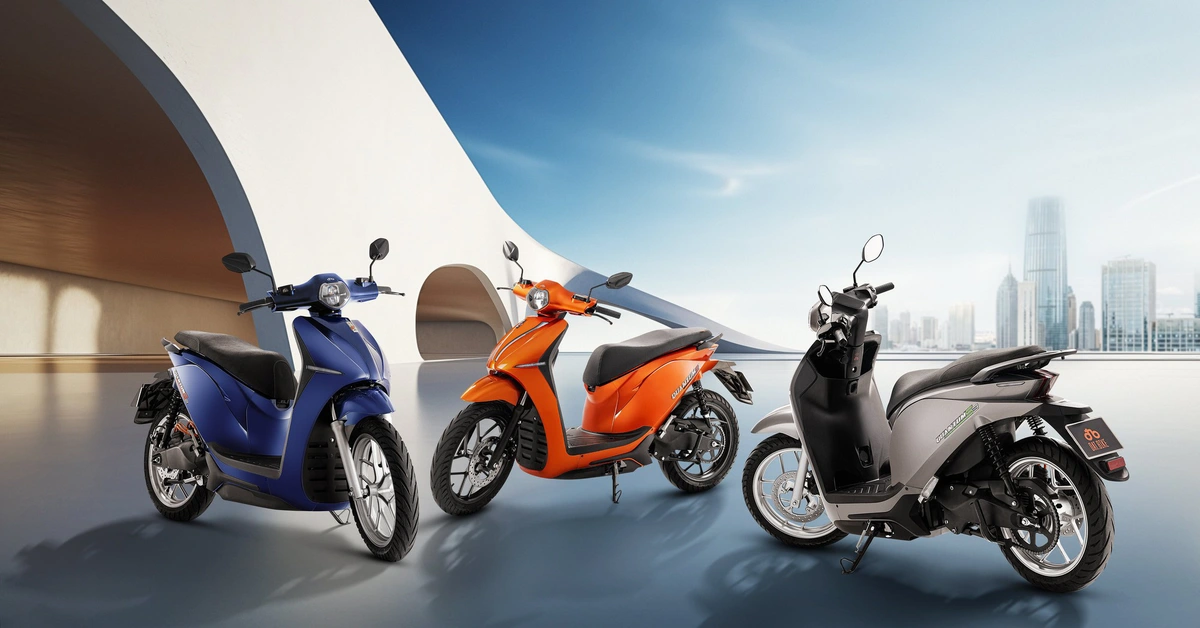 |
Dat Bike Quantum S electric motorcycle. Photo: Dat Bike |
- Where does Dat Bike position itself in the increasingly crowded domestic electric motorcycle market?
- In terms of products, we focus on producing electric motorcycles with optimal performance-to-price ratios, making them easily accessible to users. This is also the biggest challenge for the electric vehicle industry: focusing on solving the problem of electric motorcycles fully replacing gasoline vehicles.
In terms of brand, many countries worldwide have domestic manufacturers leading the industry, but Southeast Asia is dominated by foreign brands. Therefore, we aspire for Dat Bike to expand more strongly into the region, with a vision to convert all two-wheeled vehicles in Southeast Asia into electric motorcycles.
Dat Bike's role is to build a national brand of international stature, uplifting the entire domestic supply chain, from component and mold manufacturers to software developers. All will be upgraded to higher standards. We want to create a sustainable ecosystem where Vietnamese intelligence masters core technology, ensuring we are no longer "tenants in our own home".
In 2026, Dat Bike will continue to expand its store network nationwide, making it easier for people to access and use high-performance electric motorcycles.
Quang Anh