Hyundai, Kia, and Genesis have achieved strong sales in the electric vehicle (EV) market for several years. However, Consumer Reports has consistently ranked models from this group lower than some competitors due to reliability issues, particularly those related to charging and power loss during vehicle operation.
In a recent report, Consumer Reports attributes the primary cause to the integrated charging control unit (ICCU). This component converts high voltage to low voltage and recharges the 12V battery, which powers most of the vehicle's electrical systems, distinct from the main battery used for propulsion. The 12V battery functions similarly to the starter and alternator in gasoline cars, maintaining the operation of the infotainment system, safety features, and many other critical devices. Consequently, even if an electric vehicle can still charge its main battery via a DC fast charger, an ICCU malfunction can cause many auxiliary systems to cease operation or function only briefly.
A Consumer Reports survey, which included over 380,000 vehicle owners, highlighted one of the most concerning issues: vehicles losing power while in motion. Many owners reported their cars stopping abruptly mid-road despite having sufficient main battery charge to continue driving, causing inconvenience and posing potential safety risks.
 |
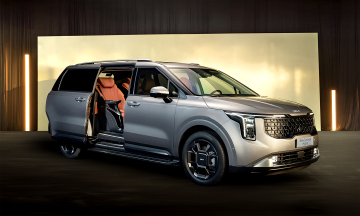
Kia EV9 GT-Line sport version. Photo: Kia
The Korean automotive group has issued two recalls and attempted fixes through software updates and component replacements. However, Consumer Reports states that the incidence of Hyundai and Kia EV owners experiencing ICCU-related faults ranges from 2-10%, significantly higher than the under 1% seen in comparable models from other manufacturers. Many owners also noted that the issue persists even after repairs conducted over the past few years.
According to InsideEVs, the technical reason lies in transistors within the ICCU, which can fail due to over-voltage during the beginning and end of the 12V battery charging cycle. The current repair procedure involves checking the control system for error codes. If an error is detected, technicians will replace the ICCU and associated fuse, along with a complimentary specialized coolant change. If no error codes are found, the vehicle will receive a software control update.
Steven Elek, Consumer Reports' lead automotive data analyst, commented that while it is not uncommon for a single component to cause multiple issues, the problem's persistence over several years is notable. He added that the Hyundai Ioniq 5, despite achieving strong test results in some categories, saw its overall reliability score significantly lowered by the ICCU fault, preventing it from meeting the criteria for Consumer Reports' recommended vehicle list.
Hyundai announced it is coordinating with suppliers to expedite component delivery to dealerships and will partially reimburse customers for out-of-pocket expenses incurred for repairs related to the issue. Kia stated that necessary components are available for repairs, while Consumer Reports did not mention an official response from Genesis regarding this problem.
Ho Tan (via The Drive)