Previously, vehicles received minor changes, typically through cosmetic upgrades, sometimes years after their introduction. Over-the-air (OTA) technology has disrupted this model, enabling continuous improvement cycles to keep vehicles updated throughout their lifespan, similar to smartphones.
BYD spearheads this shift with a proactive software update strategy. According to Nikkei Asia, the company released approximately 200 software updates for its Ocean and Dynasty brands in 2025.
In mid-February, BYD rolled out the fourth OTA update for its Han L sedan, a flagship model of the Dynasty family, originally launched in 4/2025. This upgrade introduced an improved, fully artificial intelligence (AI)-controlled driving assistance system, enhancing perception and decision-making in complex driving scenarios.
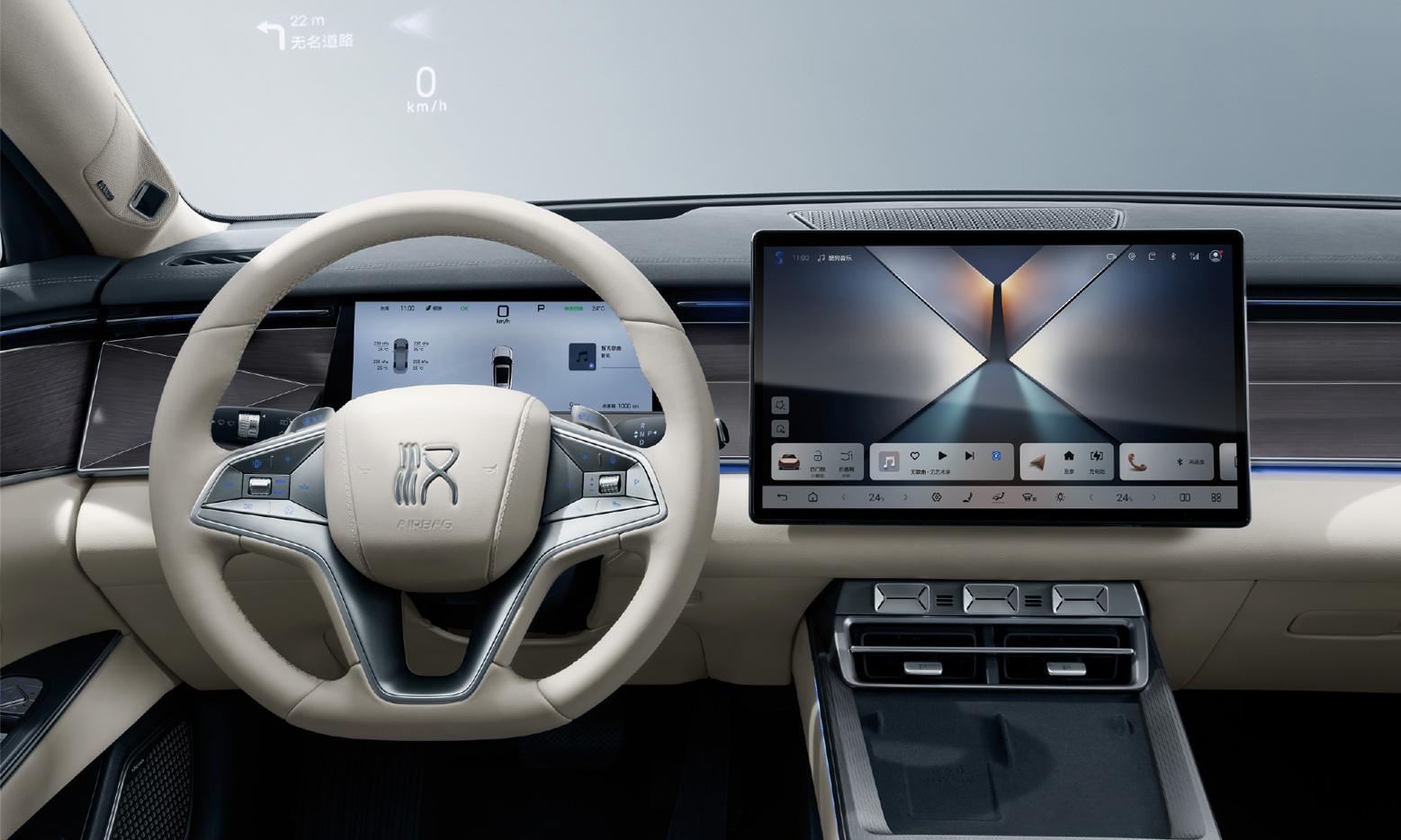 |
The latest software update released by BYD for the Han L model. Photo: BYD |
These new features take approximately two hours to install, allowing users to access them without visiting a dealership.
Other brands, such as Aito (a product of Huawei and Seres) and startups like Leapmotor, are also becoming more active in providing OTA software updates. In contrast, Tesla had only 16 OTA updates in 2025. Toyota and Volkswagen fared no better, with 8 and 5 updates respectively.
Nissan, with its new N7 electric vehicle, released its first update just two months after its launch, unlocking new applications and more advanced voice recognition capabilities.
However, the N7 is not an entirely new Nissan product, but a collaborative project with Dongfeng, built on its Chinese partner's eπ 007 platform.
BYD's rapid development can be attributed to its vertical integration model, where it designs its own semiconductors, operating systems, and hardware. This comprehensive control enables the company to update products with high speed and efficiency without altering the user experience.
However, OTA updates incur economic costs, extending beyond the development and deployment of each update. While prolonging a vehicle's technological applicability can increase its resale value and minimize the need for complete model redesigns, OTA technology itself proves challenging to commercialize.
In China, updates are typically free, which eliminates opportunities for companies to increase profits. Instead, the industry is exploring subscription-based solutions, similar to Tesla's model. XPeng is considering marketing more advanced autonomous driving levels, particularly level 4 technology, as an additional service. This approach would mirror the strategy Tesla has employed with its full self-driving (FSD) subscription service in North America.
My Anh