Despite shipping disruptions from the Middle East crisis, China's auto exports accelerated in March, continuing to be a key growth driver for the industry.
According to data from the China Passenger Car Association (CPCA), auto exports rose 73.7% year-on-year, reaching nearly 700,000 vehicles last month. This increase was higher than the 54.1% recorded in the first two months. "Automobile exports have entered a phase of ultra-high growth, exceeding our expectations", said Cui Dongshu, secretary general of the CPCA.
Meanwhile, domestic sales fell 15.2% year-on-year to 1.67 million vehicles in March, marking the sixth consecutive month of decline. Rising fuel prices reduced demand for internal combustion engine models, while electric vehicle sales continued to be impacted by incentive cuts amid a slow economic recovery.
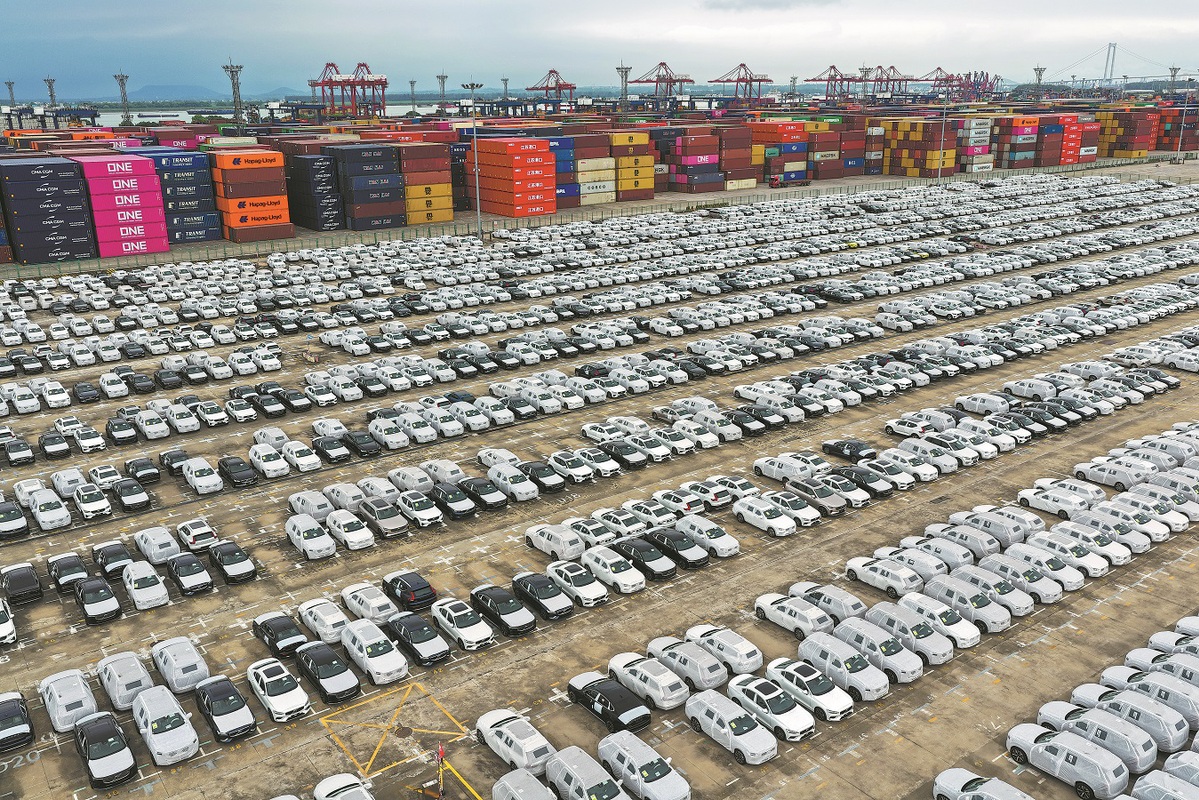 |
Cars awaiting loading for export at Longtan Port, Nanjing city, Jiangsu province, 9/2025. *Xinhua*.
Internal combustion engine vehicle sales fell 15.7%, a sharper decline than the 13.4% recorded in the January-February period. However, China capped domestic fuel price increases to mitigate the impact of escalating oil prices due to the Middle East conflict. Dealers continued to face pressure from high inventory levels. The unsold vehicle tracking index rose last month, as consumers showed less interest in new electric vehicles after incentive cuts, including the end of purchase tax exemptions.
Facing fierce competition in the domestic market, where electric vehicle and plug-in hybrid (PHEV) sales fell 14.4% year-on-year, EV maker BYD recorded its 7th consecutive month of declining sales in March. However, sales in overseas markets like Europe still saw strong growth, driven by high fuel prices boosting demand for electric vehicles. BYD management stated they are optimistic that overseas sales will exceed 1.5 million vehicles this year.
Pham Hai (according to Reuters)