Xpeng has engaged with several potential partners interested in its technology, one source told Reuters. The Chinese company plans to offer its electrical-electronic architecture, cockpit systems, Turing AI chips, and advanced driver assistance software to these partners. This list could include international software developers and auto component suppliers.
A second source indicated that the electric vehicle manufacturer also intends to broaden its technology licensing and customization segment into physical AI applications, such as robotaxis and intelligent robots. This new business area will also encompass Xpeng's own robotaxi operations.
High-margin service segment
This expansion comes as Chinese electric vehicle manufacturers reshape automotive design and technology globally.
Approximately 6 months ago, Xpeng established a strategic commercialization division to explore new technology partnerships, leveraging experience from its alliance with Volkswagen.
The collaboration between Xpeng and Volkswagen began in July 2023, when the German group invested approximately USD 700 million to acquire a 4.99% stake in the Chinese automaker. This partnership includes developing electric vehicle chassis, software, and electronic architecture.
The first joint vehicle, the ID.UNYX 08 electric SUV, integrates Xpeng's cockpit system, intelligent driving technology, and Turing AI chips. This vehicle entered mass production this past March, just 24 months after the two parties began their cooperation.
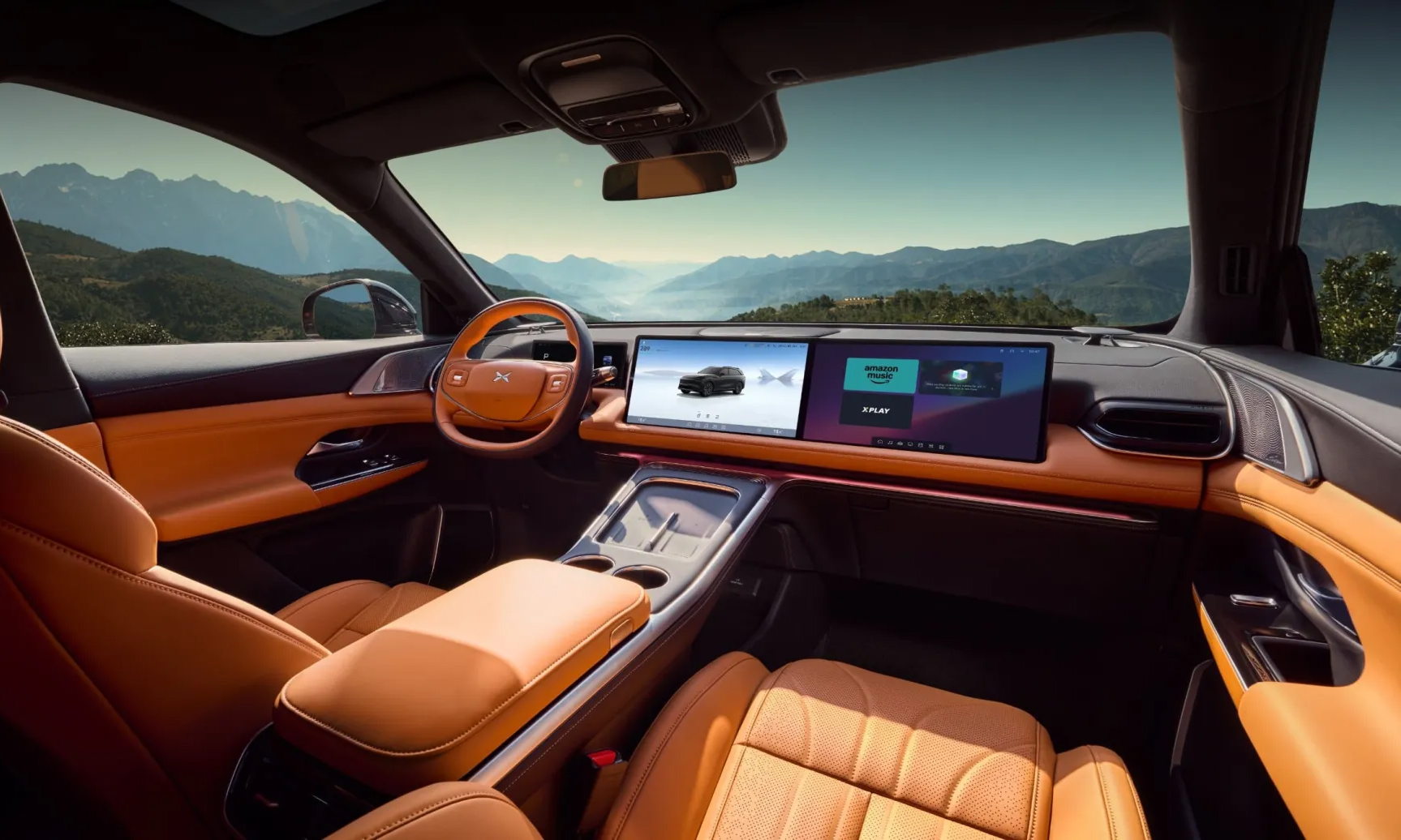 |
Interior of the new Xpeng G9L, launched in mid-September. *Photo: Xpeng*
The partnership has become a significant new revenue source for Xpeng, particularly in the technology services segment, despite the company reporting losses in the two initial quarters of the current fiscal year.
In Q2, vehicle sales remained largely unchanged, and profit margins narrowed from 14.3% to 12.1%. However, revenue from services and other operations nearly doubled, boosting its profit margin from 53.6% to 75.1% compared to the same period in 2025.
During an investor meeting in late August, an Xpeng representative stated that this growth was primarily driven by research and development services provided to Volkswagen, along with increased component and parts revenue.
The high-margin service segment is expected to play an increasingly important role as Xpeng expands into physical AI. CEO He Xiaopeng once commented that humanoid robots could yield significantly higher profit margins than automotive manufacturing.
Xpeng's Iron multi-functional humanoid robot released its first products earlier this month, marking a step towards mass production by year-end. The company anticipates commercial deliveries in China and international markets from 2027.
Xpeng is also accelerating its global expansion, with cumulative overseas sales surpassing 100,000 vehicles since its entry into Norway in 2020.
The G9L SUV, recently launched in Beijing on 17/9, is slated for its international debut at the Paris Motor Show next month. This will be the fourth model assembled at Magna's plant in Austria, following the G6, G9, and P7+ lines.
My Anh