Toyota, known for its strong hybrid technology and measured approach to battery electric vehicles (BEVs), is now reportedly preparing to launch its first range-extended electric vehicles (EREVs). This move comes as the world's best-selling automaker adapts to a dynamic automotive market.
According to a Nikkei Asia report, Toyota anticipates commencing EREV production in April 2027. These unnamed models, however, are not intended for global sale, as they are specifically developed to meet the rising demand for range-extended electric vehicles in China.
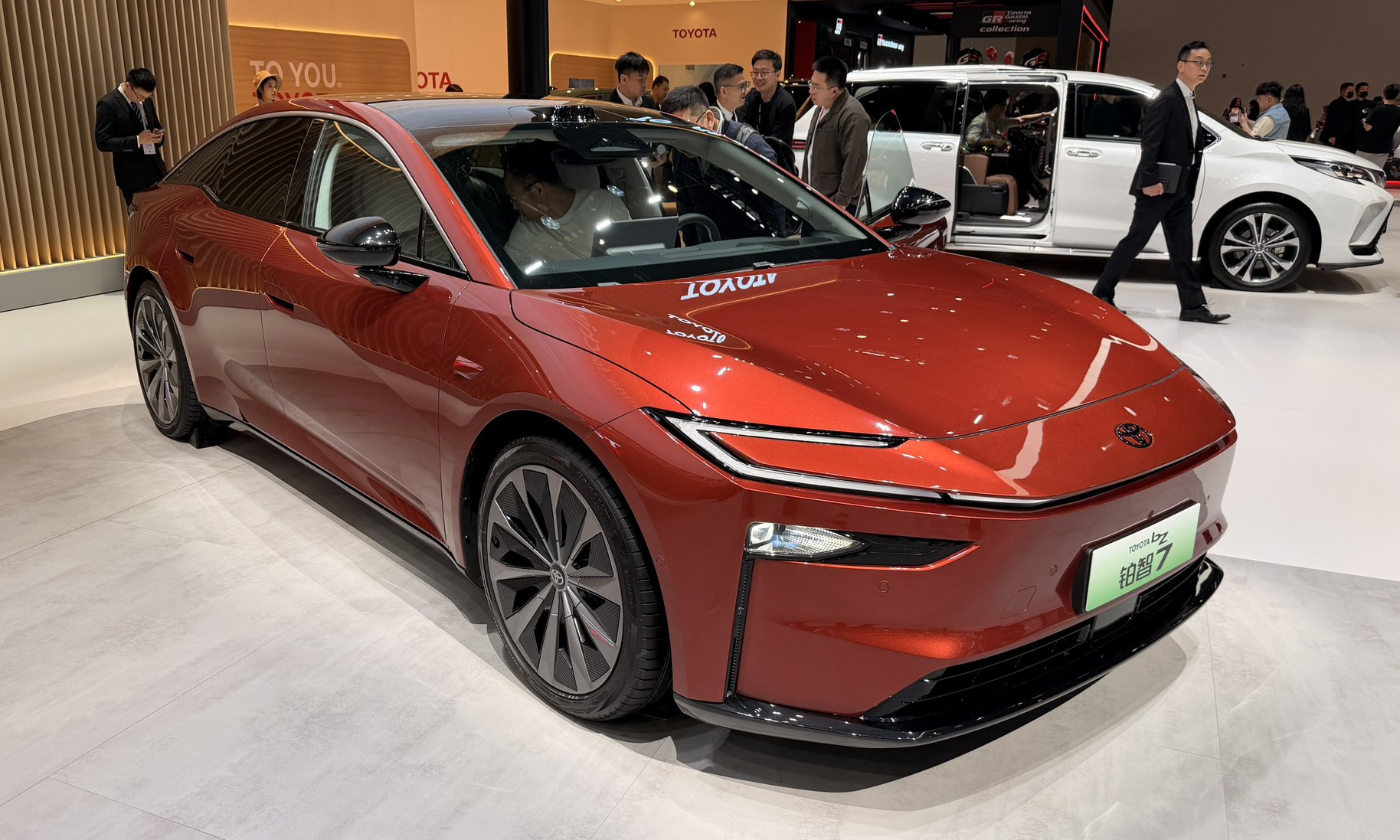 |
The bZ7, one of Toyota's current electric vehicle models sold in China. Photo: Sebastian Aaltonen |
In China, EREVs are promoted as a practical alternative to pure battery electric vehicles, helping to avoid intense price wars. With a fuel tank that often enables an operating range exceeding 1,000 km, these vehicles also reduce reliance on the charging station network.
Toyota aims to produce approximately 200,000 EREVs in 2027, with plans to increase annual production to 400,000 vehicles by 2028. For comparison, in 2025, Toyota sold 200,000 electric vehicles, 180,000 plug-in hybrid electric vehicles (PHEVs), and 4.433 million hybrid electric vehicles (HEVs) globally.
It remains uncertain whether Toyota will introduce EREV variants for its existing models. The company's electric vehicle lineup in China currently includes the bZ3 sedan, bZ7, bZ3X sport utility vehicle, bZ4X crossover, and bZ5 fastback. The Toyota bZ3X is considered a strong candidate for this technology, given that its counterpart, the GAC Aion V, already features an EREV version with a 1,5 engine.
The question of whether Toyota will introduce this range-extending technology to electric vehicles in other markets persists. However, this does not appear to be the automaker's immediate priority, as its traditional hybrid models continue to sell well globally.
My Anh