


Days after the new year 2026 began, a foreign woman married to a Chinese man posted a video on her social media account, recounting a new experience after the holidays.
The woman shared that she and her husband were invited to a friend's house for a new year party. Initially, her husband planned not to drink, but their plans changed. Instead of risking it, they hired a designated driver to take them home.
Within minutes, a driver arrived on a small, foldable electric bicycle, placed it in the car's trunk, and safely drove them home. After parking the car, the driver retrieved the bicycle and departed.
This service is often included in insurance packages, and if not covered by insurance, the cost is only slightly higher than a taxi fare. Many such drivers often wait near clubs and nightlife venues, making the service easily accessible.
China's criminalization of drunk driving in 2011 led to a boom in this designated driver service, making it a common practice. Stricter penalties, including driver's license revocation, encouraged people to hire drivers to avoid legal trouble. Companies reported an increase in orders, and drivers became an integral part of nightlife, significantly impacting traffic safety and creating a new consumer habit.
According to CNR, drivers who serve people who have consumed alcohol are part of a private driver service market that continues to expand. By the end of 2024, the market size was estimated to exceed 210 billion yuan, with millions of users and hundreds of thousands of drivers. New companies are constantly registering, indicating continuous growth but also reflecting intense competition and market fragmentation.
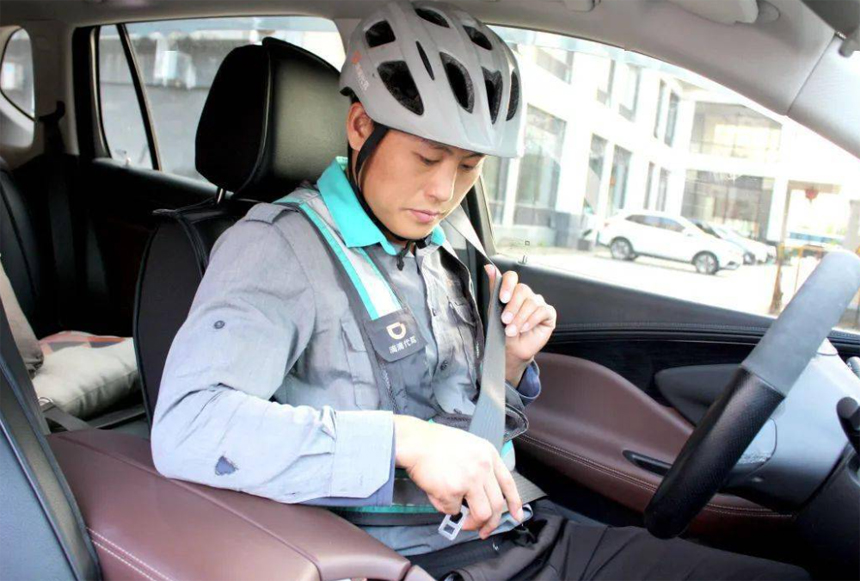 |
A designated driver takes the wheel of a client's car, still wearing a helmet after arriving on an electric bicycle. Photo: Didi |
In China, several major platforms and services offer private drivers, such as Didi and eDaijia. Additionally, there are unregistered or independent drivers (sometimes called "black" drivers). They often offer lower prices but come with higher risks regarding safety and reliability.
Below the video, the foreign woman commented, "You won't understand convenience until you live in China".
In response, one person said, "I am sure this service prevents a lot of drunk driving accidents! It should be implemented worldwide".
Another person mentioned, "In Canada, we have a service called Keys Please with two drivers: one drives your car and the other follows to take the first driver back".
Similar services exist in many parts of the world, including Vietnam, as governments globally enforce strict laws against driving under the influence of alcohol. In the US, there is the Dryver service, formerly known as BeMyDD.
In South Korea, this service is called Daeri Unjeon and is highly standardized nationwide, with drivers arriving by motorbike or public transport to take clients home.
In Vietnam, since Decree 100 took effect in 2019, the demand for hiring drivers to take car owners home after drinking alcohol began to emerge. Some companies have launched premium designated driver services, primarily in the two major cities of Hanoi and Ho Chi Minh City. These drivers can operate various vehicles, from regular to luxury and modern cars, having undergone professional training courses.
My Anh




