Electric vehicle (EV) prices currently average around USD 37,000, a 9% decrease compared to 2020. This is based on data from automotive analytics firm Mobility Global, calculated by the average weighted list price by sales volume and excluding subsidies. Conversely, hybrid vehicle prices increased by 16% over the same period, reaching USD 39,000.
High prices once hindered widespread electric vehicle adoption. In countries like China and Norway, where electric vehicle prices are comparable to or cheaper than gasoline cars, the transition rate has been significantly faster. This trend is expected to repeat in emerging markets soon.
The cost advantage of electric vehicles stems from the sharp decline in lithium-ion battery prices, a component accounting for 30%-40% of a vehicle's total cost. This reduction is due to overcapacity in China, which holds approximately 80% of the global battery market share. BloombergNEF estimates that automotive battery prices decreased by 37% between 2020 and 2025.
Automakers are increasingly favoring lithium iron phosphate (LFP) batteries, which do not use expensive cobalt. Although once considered to have lower energy density than traditional batteries, LFP battery performance has significantly improved. Renault and Volkswagen both announced in 2025 that they would adopt this battery type.
The intensified export efforts by Chinese automakers, driven by fierce domestic competition, also contribute to lower overall prices. Brands like BYD have optimized costs through closed supply chains, producing everything from batteries to chassis in-house.
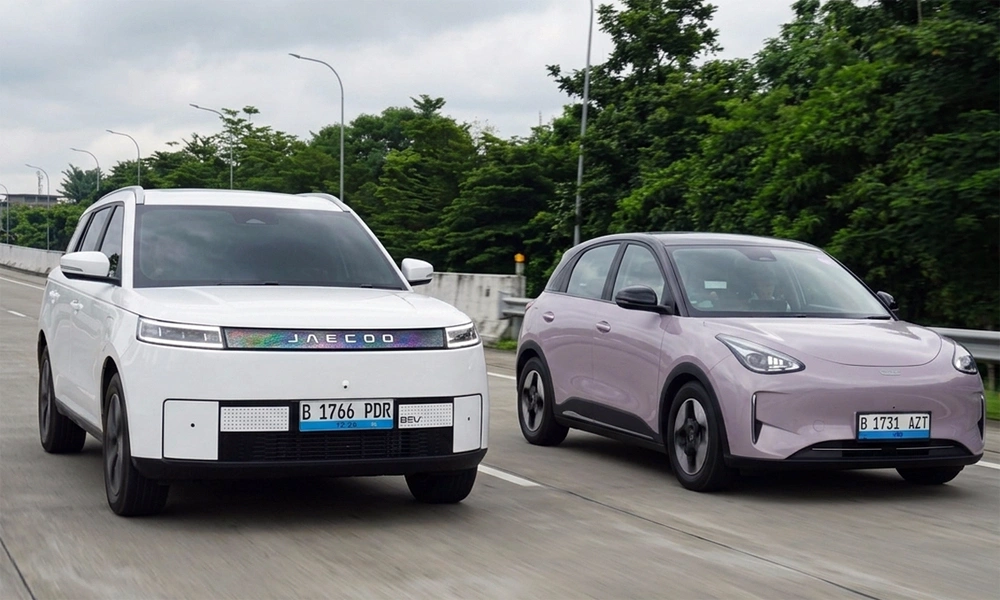 |
Jaecoo J5 EV and Geely EX2 are among many Chinese electric vehicle models currently sold in various markets worldwide. Photo: Kompas |
Jaecoo J5 EV and Geely EX2 are among many Chinese electric vehicle models currently sold in various markets worldwide. Photo: Kompas
The China Association of Automobile Manufacturers (CAAM) reported that the country exported 1,64 million electric vehicles in 2025, a significant increase from under 100,000 units in 2020. Consumers in key export markets like Thailand and Mexico particularly favor Chinese electric vehicles due to their reasonable prices. In Thailand, Chinese brands now account for nearly 30% of new car sales.
Regionally, electric vehicle prices in Southeast Asia and South America are currently cheaper than hybrids. To boost this industry, Thailand is actively attracting electric vehicle manufacturers, with BYD and Great Wall Motor already establishing factories there.
"Chinese car companies initially gained market share with high-volume small electric vehicle models, but they have now expanded their portfolios to larger and more premium models to achieve better profit margins," commented Yoshiaki Kawano, Director at Mobility Global.
This new situation forces Japanese automakers, who have focused on hybrids due to their initial low cost and extended range, to rethink their strategies. Toyota is adopting a multi-platform approach, offering both electric and hybrid vehicles depending on market demand. Nissan, meanwhile, is learning from its Chinese competitors by producing electric vehicles directly in China for export to other countries.
Electric vehicle sales have surged in recent months, partly due to the Middle East conflict driving up gasoline prices. The International Energy Agency (IEA) forecasts that electric vehicles and plug-in hybrids will account for approximately 30% of total global car sales in 2026.
My Anh (according to Nikkei Asia)