Mercedes has always proudly highlighted its origins as the inventor of the automobile in Germany. However, its home country is becoming an increasingly expensive place for the automaker to produce vehicles. The company is rapidly expanding its operations in Hungary, where production costs are up to 70% lower, while simultaneously asking German workers to work more hours without a pay raise.
Mercedes' Kecskemet plant in Hungary has doubled its annual capacity to 400,000 vehicles. This move makes it the company's largest production facility in Europe and its second largest globally, surpassed only by Beijing, China. Having assembled its first car 14 years ago, the plant currently employs around 5,000 staff and plans to recruit an additional 3,000 people. Conversely, Mercedes is reducing capacity and jobs in Germany.
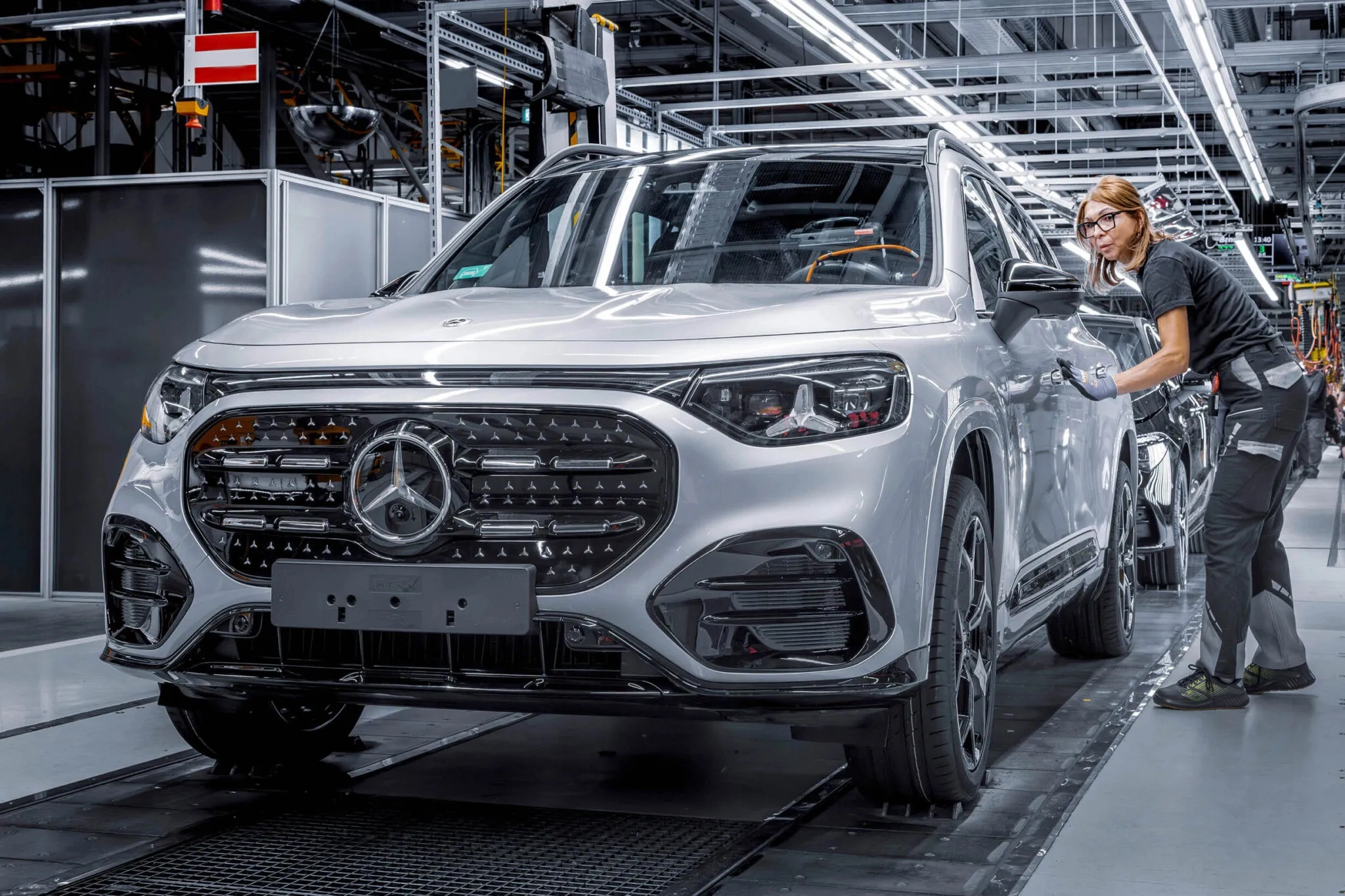 |
The production line at the Mercedes factory in Kecskemet, Hungary. Photo: Mercedes |
The production line at the Mercedes factory in Kecskemet, Hungary. Photo: Mercedes
Hungary's appeal is clear. Handelsblatt newspaper cited Mercedes' calculations, indicating that production costs there are up to 70% cheaper than in Germany. Data from Eurostat shows that industrial labor costs in Germany reach 49,5 euros (56,6 US dollars) per hour, compared to only 15,6 euros (17,8 US dollars) in Hungary. With fewer public holidays and contracts stipulating a 40-hour work week, Hungarian employees also work more hours each year. In contrast, German automotive workers have maintained a 35-hour week since the mid-1990s.
The Kecskemet facility no longer handles only entry-level models as it did initially. The C-class is now assembled there alongside the GLB, and the upcoming compact G-class will be exclusively produced in Hungary. The GLC, Mercedes' best-selling model, is also planned for production at this plant.
Meanwhile, the mood in Germany is somber. Approximately 18,000 workers recently protested after Mercedes tightened its cost-cutting plans. Management aims to lower labor costs, review special bonuses, and demand more dedication from employees without changing compensation.
Mercedes is not alone in this trend. Volkswagen is also gradually reducing its reliance on domestic production lines. Passat production has moved to Slovakia, while the Golf assembly line for the European market will shift to Mexico by 2027.
However, Porsche is pursuing a different path. Despite facing profit challenges, declining sales, and reduced influence in China, the company is considering relocating Cayenne production from Slovakia back to Leipzig, Germany. The Leipzig plant currently assembles the smaller Macan model. New Production Director Michael Leiters believes that manufacturing in Germany remains a core expectation for Porsche customers.
"We must redefine and prove the value of 'Made in Germany'. Ultimately, that will determine our success," Leiters stated in June.
This plan, however, comes with a significant condition. Bringing Cayenne production back to Germany depends on whether German workers accept pay cuts. Additionally, Porsche may need to cut thousands of jobs between now and 2035.
For its part, Mercedes argues that expanding in Hungary will strengthen the group's overall position. Production Director Michael Schiebe affirmed that this move "helps secure jobs in Germany," emphasizing that "this is not a competition between Hungary and Germany."
Nevertheless, as German automakers face pressure from falling profits and fierce competition from Chinese rivals, a significant question becomes increasingly unavoidable: what is the true value of the "Made in Germany" label, and who is willing to pay for that value?
My Anh