 |
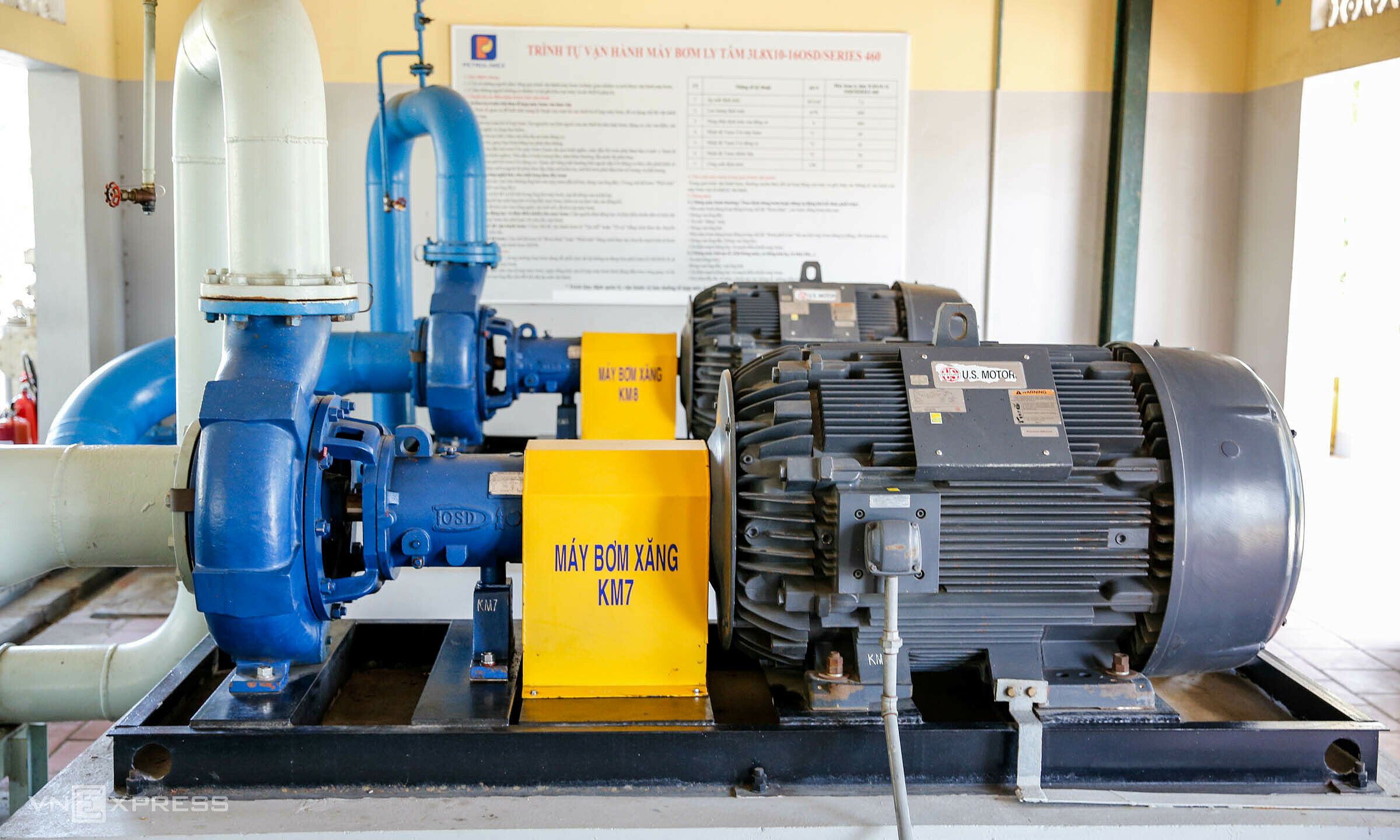
The pumping system delivers RON 95 III base gasoline to the blending system. |
E10 is a mixture comprising 90% RON 95-III mineral gasoline and 10% fuel ethanol (E100). At Petrolimex, the production process focuses primarily on blending and quality control before market distribution.
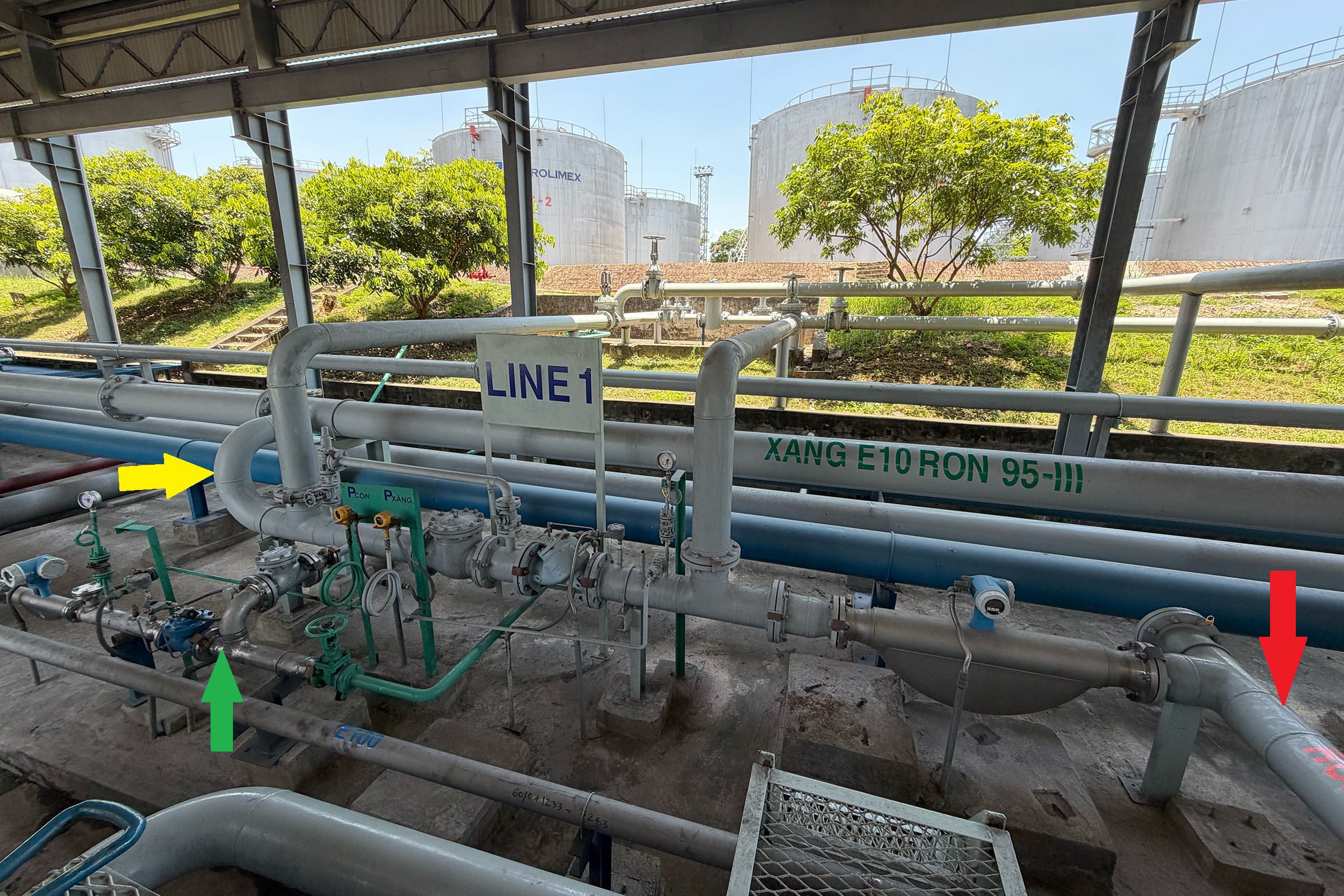
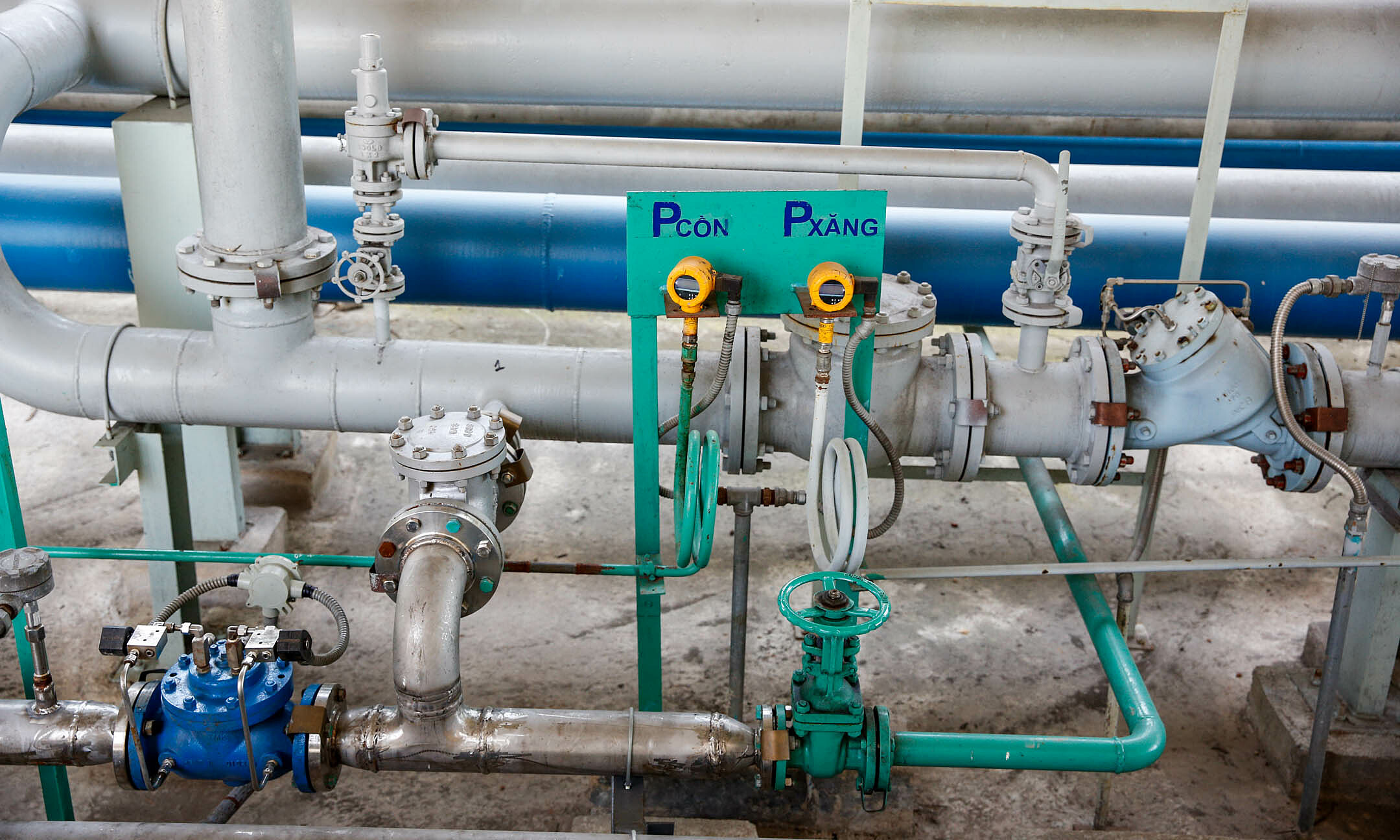
The accompanying image shows the basic E10 biofuel blending system at Xi nghiep Kho van Xang dau K130, in Viet Hung ward, Quang Ninh province. Here, fuel ethanol (E100) is mixed with RON 95-III mineral gasoline at a standard ratio. The red arrow indicates the inlet for mineral gasoline, the blue arrow points to the ethanol inlet, and the yellow arrow shows the outlet for the finished E10 product.
 |
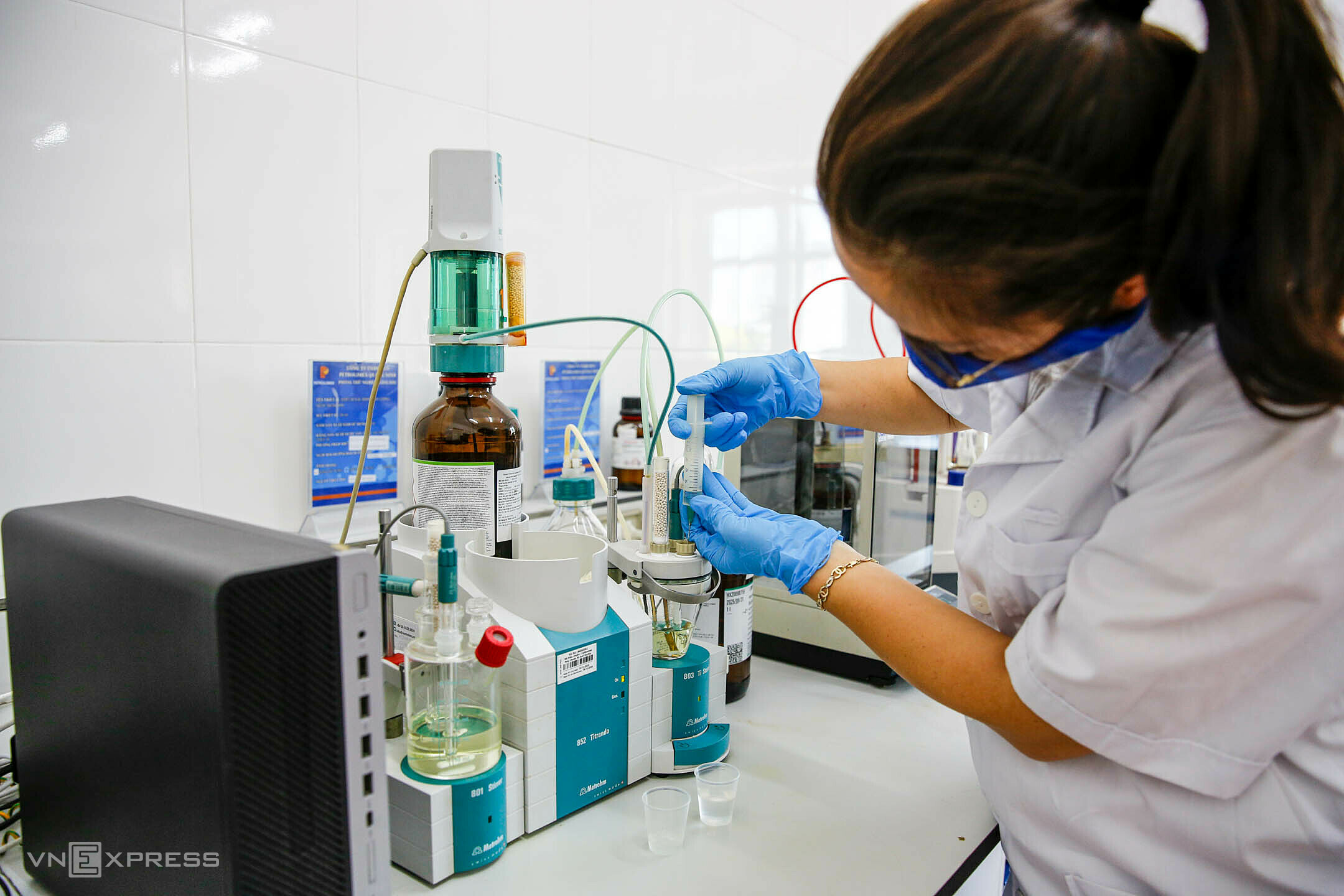
A female engineer checks the water content of E10 gasoline after blending. This is a critical step because ethanol is highly hygroscopic, making phase separation likely if water is present. |
{"caption_all":"Since E10 gasoline blending began, all rubber gaskets have been replaced and cleaned, and the pipeline system upgraded. The base material storage tanks have also been flushed.","caption_items":["The automated blending system controls the ratio via central software, ensuring fuel ethanol (E100) constitutes exactly 10% of the mixture by volume. Specialized blending equipment thoroughly combines E100 alcohol and RON 95-III base gasoline, creating a homogenous E10 biofuel mixture.nThe entire process is monitored from a central control room. Petrolimex currently operates two blending systems, Line 1 and Line 2, which run alternately to ensure continuous production and capacity.","The Line 2 blending system at Xi nghiep Kho van Xang dau K130, where E10 biofuel is blended before being transferred to storage tanks and distributed to the market.nPetrolimex has upgraded its pipeline systems, storage tanks, and pump dispensers to be compatible with ethanol's chemical properties. Ethanol is a fuel type that can be mildly corrosive to some older rubber and plastic materials."]}"}
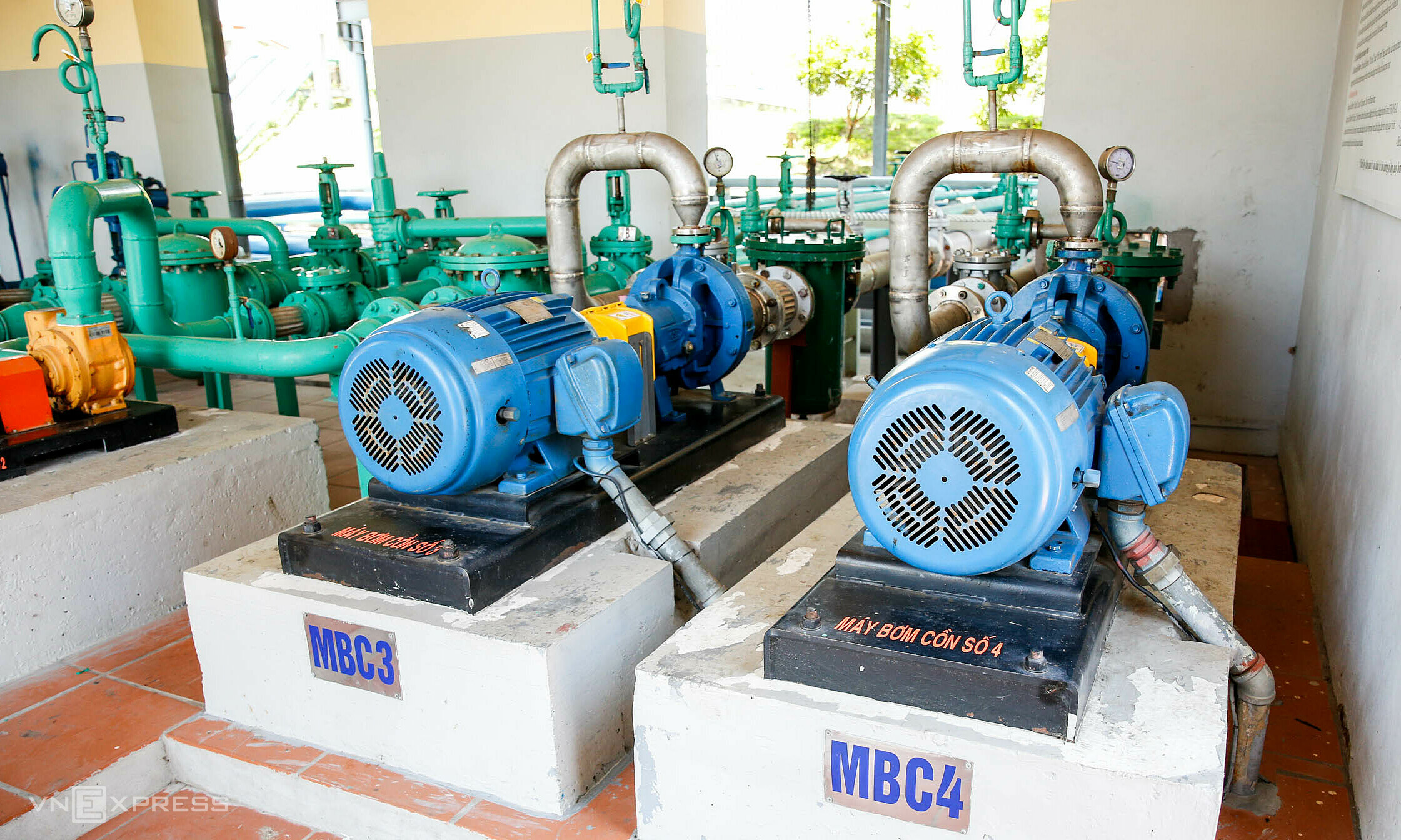 |
A separate pumping system delivers fuel ethanol (E100) to the blending area, where it mixes with RON 95-III base gasoline. This area is isolated from the base gasoline pumping system to ensure operational safety. The entire process is automatically controlled via a central control system.
Incoming fuel ethanol (E100) must meet strict technical standards, possessing high purity and very low water content before blending.
 |
{"caption_all":"After blending, laboratory engineers collect samples of the finished E10 gasoline and check its ethanol content according to standards.nnThe image shows equipment for checking the ethanol percentage of E10 gasoline.","caption_items":["",""]}"}
 |
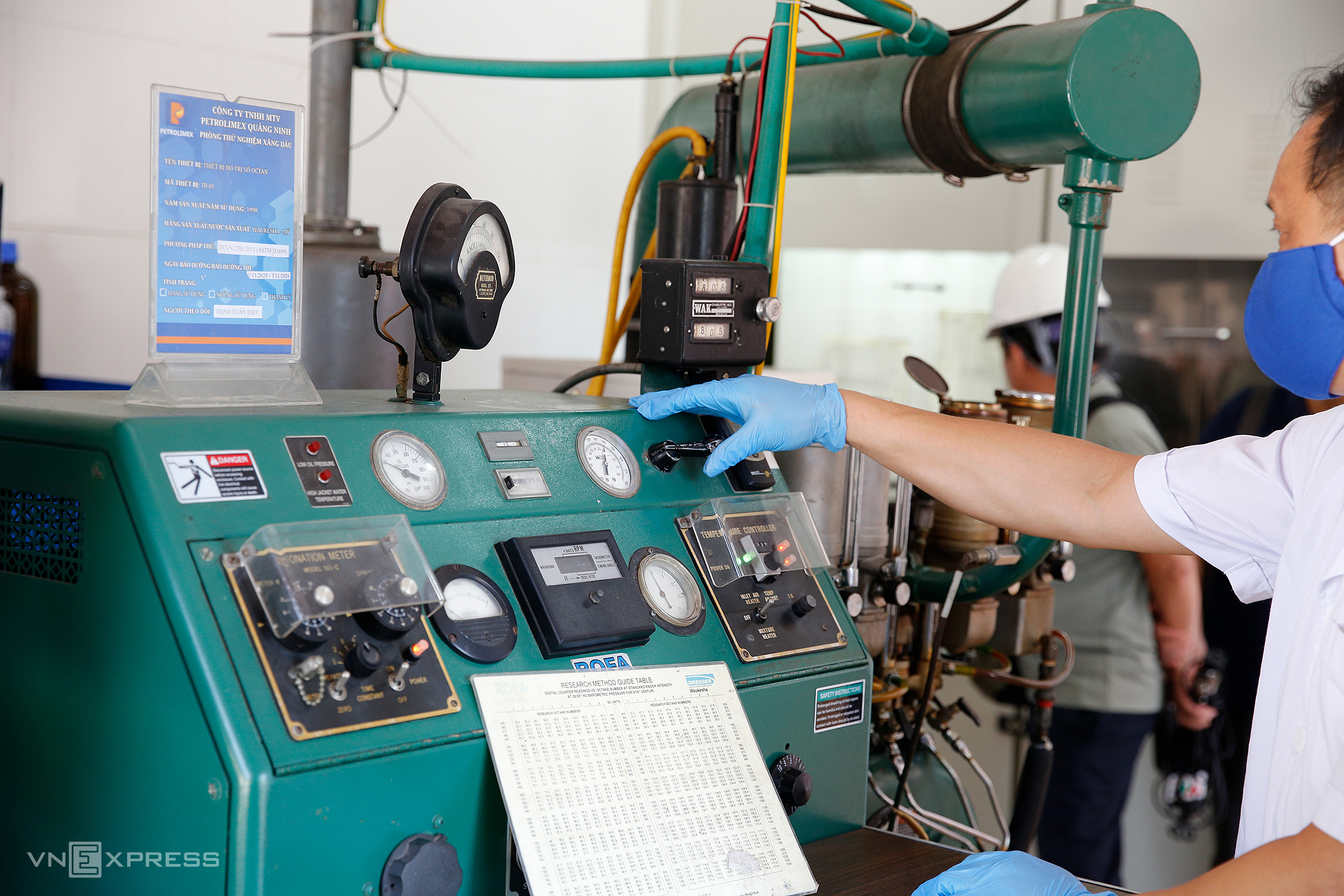
A Petrolimex technician checks the octane rating of E10 gasoline using specialized measuring equipment.
 |
 |
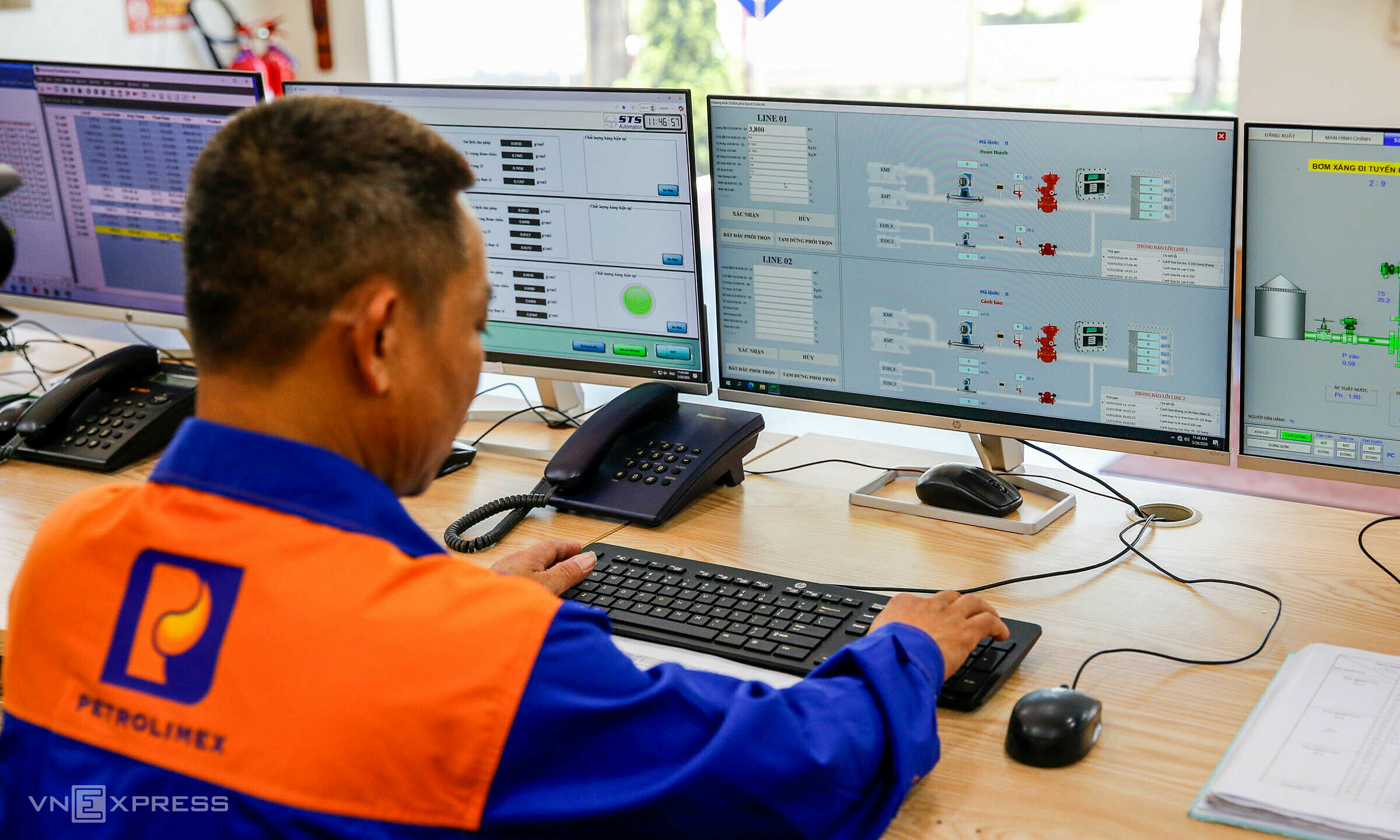
An engineer in the central control room operates and monitors the blending system via a screen.
Petrolimex operates 8 blending centers nationwide. At the Quang Ninh facility, after blending, the finished E10 is transported to consumption depots across the country via pipelines, waterways, or roads, depending on the distance.
E10 gasoline will be officially implemented nationwide from 1/6.
Luong Dung