


For decades, major cities worldwide have recognized bicycles as a vital component of urban transportation systems. From Europe to North America, developing dedicated bicycle lanes aims not only to encourage environmentally friendly transport but also to reduce accidents and enhance urban traffic quality.
To achieve this, these nations and cities have established specific design principles for bicycle lanes, encompassing separation from motor vehicles, selection of road surface materials, and management of intersections.
Designing separation from motor vehicle lanes
In countries with developed cycling cultures, such as the Netherlands, and cities like Copenhagen, Denmark, bicycle lanes are consistently designed for complete separation from motor vehicle traffic, going beyond mere painted lines on the road. In the Netherlands, the extensive bicycle network spans hundreds of kilometers, featuring dividers like sidewalks, green spaces, or barriers between bicycle and oto lanes, which helps mitigate conflicts between these different modes of transport.
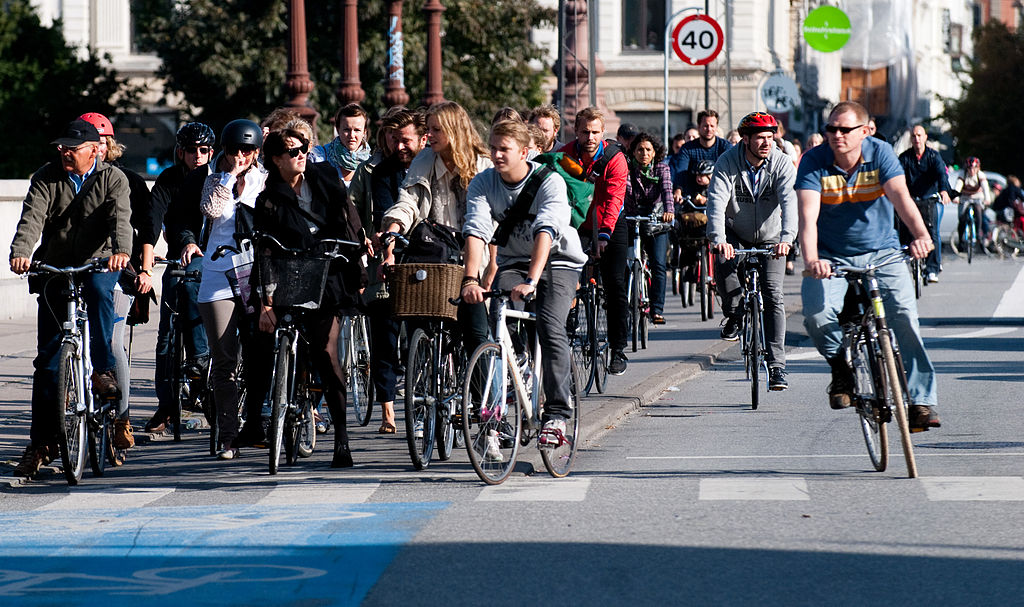 |
Bicycle lane in Copenhagen during rush hour. *Heb/Wikipedia*
Meanwhile, in Copenhagen, the bicycle lane network is situated on both sides of many main roads, typically measuring from 2,2-2,5 m wide, or wider in congested areas, and is separated from motor vehicle lanes by a hard edge. This design ensures bicycles have their own dedicated space, reducing the rate of collisions with moto and oto.
Establishing road surface quality standards for bicycle lanes
Another distinct difference in areas with developed bicycle lanes is the existence of specific standards for road surface materials. The Netherlands, Denmark, and My commonly use high-friction asphalt or colored concrete as the main surface for bicycle lanes, ensuring good tire grip in both dry and wet conditions. Paint is typically used only for marking lane boundaries, not for covering the main road surface.
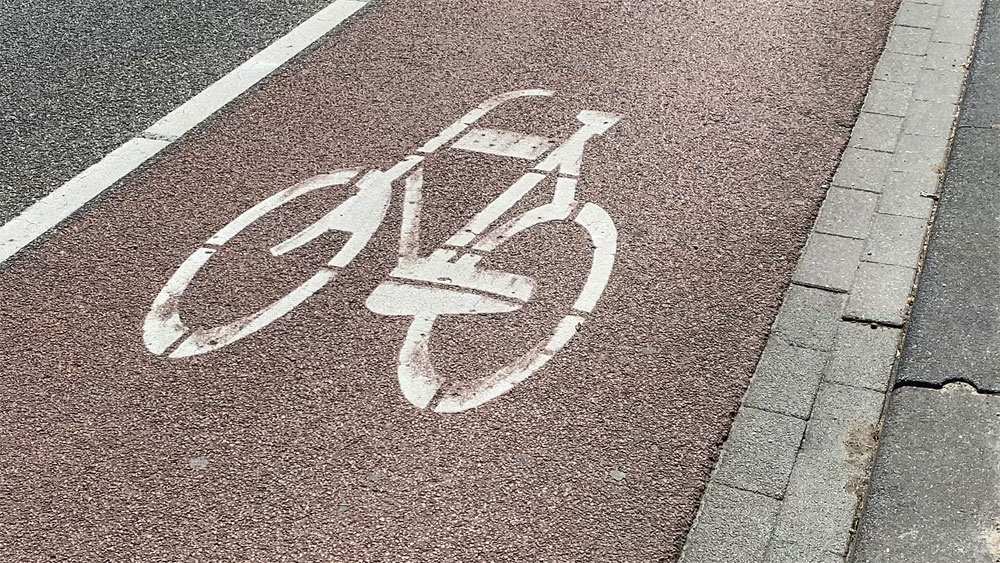 |
Bicycle lane using red asphalt in the Netherlands. *Bicycle Dutch*
If paint is used to cover an entire bicycle lane, the paint mixture is enhanced with small stones or anti-slip particles, allowing tires to grip the surface more effectively. In many European cities, bicycle lane design guidelines explicitly recommend specific quality and grip levels for surfaces, prioritizing the use of high-friction asphalt or paint for bicycle lanes to prevent sudden tire skidding during braking or turning.
Careful traffic management at intersections
In developed countries' bicycle infrastructure design, intersections are consistently regarded as the most hazardous points, as they are where bicycle, moto, and oto traffic flows must converge. Therefore, instead of allowing bicycles to merge freely into motor vehicle traffic, many European and North American cities design intersections so that bicycle lanes are guided seamlessly through the junction with clear markings, colors, and road surface indicators, enabling drivers of oto and moto, as well as cyclists, to easily anticipate each other's movements.
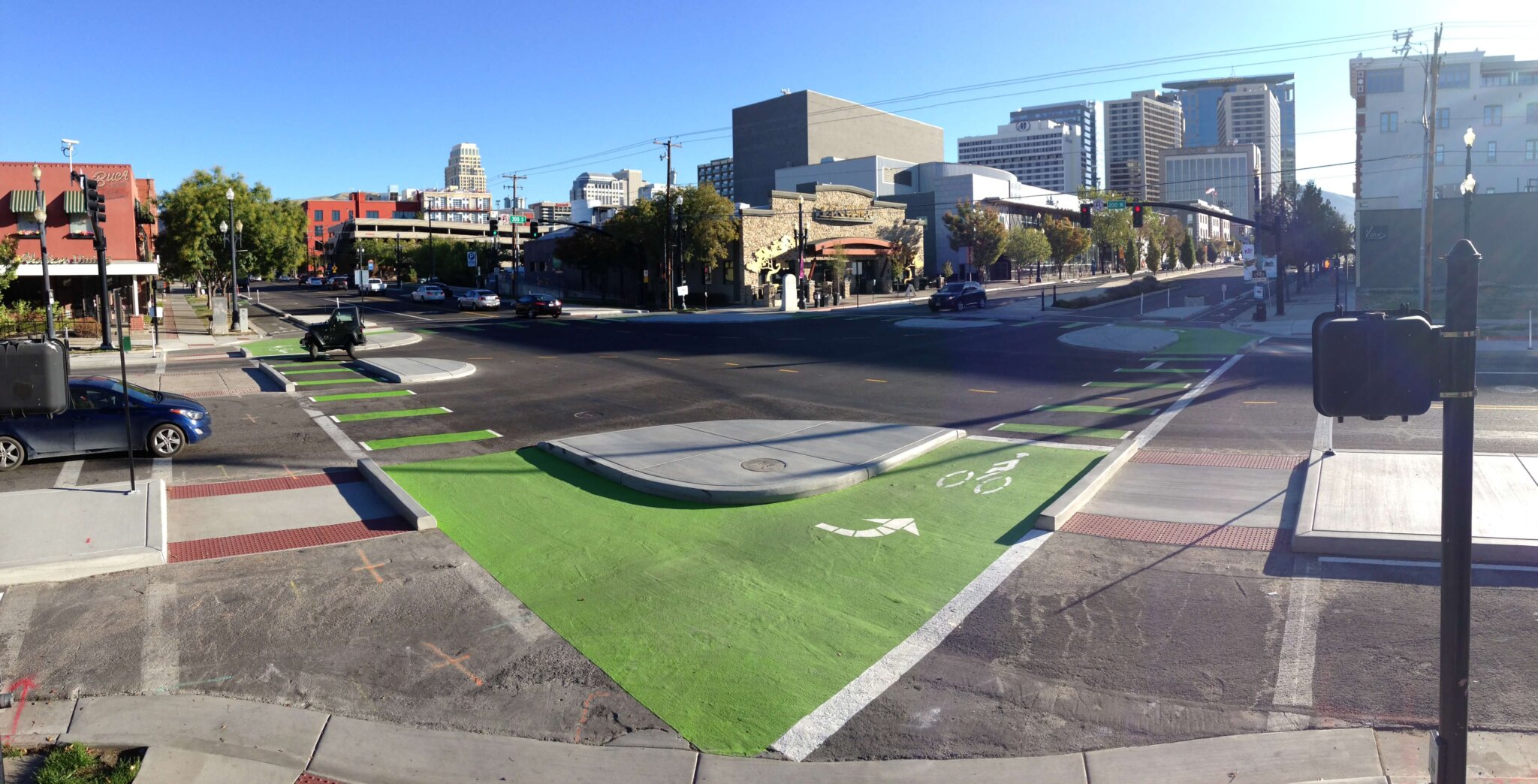 |
An intersection in the United States with a traffic island and directional guidance within the bicycle lane. *Alta Planning*
At major intersections, bicycles often have their own traffic signals or a designated stopping area ahead of motor vehicles, known as a "bike box". This allows cyclists to position themselves for better visibility and to start earlier when the light turns green. This arrangement helps reduce conflicts when oto and moto turn right or proceed straight simultaneously with bicycles.
Many locations also incorporate traffic islands, raised curbs, or low sidewalks to curve the trajectory of motor vehicles before they cross bicycle lanes. This design compels vehicles to reduce speed and observe more carefully when traversing these areas. As a result, instead of being hazardous crossing points, intersections become zones where speed and direction of travel are controlled, enhancing safety for bicycles and motor vehicles even during heavy traffic conditions.
Pham Hai



