India's transport sector is undergoing a major transformation, driven by the government's strong push away from fossil fuels. Minister Nitin Gadkari declared on 28/4 that "gasoline and diesel engines no longer have a future," signaling a clear policy direction towards cleaner alternatives.
Gadkari's remarks, made at an event, emphasized a heightened focus on deploying hybrid and purely electric vehicles, alongside the adoption of bio-gasoline instead of pure fossil fuels. While the immediate scope of this shift might impact public transport vehicles such as buses, the broader vision encompasses passenger cars as well. Automakers are urged to accelerate their transition to cleaner solutions, as gasoline and diesel engines are deemed unsustainable in the long term.
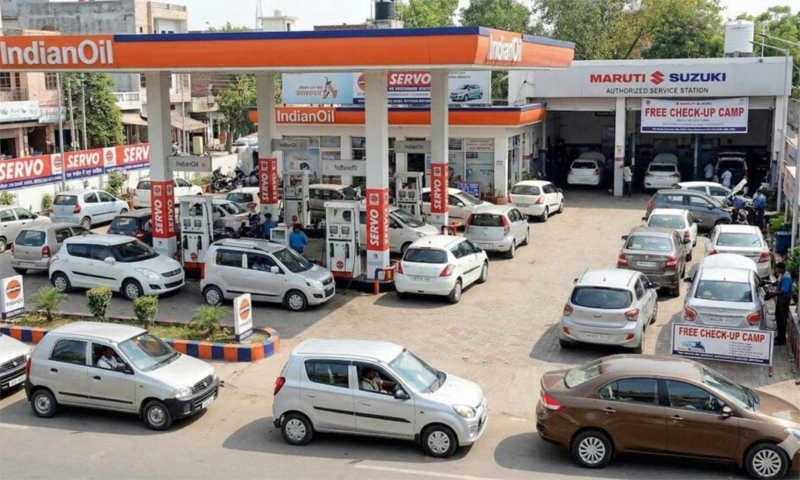 |
Cars queuing for fuel at a gas station in Delhi. Photo: *Mint* |
This significant push is motivated by two primary concerns. Firstly, India faces a growing fuel import bill, a situation exacerbated by the conflict in West Asia. Secondly, pollution levels in many Indian cities remain alarmingly high. These economic and environmental pressures are compelling the government to expedite the transition to alternative energy sources.
In his address, Gadkari called upon automakers to embrace more environmentally friendly alternatives, particularly biofuels, within the transport sector. Biofuels and electric powertrains are slated to be key components of India's future transport strategy, playing a crucial role in shaping the country's mobility landscape.
Isodiesel presents another promising fuel option currently undergoing testing. Expected to succeed the biodiesel program, isodiesel is essentially oil blended with isobutanol. This blend promises cleaner combustion and better lubricating properties than conventional oil. Crucially, its sustainability stems from isobutanol's production from surplus sugarcane and grains.
Electric vehicles are also gaining traction in India, both in commercial transport and private ownership, with particularly high adoption rates in urban areas. Hybrid vehicles are anticipated to be the next major trend. Several new hybrid and plug-in hybrid models are expected to launch in the coming years, spanning various market segments and price points.
Gadkari's recent speech also highlighted the necessity for further research into hydrogen as a fuel. He noted that hydrogen-powered trucks and buses are currently undergoing pilot testing on selected routes. If research and infrastructure development continue to accelerate, hydrogen could emerge as a primary fuel of the future. Effective implementation of hydrogen technology could enable heavy-duty vehicles, especially in long-haul and commercial transport, to operate with zero emissions.
Recognizing this immense potential, Adani Group is making a substantial investment in hydrogen. The conglomerate plans to invest 9 billion USD in hydrogen production and transport infrastructure in Kutch. As recently as 2025, Adani Enterprises initiated a project to develop a 40-ton hydrogen-powered truck. This vehicle was developed through a collaboration between India's Ashok Leyland and Canadian fuel cell manufacturer Ballard.
Beyond fuel transition, Gadkari underscored the importance of strengthening public transport infrastructure across India. With the highway network rapidly expanding, establishing efficient and accessible public transport systems is essential to alleviate congestion and reduce emissions.
Gadkari's vision for India's transport sector is built on three core pillars: First, cost-effectiveness, ensuring mobility solutions are affordable for the masses. Second, reducing emissions and pollution levels. Finally, national autonomy in fuel procurement, which aims to decrease fuel imports and bolster economic stability.
For the automotive industry, this signals an urgent need to accelerate investment in alternative fuel technologies, electrification, and next-generation mobility solutions.
My Anh (according to Cartoq)