Hyundai is doubling down on its commitment to the Chinese market, despite facing significant challenges. The automaker's strategy, termed "In China, for China, to the world", underscores its belief that the sheer scale of the Chinese market makes it indispensable. As Kim Pil-su, a professor of automotive engineering at Daelim University, emphasized, "Hyundai cannot abandon China, even as this market becomes much more challenging." He noted that even a 0,5 percentage point increase in market share in China would translate to selling over one million additional vehicles, highlighting the immense potential that still exists.
From 2010 to 2016, Hyundai experienced robust growth in China, selling over one million vehicles annually and peaking at 1,1 million units in 2016. This made China the company's largest market, surpassing South Korea. However, Hyundai's fortunes shifted abruptly following geopolitical tensions related to the US THAAD missile defense system, leading to a precipitous decline in sales. Annual sales plummeted by 30% to 785.000 units in 2017, and continued to fall to approximately 440.000 units by 2020. The decline has not yet bottomed out; by 2025, annual sales are projected to reach only around 130.000 units, leaving Hyundai with less than 1% market share.
This decline accelerated due to China's aggressive electric vehicle (EV) strategy, which fueled the rise of domestic brands and steadily eroded market share from foreign automakers. Chinese brands, led by BYD and Geely, now account for nearly 70% of the Chinese automotive market, with annual sales exceeding 34 million units. Struggling to compete with these domestic EV manufacturers – who benefit from generous state subsidies, tax incentives, and local battery supply chains that reduce costs – some global automakers have opted to scale back investments or withdraw from the Chinese market entirely.
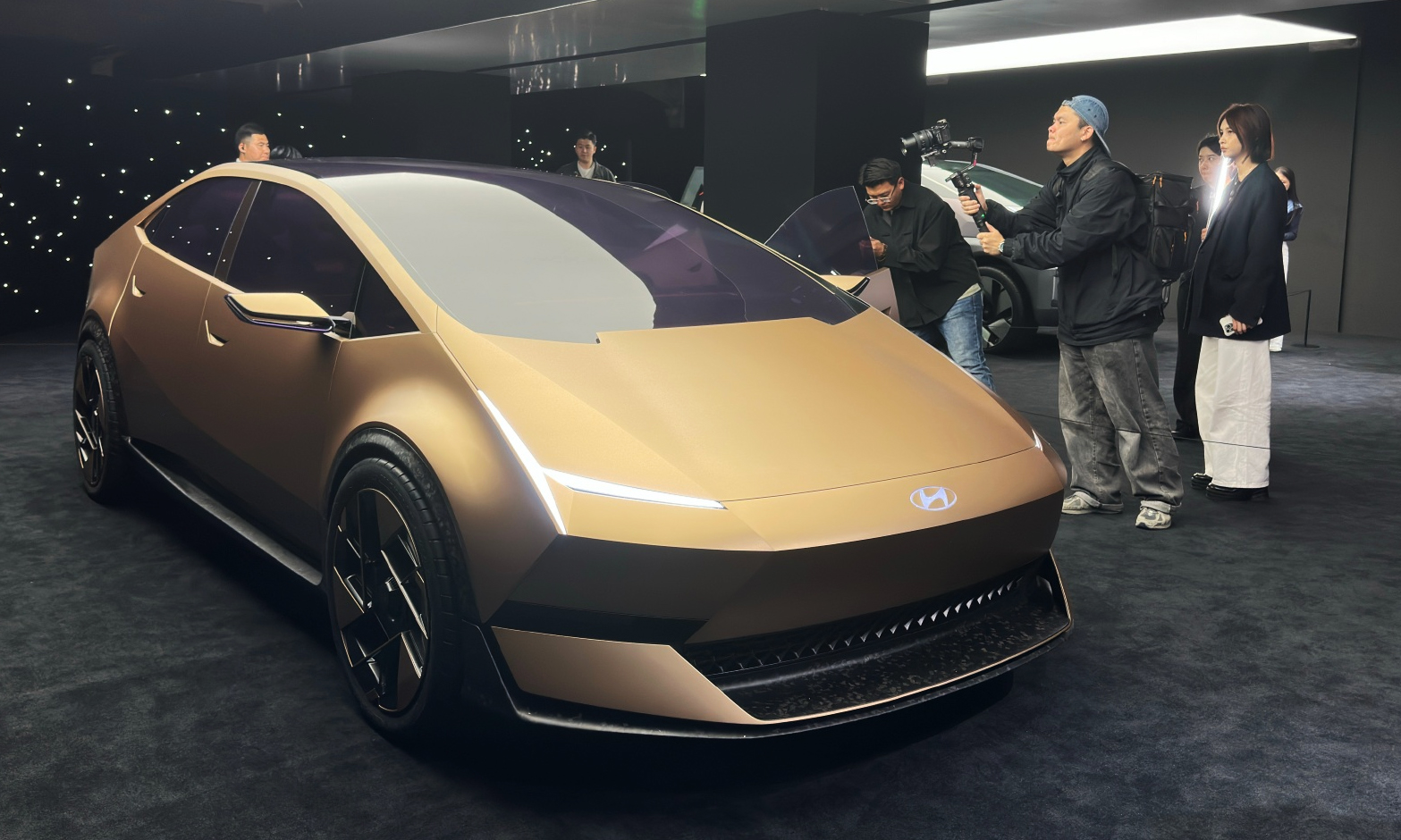 |
The Hyundai Ioniq Venus Concept electric vehicle recently launched in China. _Hyundai_ |
Despite these headwinds, Hyundai's chief executive officer, Jose Munoz, announced in a letter to shareholders in march that the automaker plans to launch 20 new models over the next five years, targeting annual sales of 500.000 vehicles in China. To achieve this ambitious goal, Hyundai is rebuilding its strategy by tailoring design, technology, and services to local preferences, moving away from relying on imported models or globally developed products with minor modifications for Chinese buyers.
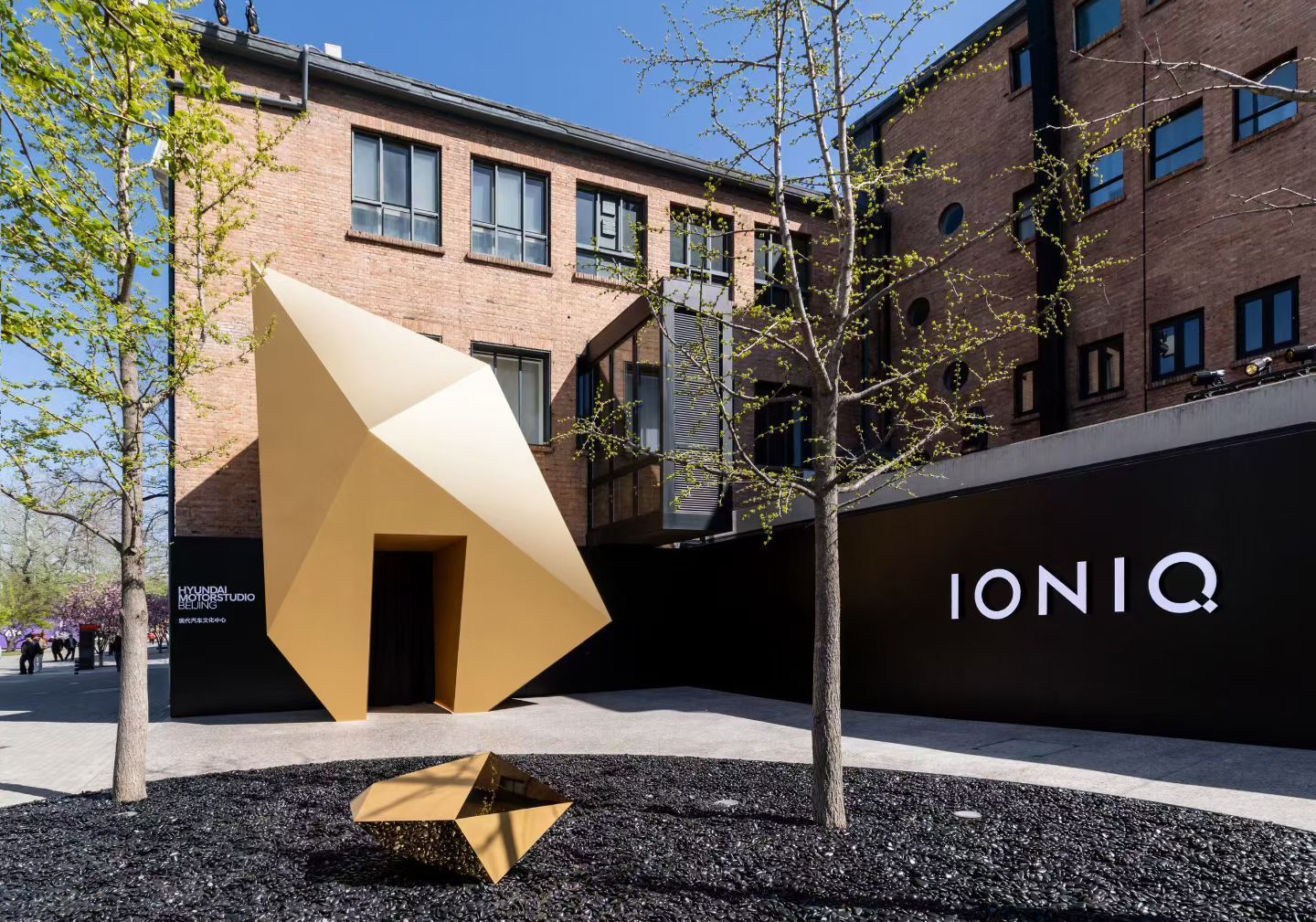 |
The Ioniq emblem outside Hyundai Motorstudio in Beijing, China. _Hyundai_ |
Last week, Hyundai introduced its flagship electric vehicle brand, Ioniq, to the Chinese market, showcasing two concept models at the launch event: the Ioniq Venus sedan and the Earth sport utility vehicle. The company is preparing to roll out a broader electrification strategy and will unveil a mass-produced Ioniq model later this month at the China Auto Show 2026, which runs from 24/4 to 3/5. For China-specific Ioniq models, Hyundai plans to adopt a new naming system based on planets, deviating from the numerical designations used globally, such as Ioniq 5 and Ioniq 6.
Hyundai is also localizing its platform technology. The company announced it is collaborating with Chinese self-driving startup Momenta to develop driver assistance features tailored to local road conditions, which is crucial for competing with domestic EV brands. In addition to battery electric vehicle models, Hyundai also plans to introduce range-extended electric vehicles in China for the first time. This powertrain combines an electric motor with a gasoline engine capable of charging the battery while driving, an effort to meet demand in one of China's most popular powertrain segments.
The appointment of Li Fenggang as head of Hyundai's operations in China in november signals this renewed focus. By appointing a Chinese national to lead the joint venture for the first time in its 23-year history, Hyundai has demonstrated its determination to accelerate localization and grant greater strategic authority to local leadership in one of the world's most competitive automotive markets. Hyundai is betting that with its renewed electric vehicle push, it can reclaim its past success in China, a market once considered one of its most lucrative.
My Anh _Korea Herald_