Minivans were once seen as a symbol of "losing one's identity" or a vehicle exclusively for those ready to start a family and become parents. However, a peculiar trend is emerging. Millennials (born 1981-1996) – who grew up in their parents' "mobile living rooms" – are now actively seeking out minivans and realizing their parents were right all along.
According to data from Edmunds, minivan sales in 2025 increased by 21%, reaching nearly 400,000 vehicles. Toyota Sienna, in particular, had a booming year with sales up by 35%, spending an average of only 18 days at dealerships before finding an owner.
Superior practicality
According to CNN, the change is not in the minivans themselves, but in the buyers. Millennials (currently aged 30-45) have entered a phase of focusing on family care. For them, automatic sliding doors, making it easy for children to get in and out, are far more practical than the distant dream of driving a three-row SUV off-road.
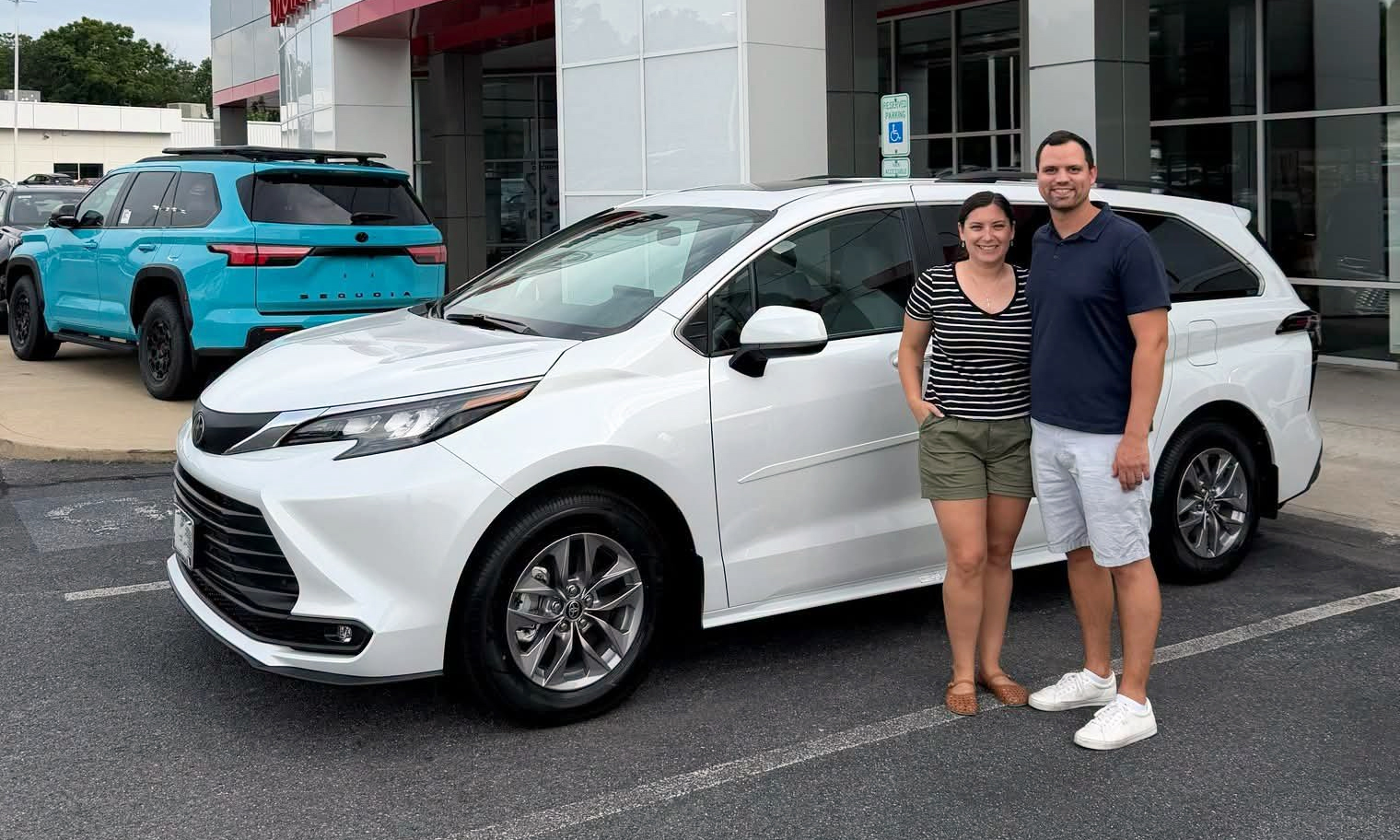 |
A young couple in Maryland purchased a 2026 Toyota Sienna in july. Photo: Younger Toyota
Modern minivans boast spacious interiors, flexible seating, large entertainment screens, fuel-efficient hybrid engines, and numerous cup holders. Some models even integrate built-in vacuum cleaners to tidy up messes made by children, or seats that not only slide forward and backward but also side to side. If families currently driving SUVs were to experience modern minivans like the Toyota Sienna or the upgraded Chrysler Pacifica, they would quickly be won over by the convenience these vehicles offer.
Kelsey Spencer, a mother of three daughters in Northwest Illinois, once thought she would never drive a minivan. Now, she can barely imagine life without her 2026 Kia Carnival Hybrid.
When she first bought the van two years ago, Spencer feared that "when she drove up, people would say 'oh, a minivan'." Instead, people asked: "What kind of car is that? It's amazing."
Better economic value
Beyond practicality, financial factors also play a key role. Data from Cars.com indicates that minivans are approximately 4,000 USD cheaper than comparable three-row SUVs.
In june, the average transaction price for a minivan was 48,908 USD, lower than the overall industry average of 49,758 USD, and a significant difference from the nearly 80,000 USD price tag of large SUVs.
The combination of practicality and economic value is gradually eroding the dull stereotype associated with this vehicle segment. Many owners are even proud to showcase their minivans on social media, highlighting their spacious, living-room-like interiors and flexible configurations.
Cedar, a mother of two in New York, is one such owner. She and her husband purchased a 2024 Chrysler Pacifica for under 40,000 USD. Cedar emphasized that she never hated minivans but was surprised by the price of basic SUVs when searching for a larger vehicle.
"I remember when I was young, BMW used to release a 30,000 USD car", she said. "Now, that's almost the starting price for many types of vehicles."
The "minivan comeback" wave is not limited to new car showrooms; it has also extended to the classic car market. At the Festival of the Unexceptional, organized by Hagerty in the UK last weekend – an event celebrating ordinary cars from the past – a Renault Espace was among the exhibits. Notably, a 1992 wine-red Toyota Previa impressively secured the runner-up position overall, trailing only a 2001 Volkswagen Polo.
My Anh