Zoox sent a recall report to the National Highway Traffic Safety Administration (NHTSA) on 17/7, following the discovery of a software error from an incident that occurred last month.
Previously, on 20/6 in Las Vegas, an unoccupied Zoox robotaxi entered a large fire area. As emergency services had not yet cordoned off the scene with traffic cones, the vehicle drove directly into thick smoke, which obscured visibility. It then braked sharply and attempted to steer away before coming to a complete stop.
A remote Zoox operator subsequently intervened, reversing the vehicle before firefighters were able to place cones to block the pathway. Zoox stated that an internal investigation found this to be a "unique incident of its kind" and reported no injuries.
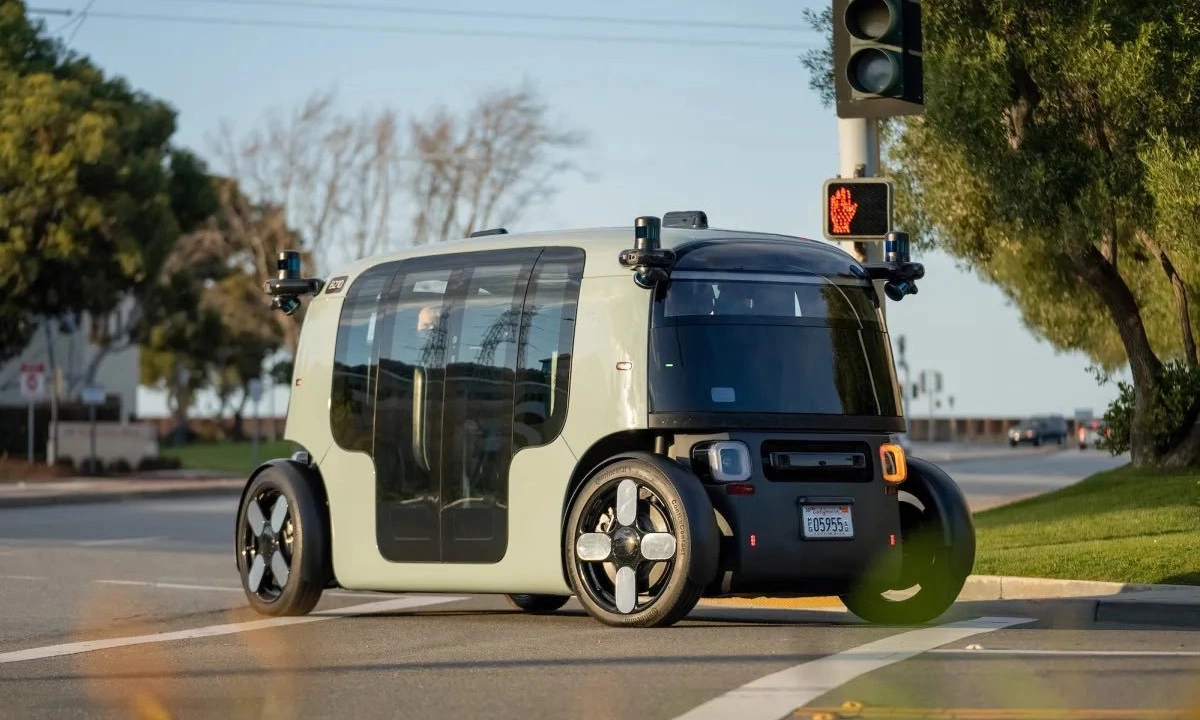 |
A Zoox robotaxi in the US. Photo: *Zoox* |
Amazon acquired Zoox in 2020 for USD 1.3 billion. The company develops box-shaped autonomous vehicles that operate without a steering wheel or pedals. The cabin features four passenger seats facing each other, similar to a train compartment.
Zoox currently provides free shuttle services in select areas of Las Vegas and San Francisco. It also conducts limited testing in Miami and Austin, Texas. The company's vehicles are undergoing testing in six other US cities.
Zoox's voluntary recall closely followed a letter from NHTSA director Jonathan Morrison, who urged autonomous vehicle developers to ensure their vehicles yield to emergency services.
In his letter, Morrison highlighted that the regulatory agency had "identified a clear pattern of failures" where autonomous vehicles consistently obstructed police and firefighters. These incidents included vehicles driving into accident scenes, blocking ambulances, or failing to recognize flashing lights, flares, smoke, fire, and traffic cones.
NHTSA leadership demanded that autonomous vehicle companies immediately focus resources to thoroughly address this issue and present solutions by month-end. The agency's document did not name any specific companies.
In 2025, Zoox also conducted several software recalls to fix errors related to vehicles driving over lines and incorrect prediction of other vehicles' and pedestrians' movements.
The company is attempting to catch up to Waymo, an Alphabet subsidiary and the largest robotaxi service in the US, with a fleet of approximately 4,000 vehicles. In June, Waymo also recalled about 3,900 autonomous vehicles after some of its vehicles mistakenly entered a highway construction zone, increasing the risk of collisions.