Thailand's automotive industry is concerned about the impact of the shift to electric vehicles (EVs) on its domestic supply chain and employment. Industry leaders are advocating for policies that promote the local production of EV components to mitigate these risks and maintain the nation's position as a regional manufacturing hub.
Suwat Supakandechakul, Chairman of the Automotive Industry Club under the Federation of Thai Industries (FTI), highlighted the importance of localizing common components such as seats, wiring systems, and windshields. He noted that these parts are crucial for achieving economies of scale, reducing costs, and ensuring quality standards. Suwat also stressed the need to prioritize the use of high-value components, like chassis, which are already manufactured in Thailand.
"The government should encourage businesses to use these components and allow tax deductions for related expenses," Suwat stated. The FTI believes that requiring foreign pure EV manufacturers to source Thai-made components would align with practices already established for internal combustion engine vehicle producers, thereby protecting the domestic supply chain. This strategy is vital for Thailand to retain its status as Southeast Asia's automotive manufacturing hub.
Another significant concern for the Thai auto industry is the United States' scrutiny of transshipment activities. This refers to products assembled in Thailand using imported components. Washington might consider this a basis for imposing higher tariffs on goods exported from Thailand, potentially impacting the industry's competitiveness.
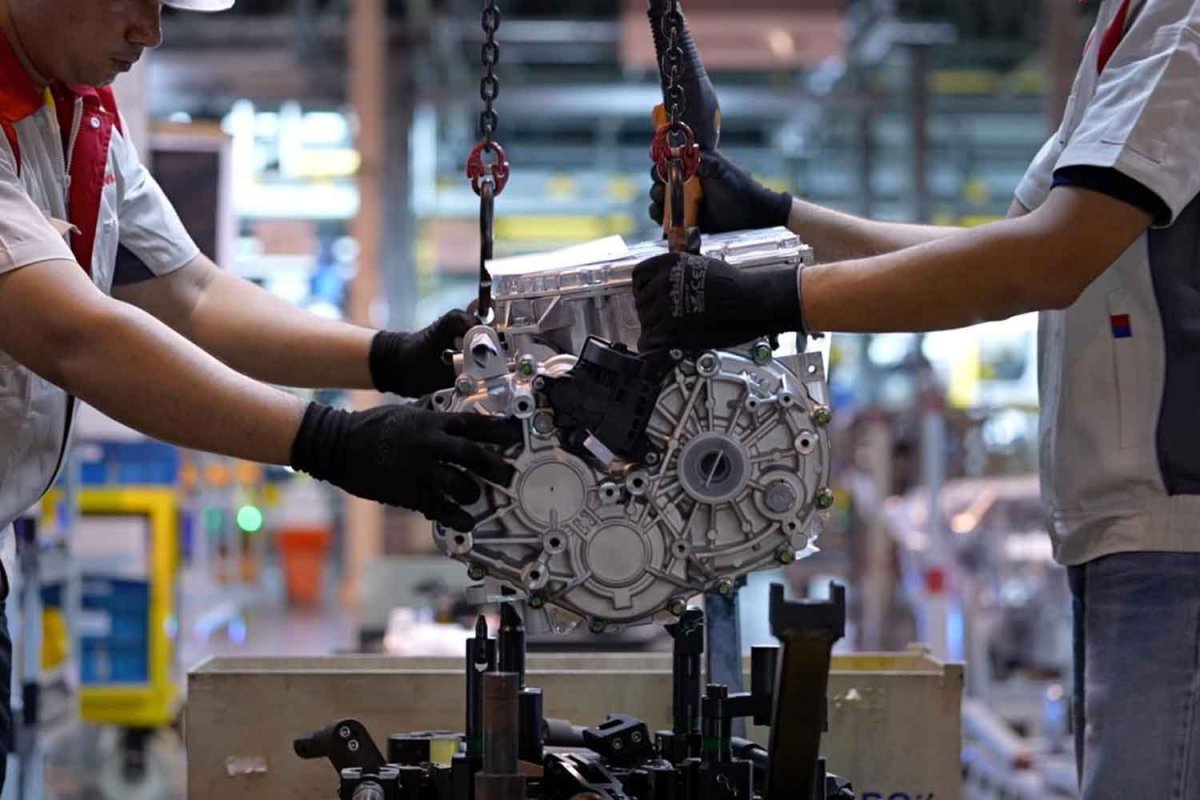 |
Workers on a chassis assembly line at Great Wall Motor's EV factory in Rayong province, Thailand. Photo: Bangkok Post
The FTI is actively collaborating with a House committee on tariff measures. Concurrently, the federation is pushing for stricter regulations on localization rates in EV production to bolster the domestic industry against foreign competition.
Yuphin Boonsirichan, President of the Thai Automotive Industry Association (TAIA), called for government intervention to adjust excise taxes on fully imported electric vehicles. This measure aims to protect local manufacturers and suppliers. Boonsirichan also proposed incentive programs for consumers purchasing domestically assembled cars, such as allowing partial cost deductions for personal income tax calculations. Furthermore, TAIA recommended that state agencies prioritize using EVs in public fleets to stimulate market demand.
Thailand has set an ambitious target to produce 1,5 million automobiles in 2026, with approximately 950.000 vehicles earmarked for export. However, the FTI is re-evaluating this target due to disruptions in shipping routes through the Hormuz Strait, caused by ongoing conflict. Suwat noted that automobiles account for over 20% of Thailand's total exports to this affected region.
Ho Tan (via Bangkok Post)