In previous years, months after the Covid-19 pandemic erupted, the automotive industry faced its most severe semiconductor shortage in a long time. Now, a second chip crisis has emerged, but its cause stems from the artificial intelligence (AI) boom, not a virus.
The primary culprit is AI companies racing to build data centers, consuming massive quantities of DRAM memory chips and driving prices for this component sky-high. Automakers are struggling to respond.
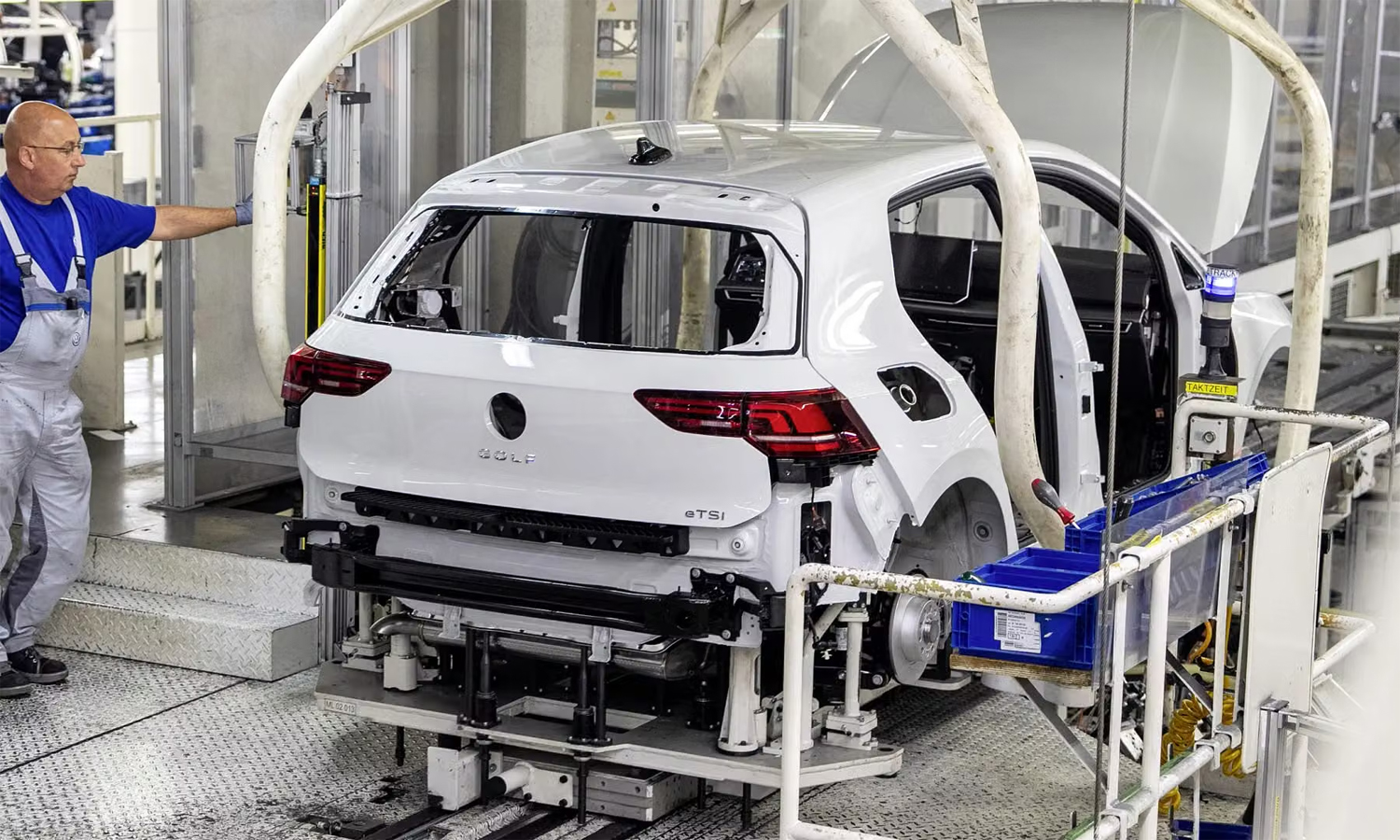 |
A production line at a Volkswagen factory. Photo: VW. |
A new report from consulting firm Kearney reveals that spot prices for DRAM chips surged by approximately 450% between September 2025 and January 2026. Automakers are feeling this pressure keenly, acknowledging a rapid monthly deterioration. Nevertheless, many assert that their supply chains remain intact due to risk management systems refined during the Covid-19 chip crisis.
Ford and General Motors (GM) have had to increase their raw material procurement cost forecasts for 2026 by hundreds of millions of USD as memory chip prices continue to escalate.
A Volkswagen (VW) spokesperson told Automobilewoche, "In recent years, we have implemented measures to assess market developments early to mitigate supply risks. Currently, the company's memory chip supply chain remains stable. Should challenges arise for specific semiconductor categories, we are prepared to react flexibly with targeted solutions to maintain supply".
Joachim Kahmann, Vice President of Global Electronic Component Procurement at Stellantis, stated that the group plans to increase its purchasing budget for 2026 and 2027, but has not yet had to adjust production due to shortages. He anticipates this disruption will be temporary, with market improvement possible by 2028. Similarly, Renault believes "the industry will adapt through continuous investment and capacity expansion".
BMW shares a similar positive outlook. The German automaker stated that it does not purchase memory chips directly, but rather relies on long-term agreements with component suppliers. Consequently, the company has not observed any signs of supply shortages and maintains its production targets.
However, despite automakers' calm public demeanor, the risk of severe disruption persists. According to the German Electrical and Electronic Manufacturers' Association (ZVEI), immense demand from AI data centers and the multi-year timeline required to expand factory capacity mean that price increase pressure is unlikely to abate soon.
Currently, Samsung, Micron, and SK Hynix control nearly 90% of global DRAM demand, and these major players have no immediate plans for significant production increases. In the short term, they are free to sell chips to the highest bidder—which typically means AI technology giants.
My Anh