Speeding remains one of the most frequently penalized traffic offenses, the Traffic Police Department reported on 25/9. The rise in speeding incidents averaged over 920 additional cases daily throughout the nine-month period.
The Traffic Police Department clarified that the sharp rise in speeding cases primarily reflects enhanced detection capabilities, not necessarily a surge in driver violations. This improvement stems from diverse speed control methods, including direct patrol teams and advanced surveillance camera systems, particularly high-tech equipment.
During Quarter III/2026, AI camera systems alone identified and processed 9,488 violations. These cameras record vehicle details, time, and specific infractions, transmitting data to a central hub for official verification. Additionally, authorities handled 6,069 public reports of violations submitted via Facebook, Zalo, VNeTraffic, and vehicle tracking systems. These channels provide supplementary data, complementing traditional roadside enforcement.
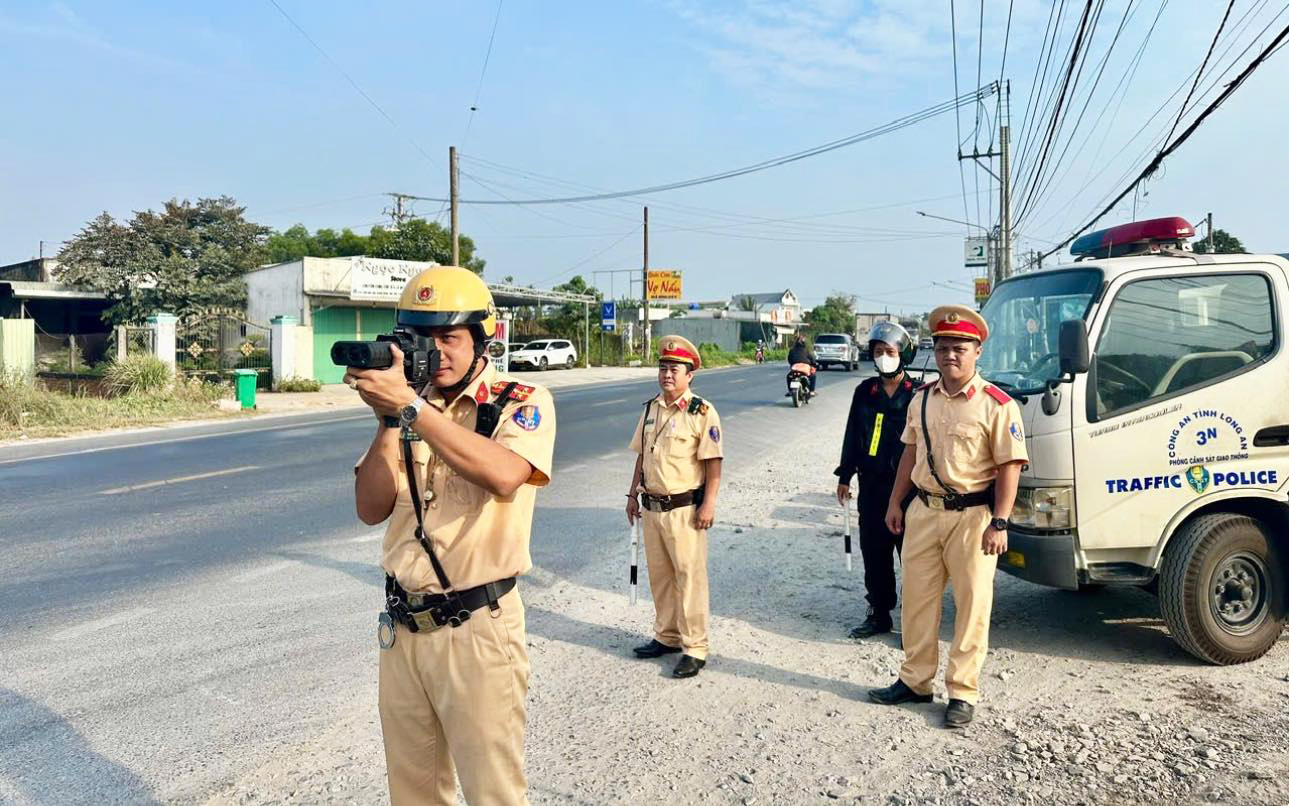 |
Traffic police enforce speed limits on National Highway N2, Tay Ninh. *Photo: Traffic Police Department*
Nine-month statistics show that authorities processed a total of 3,765,573 traffic violations, a 46,8% increase year-on-year. Speeding incidents, totaling 959,407 cases, comprised approximately 25,5% of all violations.
The department attributes improved traffic conditions to enhanced surveillance and enforcement, as evidenced by positive trends in three key traffic accident metrics. In the first nine months, there were 11,564 traffic accidents, a 16,6% decrease year-on-year. These incidents resulted in 7,198 fatalities, down 9%, and 6,704 injuries, a 26,4% reduction.
Over the past year, AI camera systems have been deployed across major cities. Hanoi activated 1,837 cameras at 195 intersections in December 2025, while TP HCM implemented AI cameras on central routes and accident blackspots. This surveillance method ensures that speeding violations are detected independently of direct roadside patrols.
High speeds reduce a driver's reaction time to unexpected situations and increase both reaction and braking distances. Consequently, speed control remains a central focus in traffic patrol and enforcement efforts.
Hai Dang