For many years, electric bicycles and motorbikes have become the primary mode of transport for students, replacing traditional bicycles. Their advantages—higher speed and no pedaling effort—are the main reasons many parents purchase these electric vehicles for their children each back-to-school season.
However, the widespread use of electric bicycles and motorbikes by children who lack proper traffic knowledge and riding skills creates many societal problems. Beyond the risk of accidents due to reckless riding, the modification of electric motorbikes to achieve very high speeds poses a clear safety risk.
On 16/9, Ho Chi Minh City Police summoned 21 teenagers involved in a group using modified electric motorbikes. They were observed riding at high speeds, swerving, weaving, doing wheelies, riding abreast, and racing on various roads in Vung Tau. This group formed a private Facebook group to arrange meetings, rented trucks to transport their modified vehicles to Vung Tau, and then uploaded videos to social media to attract views and engagement. Police seized 9 electric motorbikes, many of which had been altered to increase speed and facilitate dangerous stunts.
Modified electric vehicles are not only used by racing groups. On 11/9, Road Traffic Police Team No. 3 in Lao Cai stopped a 15-year-old male student in grade 10, who was riding an electric moped at high speed without a helmet. The vehicle's dashboard displayed speeds up to 99 km/h, far exceeding its original design speed of no more than 25 km/h. The student admitted to installing an additional controller unit to increase speed; traffic police then impounded the vehicle and ordered the removal of the component. Earlier, on 28/3, a student born in 2011 in TP HCM died after losing control, falling onto the road, and colliding with a truck. The electric bicycle he was riding had been modified to increase speed.
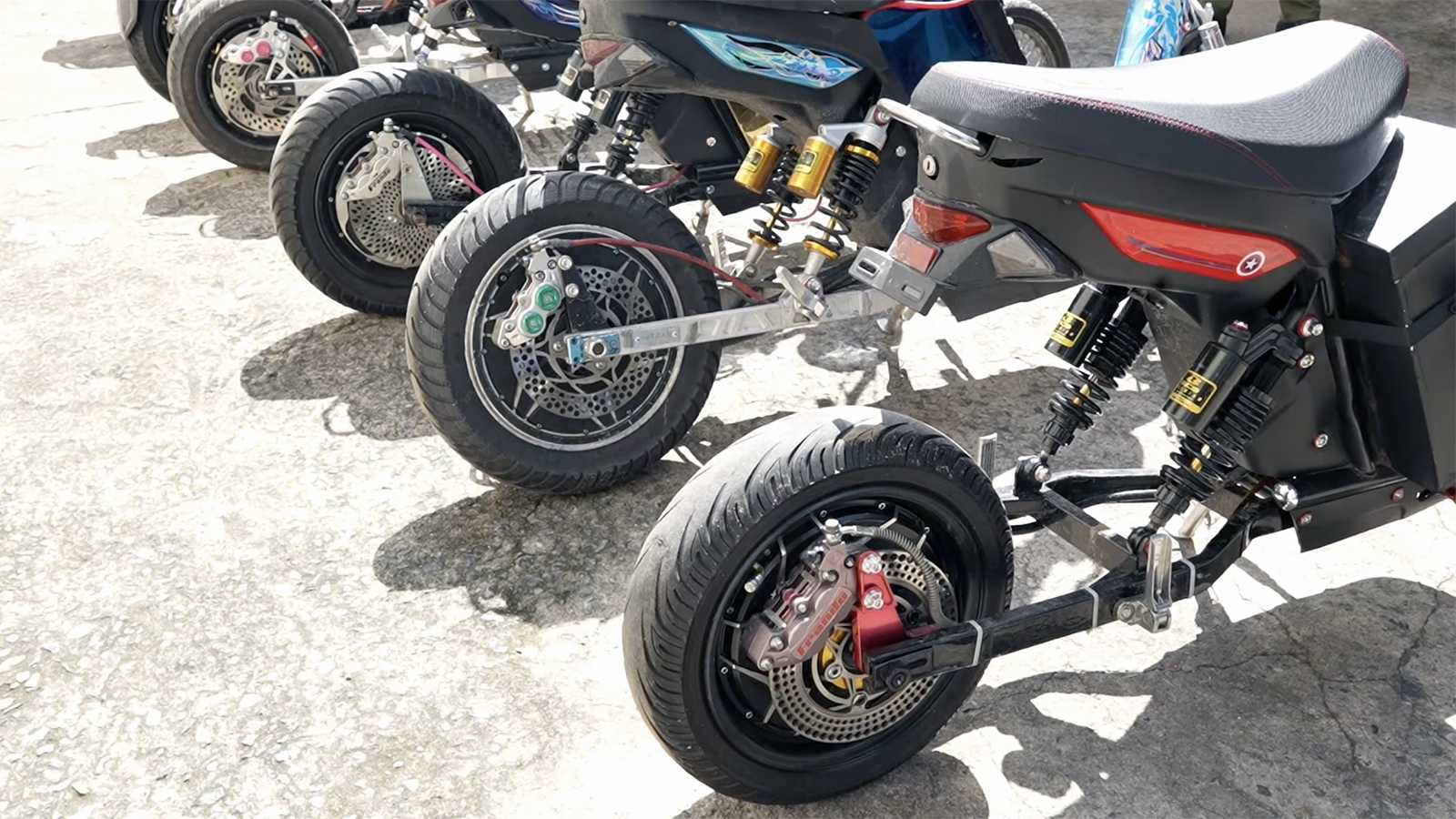 |
Electric vehicles with modified structures, wheels, batteries, and controllers. Photo: Ho Chi Minh City Police
Electric motorbikes are easier to modify than gasoline motorbikes.
To increase power in gasoline motorbikes, modifications often involve mechanical engine components such as pistons, camshafts, valves, intake and exhaust systems, or fuel injection adjustments. Some changes require engine disassembly, experienced personnel, and typically leave detectable signs during inspection, with considerable costs.
For electric vehicles, performance changes can focus on the electrical system, which includes the battery, the controller unit (which dictates power delivery to the motor), and the motor itself. By altering just one or a few of these components, a vehicle's acceleration and speed can change significantly from its original configuration without extensive mechanical intervention.
This ease of modification is why young people can more readily access electric bike modifications. Components like batteries, controller units, and motors are sold separately, and information on replacement and upgrades is shared online. Users do not need deep knowledge of internal combustion engines to begin modifying their vehicles.
The exterior of the vehicle may also remain largely unchanged after upgrades. An electric motorbike can retain its original appearance while its acceleration, torque, or top speed are significantly different. In the Vung Tau incident, one individual stated that they replaced the battery, controller unit, swingarm, and wheels, having "learned this modification online" for racing purposes. Another individual mentioned that their modified bike "can do a wheelie with just a twist of the throttle" and could reach a top speed of 140-150 km/h.
Parents find it difficult to identify modified vehicles.
If the bodywork, wheels, or some exterior details are changed, parents might notice with a visual inspection. However, detecting modifications to components within the electrical system is far more difficult without technical knowledge. The controller unit, battery, and many related components can be hidden. Consequently, the vehicle can maintain its nearly original external appearance even if important internal components have been changed.
Electric vehicles also lack the distinctive engine sound of gasoline motorbikes. Therefore, parents cannot rely on sound to detect if a vehicle has been modified, such as when acceleration or power changes.
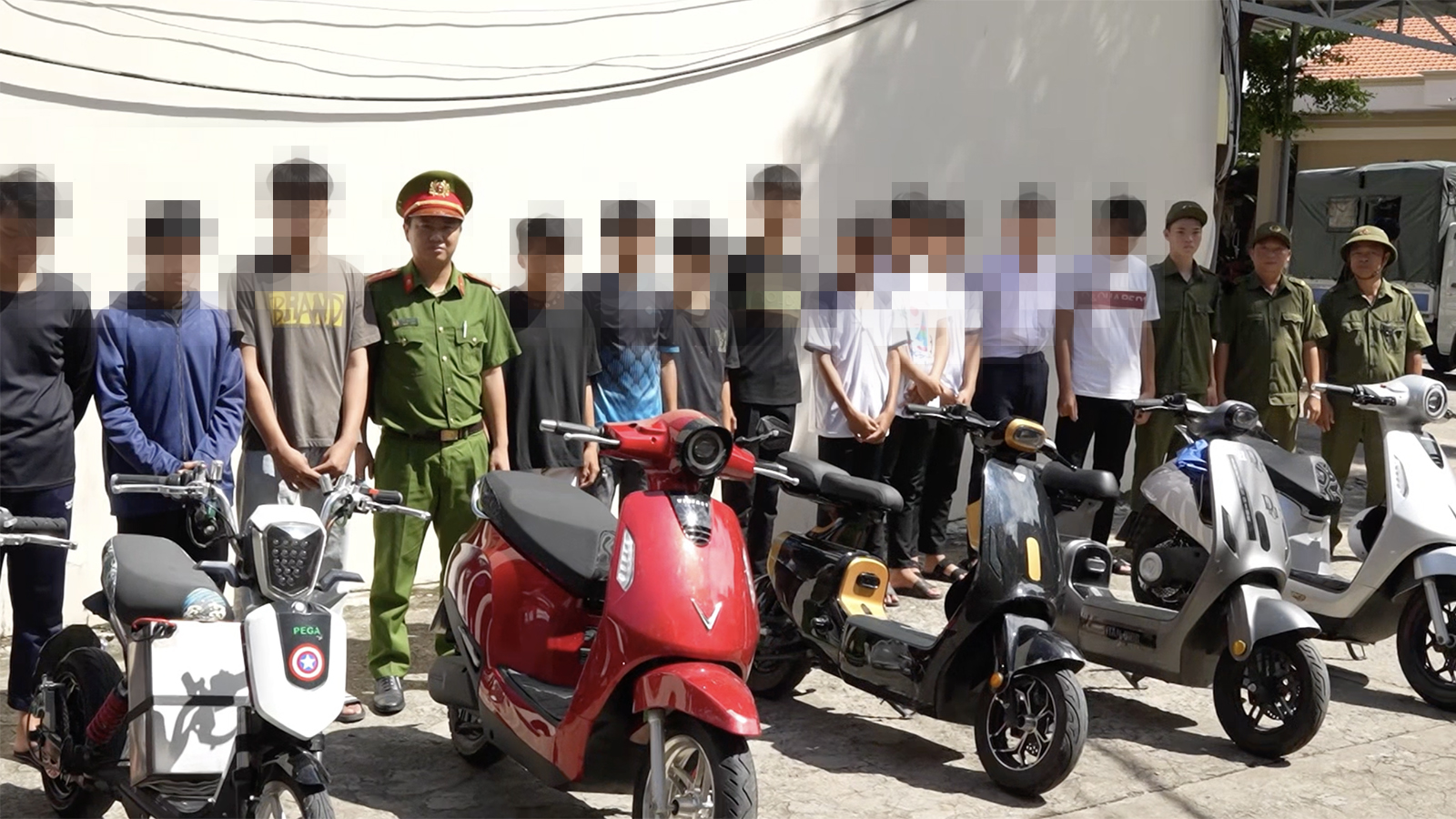 |
21 teenagers used modified electric vehicles to swerve and do wheelies in Vung Tau on 16/9. Photo: Ho Chi Minh City Police
Even performance changes do not always produce clear signs. The vehicle can still start and move normally, and can be used at low speeds as before. The difference only becomes apparent when the rider accelerates or fully exploits the vehicle's enhanced capabilities.
This makes giving a vehicle to a child more complex than simply providing transportation. Parents might know their child uses the vehicle for school but may not know if it retains its original configuration or if it has been modified, nor what purposes their child uses it for.
According to Car Awards safety driving experts, parental supervision of their children's vehicles should not only involve checking for damage. More importantly, parents must educate their children before and during the process of providing a vehicle. They need to understand how their child is using the vehicle, if they are involved in any modification or racing groups, and if they understand the limits of the vehicle they are operating.
Hai Dang