During a speech in Las Vegas on 5/8, US President Donald Trump dismissed the common concern of electric vehicle (EV) battery depletion as a "disease". He claimed to have "ended the EV mandate" and criticized previous policies for "forcing people to switch to these vehicles in a very short time". He described EV drivers as "crazy" for searching for charging spots even when their batteries were still at 75%.
Despite these statements, real challenges exist. The public charging network needs improvement, especially outside major cities and along rural highways across the US. The experience for a driver unable to charge at home differs greatly from one who can plug in every night. Long-distance EV trips require more careful planning than gasoline-powered ones.
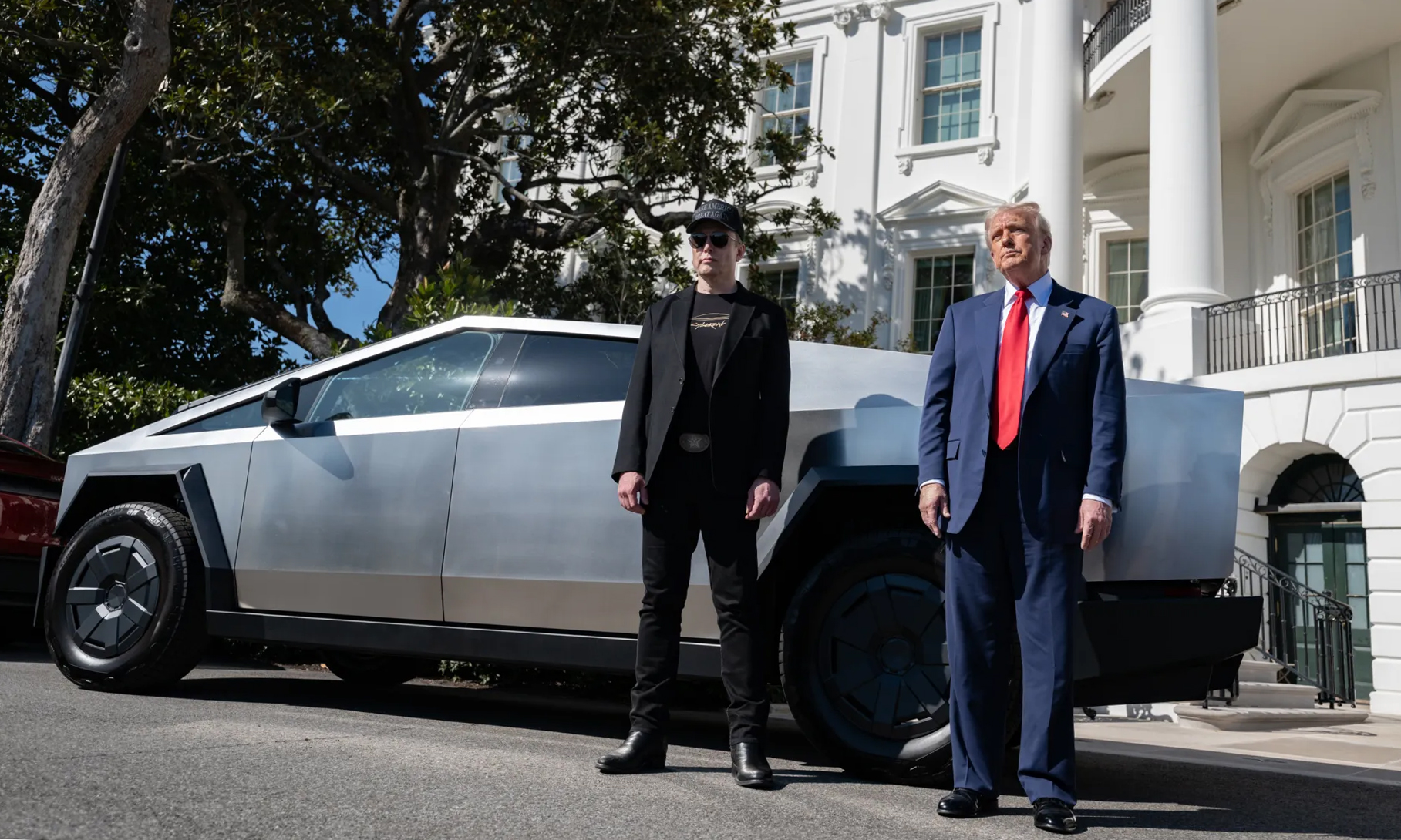 |
US President Donald Trump (right) and Tesla CEO, Elon Musk, at an event held at the White House in 3/2025. Photo: The White House. |
Nevertheless, Trump's characterization of range anxiety as a "disease" is an exaggeration. It is reasonable for a driver to consider the next charging station 140 km away, but a 75% battery level is never a cause for panic in modern electric vehicles. For most users who can charge at home, this is rarely a daily concern.
Trump's assertion that there is "absolutely no way" to charge an EV is also inaccurate. Data from the US Department of Energy shows over 250,000 public charging ports nationwide. While not perfect, reliable, or distributed, this network is far from "invisible".
Trump also stated that EVs currently account for 7% of US vehicle sales. The latest estimates from Kelley Blue Book put the figure for QII at 5.8%, so his assessment has some basis. Demand for EVs has cooled compared to its 2025 peak, a market adjustment automakers cannot ignore. However, this slowdown partly stems from Trump's own decision to repeal the 7,500 USD federal tax credit for EVs.
Also inaccurate is the notion that Americans face a federal mandate forcing them to buy electric vehicles by 2030. The previous administration's policy only aimed for zero-emission vehicles to account for 50% of new vehicle sales, combined with emissions and fuel economy regulations to pressure automakers to sell more electric vehicles.
On the same topic, Trump remarked: "We have thousands of years of gasoline and oil, and that's what people prefer. I repealed the electric vehicle mandate. I don't want to talk about it because Elon isn't really happy with me, but I had to do it." The US president added, "We have more oil and gas than any country in the world."
In reality, Trump's opposition to electric vehicles and his complete siding with internal combustion engine vehicles is not surprising. This stance has been expressed clearly and consistently over the years, even if he occasionally offered some token support for electric vehicles.
The US President's speech is attracting attention and being shared on social media. One commenter remarked, "I wonder what Elon Musk will say about Trump's statements."