Bernie Moreno, a republican senator, announced on march 31 that he will introduce a bill next month to tighten the U.S. government's ban on chinese automakers entering the U.S. market.
Senator Moreno stated his proposed legislation would go beyond mere import restrictions, aiming to completely seal off the U.S. market. He emphasized that "there will never be a scenario where chinese cars can enter our market, that is hardware, that is software, that is partnerships". Moreno hopes latin american countries, Mexico, Canada, and Europe will adopt similar strict standards.
He drew a stark comparison, stating, "We did not allow Huawei to enter our telecommunications infrastructure. We will not allow chinese automakers into this market." The senator further likened chinese vehicles to a "cancer" invading the U.S., suggesting other nations need to "undergo chemotherapy".
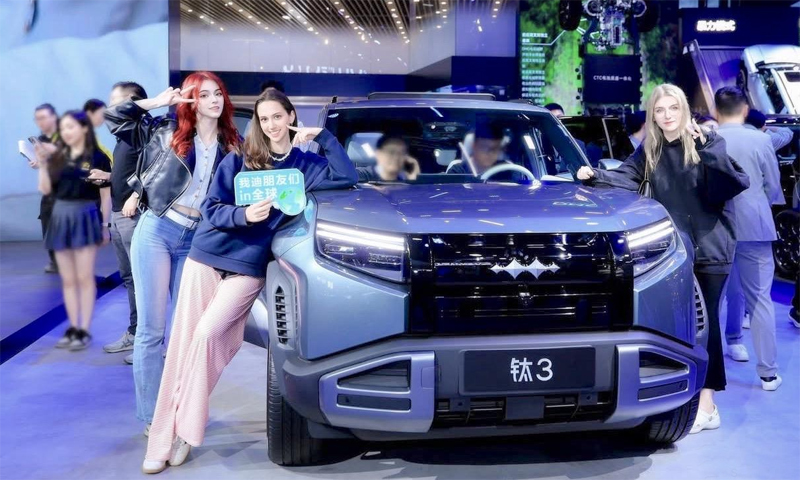 |
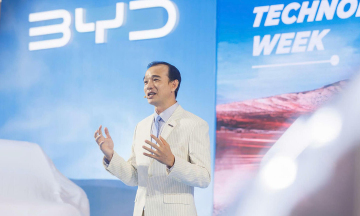
The BYD Fang Cheng Bao Tai 3 electric crossover at an auto show in China in 2025. Photo: DSF |
This legislative push builds on a regulation imposed by former president Joe Biden's administration, which, effective january 2025, will effectively ban all chinese automakers from selling passenger cars in the U.S. The administration cited national security concerns, specifically the potential for these vehicles to collect sensitive data from American owners. The ban has garnered strong backing from U.S. automakers and other automotive groups. Earlier this month, major automotive trade organizations urged the U.S. government to prevent chinese automakers from entering the country, ahead of a planned meeting in may between president Donald Trump and chinese president Xi Jinping.
The chinese embassy in Washington criticized the U.S. stance, stating that while China's market is open to global automotive companies, the U.S. has "practiced trade protectionism and erected barriers including discriminatory subsidy policies to hinder market access for China-made cars in the U.S.". The embassy added that Moreno's bill violates the principles of market economy and fair competition, characterizing it as a clear example of protectionism and economic coercion.
In contrast to the proposed ban, former president Donald Trump expressed a willingness earlier this year to allow chinese businesses to manufacture vehicles in the U.S. "If they want to come and build factories, hire you, your friends and neighbors, that's great", he told the Detroit Economic Club.
By My Anh (Reuters)