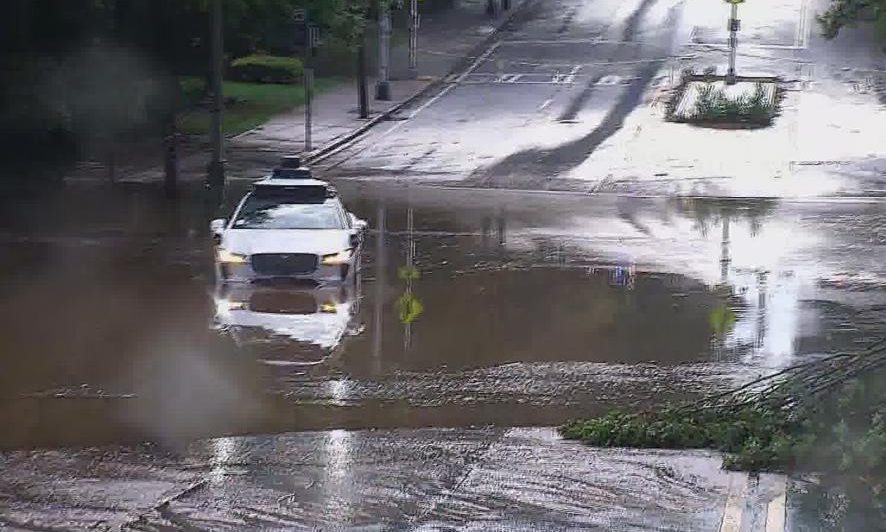
The incident occurred on 31/3 on several elevated highways and main roads in Wuhan, Hubei province. Apollo Go's (a Baidu subsidiary) customer service department attributed the "abnormal driving system malfunction" to a network issue.
Starting around 21h, social media platforms were flooded with user reports detailing the "collective paralysis" of Apollo Go vehicles across Wuhan. Passengers described harrowing situations as their driverless cars suddenly stopped on busy roads.
Lu, a Wuhan resident, recounted a harrowing experience of being stranded on the 3rd Ring Road, an elevated highway, for nearly two hours.
"The car stopped right in the middle of the road with large trucks speeding by on both sides," Lu stated at 10h40 while still inside the vehicle. He noted the in-car SOS button was "completely useless", and calls made via the central screen automatically disconnected. After reaching the customer service hotline, he was informed that a specialist would be dispatched. However, no one arrived. Desperate, Lu called the police, and police officers, along with Apollo Go staff, finally reached him around 11h, allowing him to safely exit the elevated highway.
Another passenger, Zhou, shared a similar experience. She boarded an Apollo Go vehicle around 20h30.
"The car repeatedly displayed malfunction warnings, advising against opening the doors," she said. After driving for about 10 minutes, the vehicle suddenly stopped on the highway. Similar to Lu, Zhou struggled to contact in-car emergency services and reach support via the app. After a wait, she was informed a specialist was en route, but no one appeared for 1,5 hours. Fortunately, passing traffic police noticed her predicament and helped her off the highway. Subsequently, Zhou was still charged the full fare.
Numerous online posts described similar experiences, highlighting the incident's widespread nature, including difficulties contacting customer service and extended wait times for assistance.
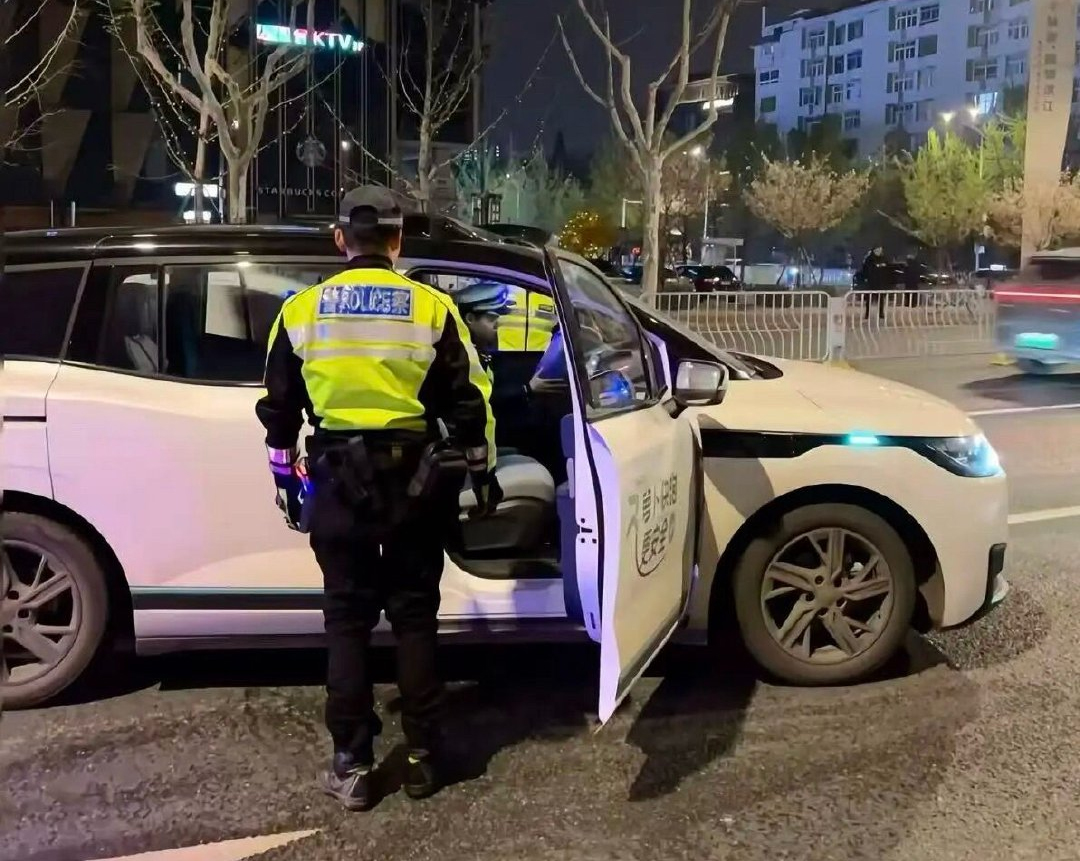 |
Police officers approach one of the stranded Apollo Go vehicles in Wuhan on the night of 31/3. Photo: Weibo |
An Apollo Go customer service representative stated they could only investigate the issue if provided with a specific vehicle number and claimed no knowledge of a broader incident in Wuhan.
This marks the latest incident involving Baidu's self-driving vehicles. In 12/2025, a Baidu self-driving vehicle operated by Hello was involved in an accident in Zhuzhou, prompting the government to temporarily suspend self-driving operations in that city.
As of 10/2025, Apollo Go's global autonomous driving test and operational mileage exceeded 240 million km, with fully driverless mileage surpassing 140 million km. The service operates in 22 cities worldwide and has completed over 17 million rides.
My Anh (according to CarNewsChina)