E10 gasoline sold on the market can display various colors, ranging from light yellow to dark yellow or a slight blue tint. When comparing fuel from different stations or batches, this difference is often easily noticeable. However, experts state that the color of gasoline does not reflect fuel quality nor indicate the ethanol content in the blend.
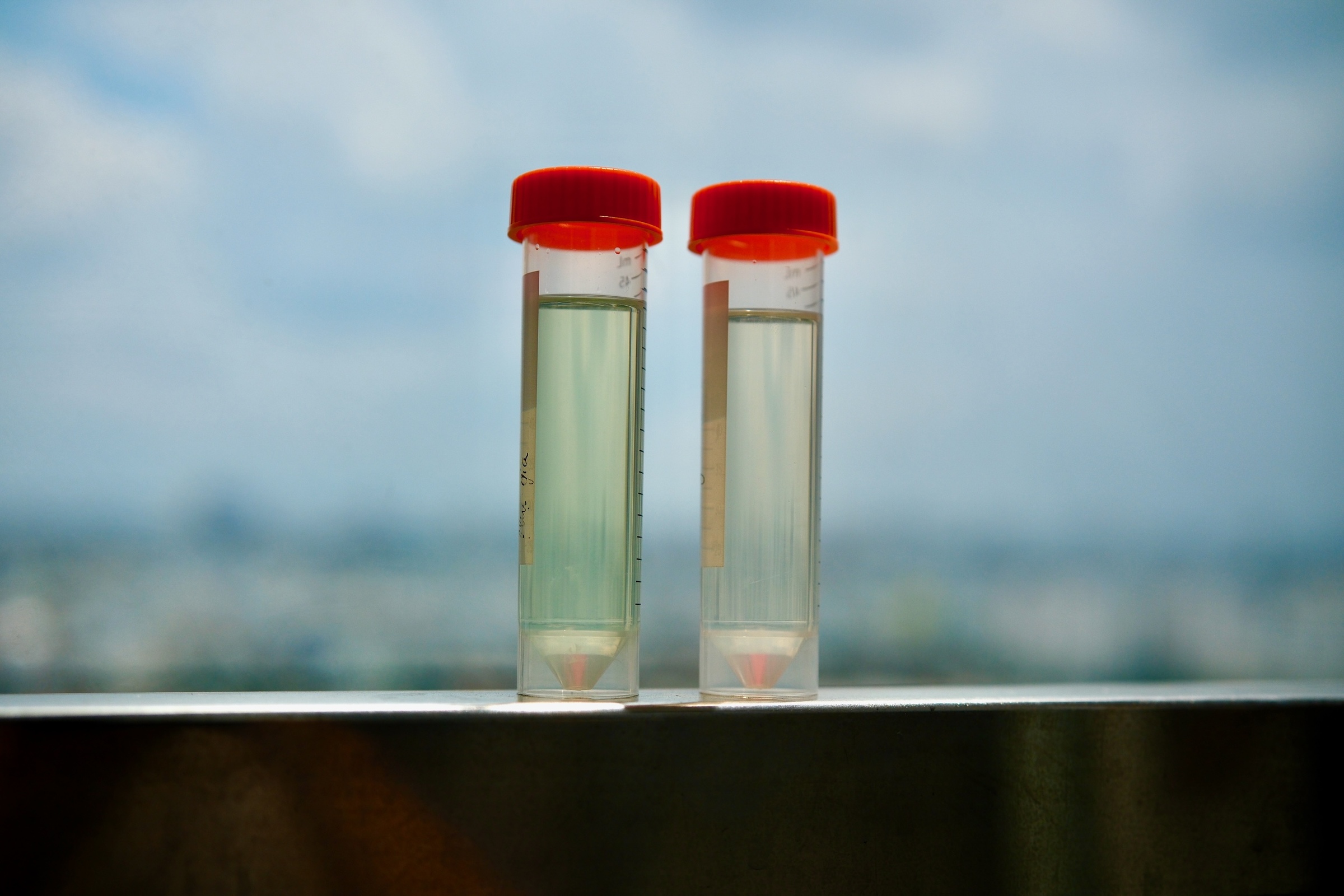 |
Two E10 gasoline samples with slightly different colors. Photo: Pham Hai |
According to the US Energy Information Administration (EIA), retail gasoline is a blended product comprising various components: base gasoline, ethanol, and additives. Fuel quality is controlled by technical specifications such as octane rating or sulfur content, rather than color.
Some fuels are even supplemented with dyes for identification or product differentiation. For instance, in Australia, E10 gasoline was once dyed red-orange for identification within the distribution system. From 2015, this fuel transitioned to its natural light yellow color, with various shades, without any changes to quality standards or operational performance. This indicates that color is primarily a sensory characteristic or product identifier, not a basis for assessing gasoline quality.
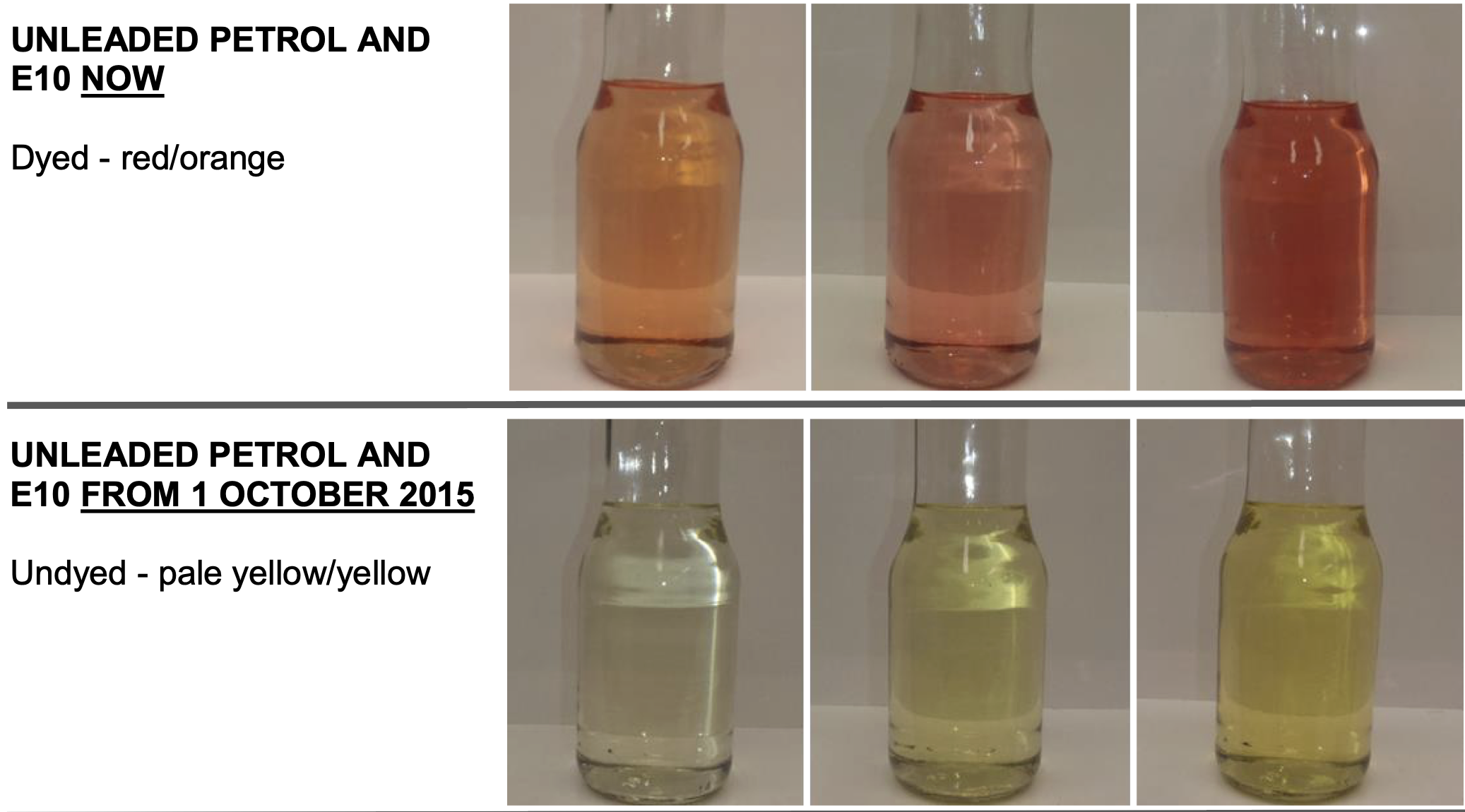 |
E10 gasoline in Australia was dyed red-orange before 10/2015 and not dyed afterward. Photo: Australian Institute of Petroleum |
According to Mr. Ho Ngoc Linh, deputy head of the petroleum technical department at Petrolimex, color is not a criterion for evaluating gasoline quality. He stated that the color difference in gasoline primarily stems from the crude oil input source, technology, distillation process, and additives used in production. For E10 gasoline, ethanol is nearly colorless, so the shade of the finished fuel mainly depends on the mineral gasoline portion used for blending. Therefore, E10 gasoline at different stations or from various production batches may have different shades of light yellow, dark yellow, or a blue tint, while still meeting the same technical standards and not affecting vehicle performance.
A difference in color also does not mean that the ethanol ratio in the gasoline has changed. The ethanol content of E10 is controlled through the blending process and quality tests; it cannot be accurately determined by visual observation.
When does gasoline color indicate an abnormality?
In reality, gasoline color can indicate signs of abnormality in certain cases. Standard gasoline is typically clear, uniform, and free of impurities. If the fuel turns dark, shows sediment, cloudiness, or separation, the cause may be water contamination, oxidation due to prolonged storage, or impurities introduced during storage and transport.
Especially with ethanol-blended gasolines like E10, the fuel can absorb moisture from the environment. Under improper storage conditions, water can accumulate to the point of causing stratification between the gasoline and the ethanol-water mixture. In such cases, the fuel quality is no longer uniform and should be inspected before use.
Therefore, different colors of E10 gasoline at various stations do not signify a difference in quality. Instead, signs such as cloudiness, sediment, or separation are the phenomena to watch for when assessing fuel condition.
Pham Hai