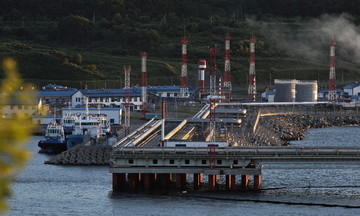
In a recent report to the Prime Minister, the Ministry of Industry and Trade (MoIT) stated that last year, it focused on reviewing petroleum business conditions. This effort aimed to rectify and stabilize the market, ensuring national energy security.
Several traders had their licenses revoked by the MoIT for failing to meet their allocated supply quotas. Meanwhile, many businesses that could not maintain their operating conditions voluntarily surrendered their licenses. Additionally, some licenses were revoked or not renewed.
By the end of last year, the number of land petroleum traders stood at 26, while aviation fuel traders totaled 5. The number of active petroleum distribution businesses was 252.
This represents a reduction of two wholesalers and 24 distributors compared to the previous year.
Last year's petroleum consumption was estimated at 26,4 million m3/tons, an increase of 1,85% compared to 2024. Inventory at year-end reached 1,7 million m3/tons.
According to the MoIT, the petroleum market experienced unpredictable fluctuations amidst escalating geopolitical tensions, yet supply consistently met market demand. Petroleum prices were adjusted 54 times throughout the year, showing a downward trend compared to the previous year. Consequently, the regulatory body did not need to utilize the price stabilization fund.
However, during the final months of last year, many businesses encountered difficulties securing bank credit for imports and purchases. This was due to limited capital, high interest rates ranging from 5-7,5%, and significant exchange rate fluctuations. Consecutive natural disasters also impacted delivery schedules from domestic factories, leading to increased vessel demurrage and transportation costs for businesses.
For 2026, the minimum total petroleum supply allocated to wholesalers is 31,7 million m3/tons. The MoIT anticipates that the global political and economic situation will remain unpredictable, potentially affecting petroleum supply and prices. The ministry expresses concern that localized fuel shortages could occur.
Therefore, the regulatory body will closely monitor domestic and international petroleum supply, demand, and prices. Concurrently, it will coordinate with relevant ministries and local authorities to advise the Government on timely solutions.
The ministry requires traders to adhere strictly to their allocated minimum supply quotas and to closely monitor market developments to balance supply and demand. If necessary, the MoIT will reallocate minimum supply among traders. Furthermore, wholesalers are tasked with proactively engaging in production and import activities to ensure an adequate petroleum supply in all situations, preventing any disruptions.
By Phuong Dung