Under the recently issued Decree 110, the Extended Producer Responsibility (EPR) recycling rate for electric vehicle (EV) and hybrid vehicle batteries has been set at 0%. Previously, this recycling rate was 8% of the total battery volume sold on the market, a requirement that was slated to begin in 2024.
This mandatory recycling rate for EV batteries will be reviewed and increased every three years, with a maximum adjustment of 10% each time. The next adjustment is therefore anticipated in 2029.
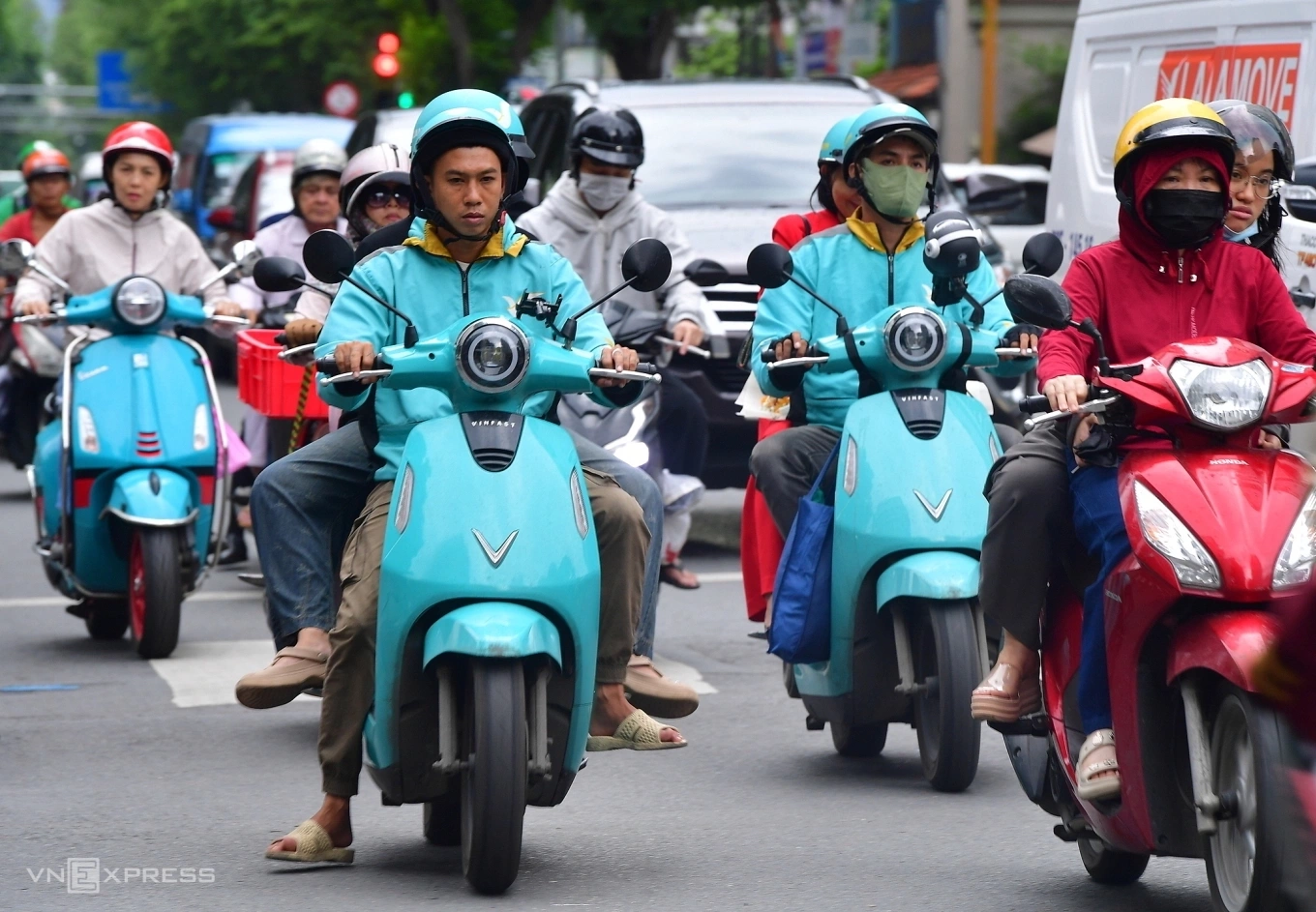 |
A ride-hailing driver uses an electric vehicle on a street in TP HCM. Photo: Thanh Tung
Extended Producer Responsibility (EPR) is an environmental policy that mandates businesses to take responsibility for collecting and recycling their packaging and products after use, according to a specified percentage. This regulation is common in many countries, aiming to shift the burden of waste management and recycling from the state to manufacturers, thereby fostering a circular economy.
In Vietnam, EV batteries were included in the EPR policy in 2022, with a recycling rate of 8%. This rate was maintained in the amended decree in 2025. However, at an event late last year, a representative from the Environmental Agency (Ministry of Agriculture and Environment) stated that EV batteries have a lifespan of at least 10 years. Given that the EV market has only recently boomed in Vietnam, manufacturers found it challenging to meet the recycling requirement due to the lack of actual waste batteries available for collection.
At an event last month, Pham Van Quan, Deputy Director of the Industry Department (Ministry of Industry and Trade), noted that current EV batteries are highly durable. When their capacity drops to about 70%, making them less suitable for transportation, these batteries can be repurposed for energy storage systems (BESS).
The transition to electric vehicles is one of several solutions for Vietnam to achieve its Net Zero emissions target by 2050. According to a World Bank report late 2024, to meet EV goals, Vietnam will require 2 million batteries by 2030 and 10 million by 2050. Recycling and reusing batteries are essential activities within this transition ecosystem.
Decree 110 also exempts personal transportation vehicles, such as motorbikes and oto, from mandatory recycling. Vehicles still subject to recycling include cargo oto, passenger vehicles with more than 9 seats, or those with a specified service life. Recycling rates for paper, plastic, and aluminum packaging remain unchanged from previous regulations, at 10-22%.
Thuy Truong