Doan Nguyen Duc (Bau Duc), Chairman of Hoang Anh Gia Lai (HAGL), is an entrepreneur known for his "ahead of the curve" decisions and an unusually rapid expansion during the early stages of Vietnam's Doi Moi (Renovation) period. His philosophy, "if I do something, I must lead", once brought HAGL to its zenith but also plunged the company into a severe liquidity crisis, marking one of the toughest periods of his life.
VnExpress spoke with Bau Duc about his leadership mindset in pivotal decisions, how he navigated the crisis, and HAGL's path back to its current growth trajectory.
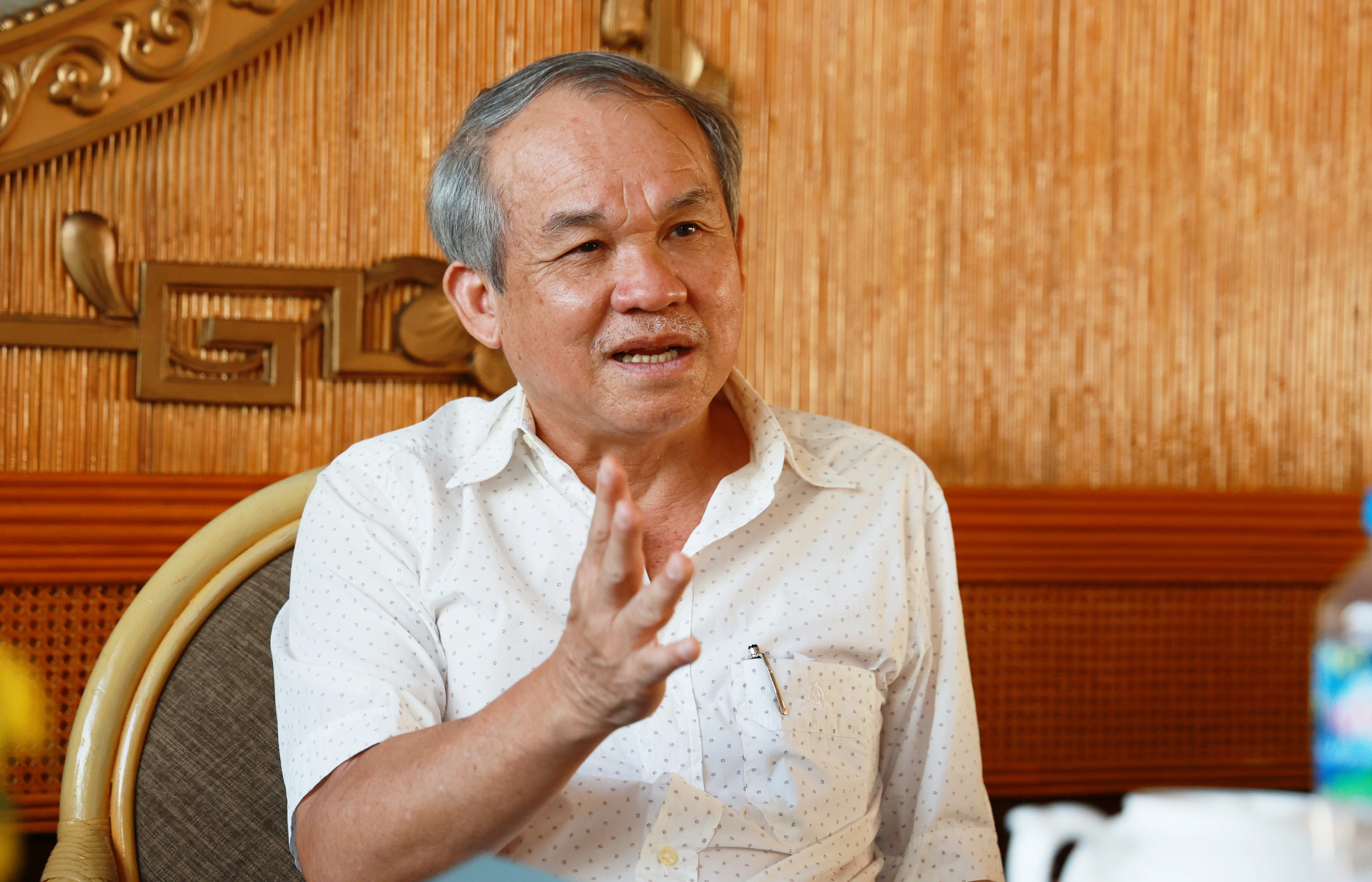 |
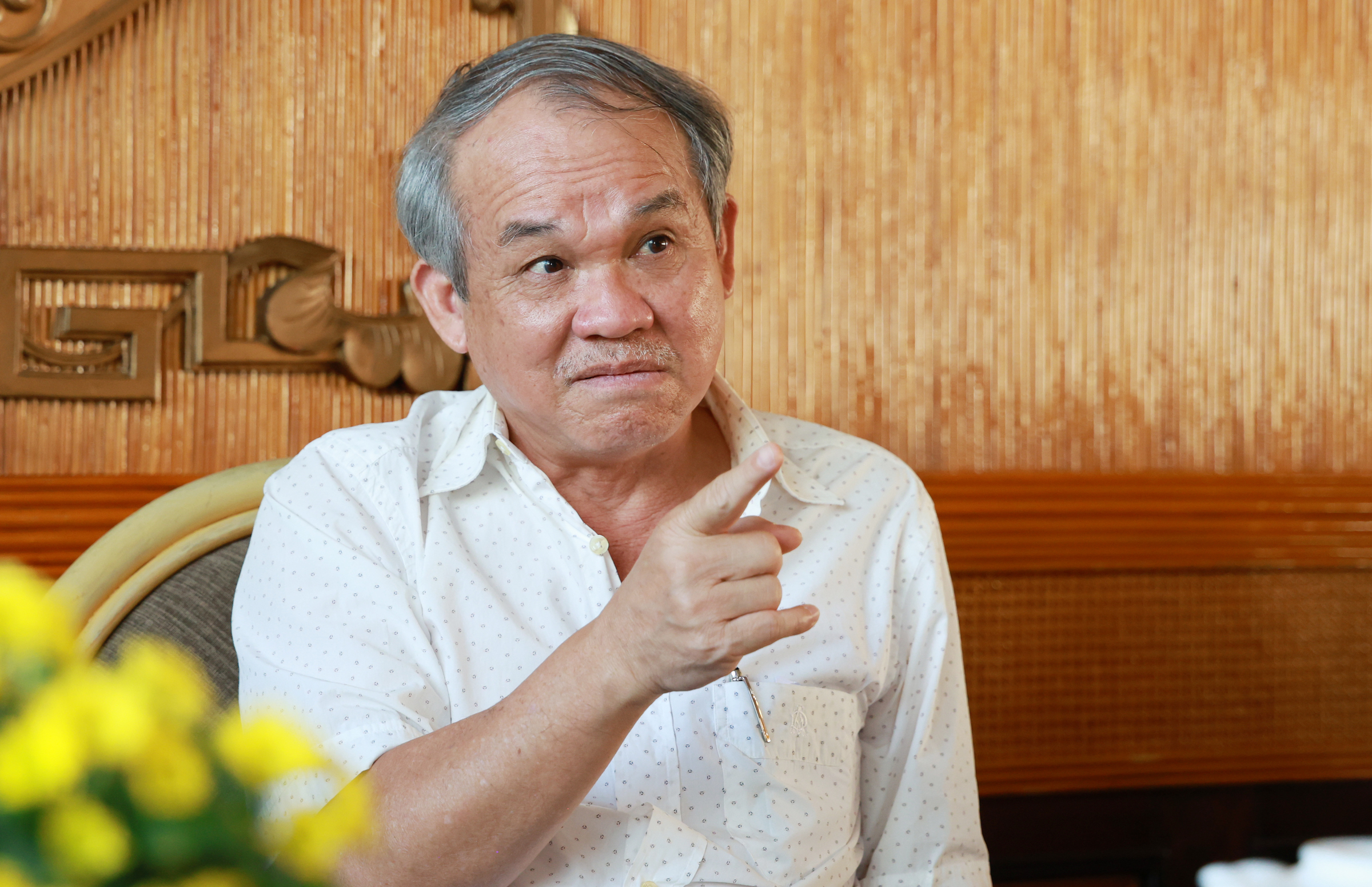
Doan Nguyen Duc (Bau Duc), Chairman of Hoang Anh Gia Lai, interviewed by VnExpress in TP HCM. Photo: Duc Dong |
After guiding Hoang Anh Gia Lai through its most severe liquidity crisis in 34 years, Bau Duc describes his company's journey as a sine wave, with very high peaks followed by deep troughs. He states that this uneven path accurately reflects the nature of business: success is always accompanied by failure.
Hoang Anh Gia Lai was established in 1992, at a time when the Enterprise Law began paving the way for the private sector, encouraging business, and spreading the spirit of innovation. Starting as a small wood enterprise with initial capital of just tens of millions of VND, HAGL rapidly expanded exports and became a leading company in the wood industry before diversifying into real estate and later agriculture.
Among HAGL's cyclical journey, the period from 2004 to 2012 stands out most vividly for Bau Duc, particularly the real estate boom. In 2007-2008, he became the wealthiest person on Vietnam's stock market. He remembers this time not for the money earned, but for the profound sense of what it meant to be a number one enterprise.
Bau Duc recounts that during this period, whenever Hoang Anh Gia Lai launched a project, customers would queue up just to place deposits. A deposit for an apartment was around 300 million VND. Most transactions were in cash, with customers bringing large sums to the company, requiring accounting and finance staff to work through the night to count money. Cash counting machines ran continuously, replaced immediately if one broke down.
Hoang Anh Gia Lai developed projects not only in TP HCM but also in Can Tho, Da Lat, Dak Lak. A common joke among real estate professionals then was that wherever HAGL launched apartments, the surrounding market would "stand still" due to difficulty competing on price. Money flowed in so quickly that, at times, Bau Duc felt money was no longer the goal he pursued.
Bau Duc attributes HAGL's rapid rise in real estate to a "think big" mindset. From the very beginning of his enterprise, he believed that entrepreneurs must dare to think big, make decisions, and take responsibility. Operating cautiously, he argued, would never lead to breakthroughs.
This philosophy was evident from HAGL's entry into real estate in 2002. Instead of starting small, the company targeted the high-end apartment segment with the HAGL 1 project in Le Van Luong, TP HCM. Later, when expanding to central Vietnam, HAGL built a 23-story hotel in Da Nang, one of the city's most modern structures at the time, even before the city's significant development. Many visitors came not to stay, but simply to experience the elevators for the first time. Bau Duc always believed that investments should create landmarks and precede market trends.
Additionally, Hoang Anh Gia Lai acquired large land banks early when prices were low and controlled nearly its entire construction supply chain, from materials to execution. This allowed the company to control quality, schedule, and maintain significantly lower costs than many competitors. These advantages became highly effective when the market entered a growth cycle. In 2009 alone, four major projects generated over 3.3 trillion VND in revenue, accounting for approximately 77% of the group's total revenue. Bau Duc believes that a company can only move fast if it prepares well in advance of a market boom.
Despite being at the peak of real estate success, Bau Duc decided to pivot to agriculture. He began to notice unusual market signs: people were buying homes for speculation rather than residence, prices were escalating too rapidly, and the distinction between real and artificial value blurred. He understood that such a market was unsustainable.
Bau Duc observed many irrationalities in real estate. An apartment, essentially collective housing built from ordinary materials, was at one point something people would queue up for, pay 100% cash, and consider a privilege. When the market operated primarily on herd mentality rather than real value, risks began to accumulate. Therefore, in 2012, he decided to cut prices by approximately 50% and sell off all projects. This was not due to financial difficulties, but because he foresaw the limits of the cycle. Some projects, despite a 50% price reduction, still yielded profits because the land was acquired years earlier at very low prices. Bau Duc believes that irrationality cannot last forever. For him, business is not about how far one goes, but about knowing when to stop. Looking back, he remains convinced that the decision to leave real estate for agriculture was correct.
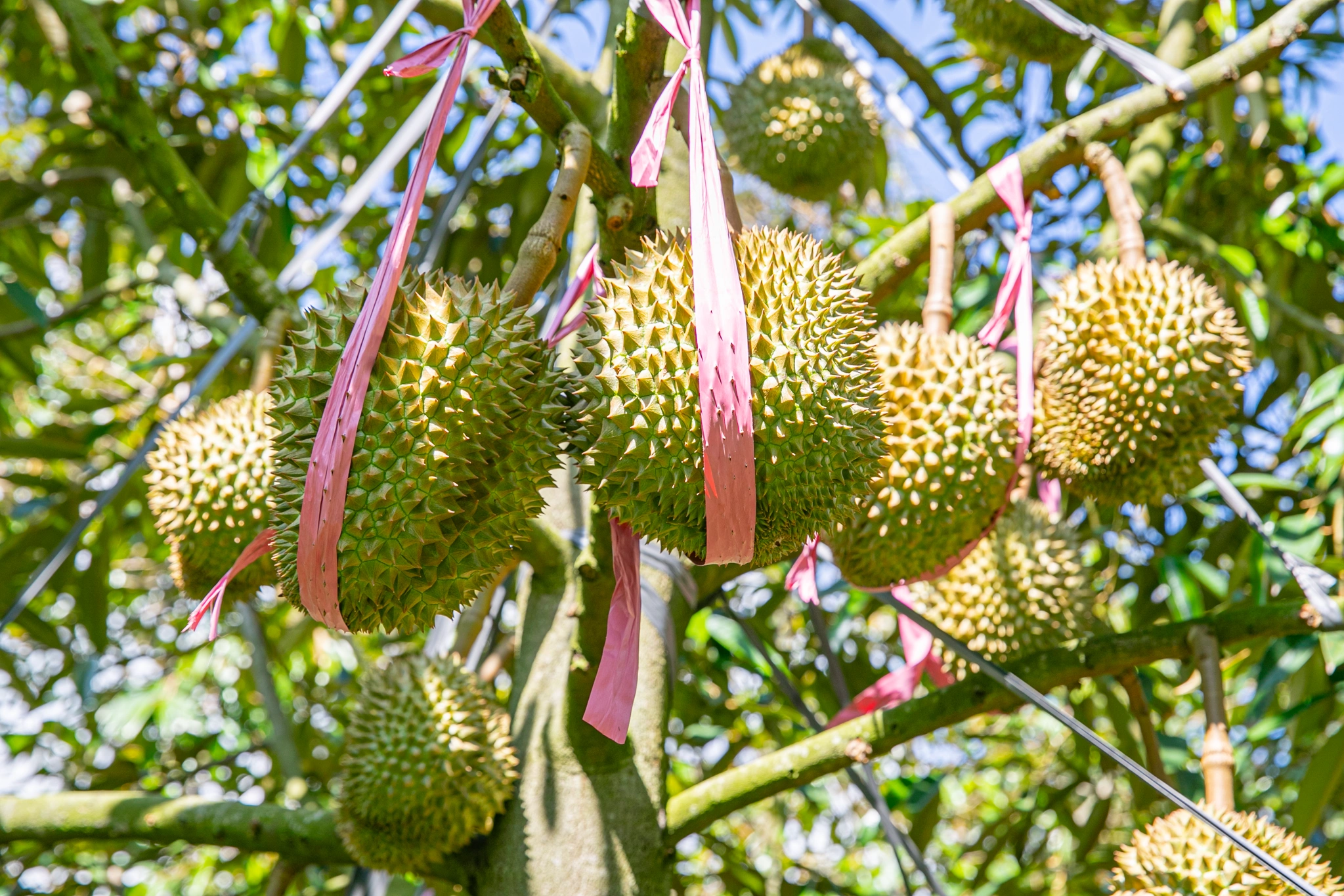 |
Hoang Anh Gia Lai's durian farm in Laos. Photo: HAG |
However, the move to agriculture saw Hoang Anh Gia Lai face setbacks with rubber and oil palm. At the time, rubber was considered "white gold". Investment plans were calculated based on high prices and attracted participation from major financial institutions, including Temasek of Singapore. But the market unfolded differently than predicted. Rubber prices plummeted for an extended period, at one point falling to around 1,000 USD per ton, far below projected scenarios. Bau Duc attributes the losses to market fluctuations, not a lack of foresight. In business, winning and losing are often cyclical. What matters is not whether one has fallen, but whether one has the courage to get back up after a fall.
The night before Hoang Anh Gia Lai announced its liquidity crisis in 2016, Bau Duc spent a month sleepless, not in panic, but calculating an "all-in" strategy. He understood how many businesses at the time cycled debt: using larger subsequent projects to cover older debts. That was a path of accumulating more debt, which he refused. He chose to disclose the truth on 31/12/2016, accepting bad debt and the shame, but seeing it as the only way for the government to allow restructuring. This granted HAGL a 5-year debt extension, providing time to sell assets to repay obligations. Without cutting the "tumor" of interest expenses, the over 36 trillion VND in bank debt would have remained without a solution.
When the government approved restructuring, Bau Duc simultaneously sold assets to repay debt and invested to keep the business alive. He recognized that merely repaying debt without generating new cash flow would leave the company with nothing. Therefore, he chose the more difficult path: concurrently restructuring assets, repaying debt, and reinvesting, leveraging the company's largest existing resources. At that time, his biggest asset was the land bank, which he believed was the true source of money. He began with short-term crops like chili and passion fruit, with harvest cycles of three to six months, to generate cash flow to sustain operations. Once the foundation was stable, he transitioned to bananas and durian. Bananas provide steady revenue for gradual debt repayment, while durian and coffee represent the future he holds. Alongside its own efforts, Hoang Anh Gia Lai also received support from many entrepreneurs and financial partners during the restructuring, helping the company progressively alleviate debt pressure and complete its recovery.
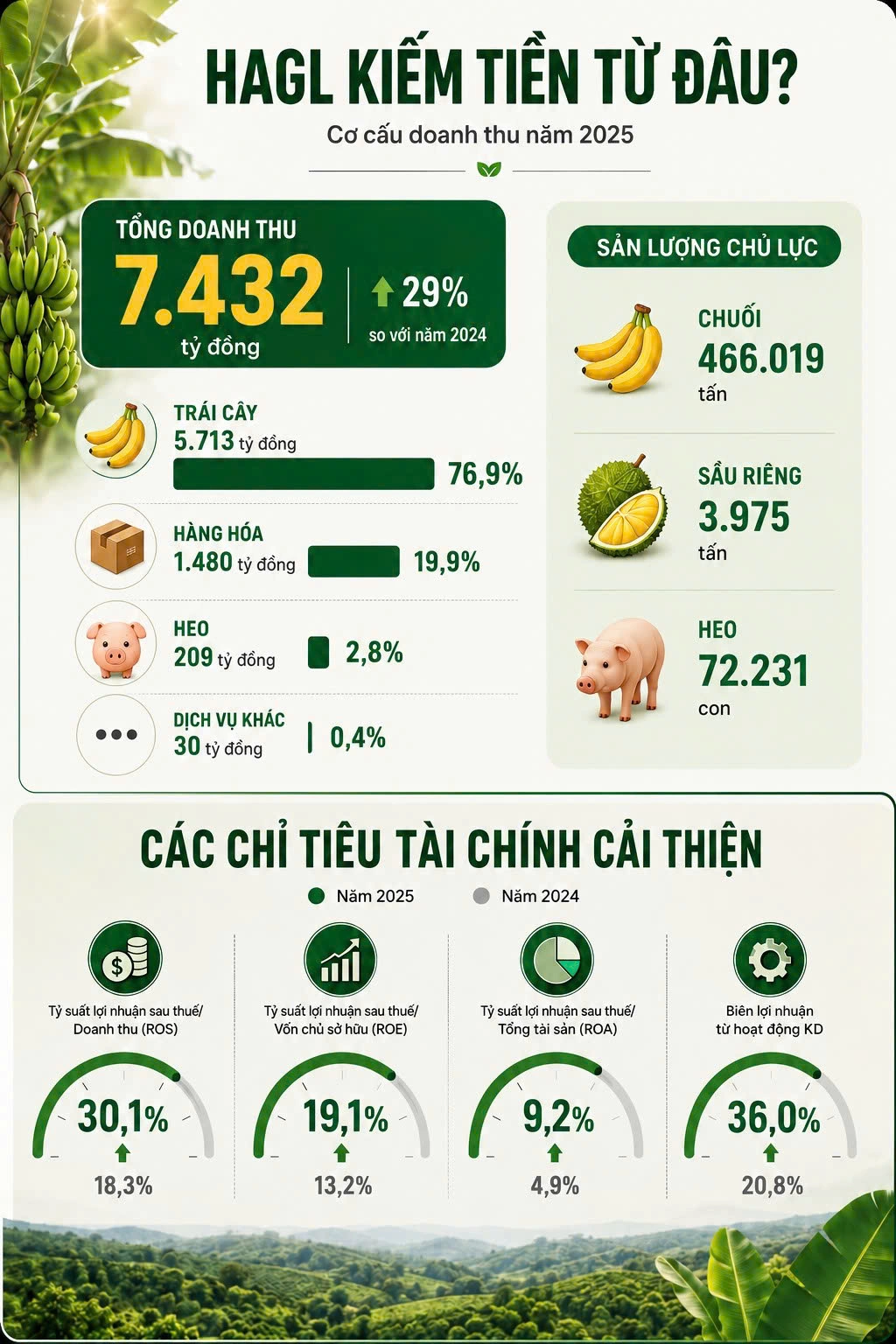
Today, Hoang Anh Gia Lai has completed its restructuring and entered a new financial state. After more than a decade of restructuring, the company reduced its outstanding debt from approximately 36 trillion VND to 7.9 trillion VND by the end of 2025, while also clearing accumulated losses of nearly 8 trillion VND. By March 2026, the company also completed the settlement of all bond obligations. In 2025, the company reported an after-tax profit of approximately 2.243 trillion VND, doubling year-on-year and reaching its highest level ever. In Q1 this year (2026), HAGL continued to record a profit of 1.172,6 trillion VND, more than three times higher than the same period last year, completing nearly 28% of its annual plan. Bau Duc is also pushing for IPOs of subsidiaries to generate capital for new projects. If market conditions are favorable, the project management company in Laos could go public this year.
Looking to the future, Bau Duc has a clear roadmap. By 2030, he aims to complete 20,000 hectares of coffee, positioning Hoang Anh Gia Lai among the world's leading coffee landholders. Coffee will then become the group's largest revenue contributor. Next is 2,500 hectares of high-quality durian. Bananas, currently the main cash flow generator, along with pig farming and other products, will form the third pillar of Hoang Anh Gia Lai's ecosystem. Bau Duc has experienced extreme difficulties and understands that failure does not mean defeat. When Hoang Anh Gia Lai truly stands on its own internal strength, it is not a noisy comeback, but a resilient journey that is very difficult to be left behind.
 |
Bau Duc advises young entrepreneurs to dare to think and act, but not to skip stages. Photo: Duc Dong |
Shareholders worry that Hoang Anh Gia Lai might repeat the "white gold" rubber scenario given fluctuating agricultural prices. Bau Duc assures that a liquidity crisis will not recur, as he paid a high price to learn from that lesson. Currently, Hoang Anh Gia Lai has a much safer financial structure and is no longer reliant on a single crop like during the rubber era. The company has built a multi-pillar model with bananas, durian, coffee, pigs, and mulberries, so that if one segment faces difficulties, the others can provide support. For Bau Duc, the key is not the selling price but the cost price. If the market declines sharply, those with the lowest costs will be the last to survive. This is HAGL's advantage, possessing large land banks and controlling the production process. HAGL's current scale extends beyond the domestic market to a global reach. Bau Duc says he does not aim for second place. Once the development plans for key commodities are completed, he believes the company will hold a competitive position among world leaders in several areas.
With risk management now in place, the "backbone" of Hoang Anh Gia Lai's long-term agricultural strategy is its people, not capital. HAGL revived because its team stayed during the most difficult period. Therefore, as the company returned to health, Bau Duc chose to distribute shares to nearly 500 employees and gift apartments to 160 key personnel, allowing them to share in the success and commit long-term. Retaining people cannot be done with slogans but with real benefits. He clearly assigns responsibility, entrusting farms directly to workers. If they perform well, they benefit from the added value. When they view the farm as their own asset, their sense of responsibility changes significantly. Besides people, land is a vital condition. Large-scale agriculture requires extensive, contiguous land. With land, people, and a leading mindset, the output will target the global market.
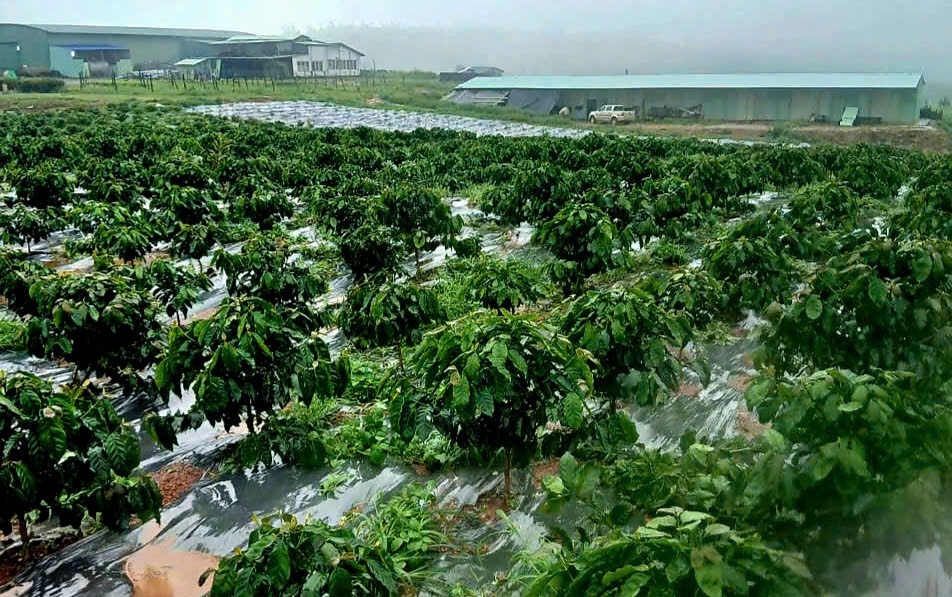 |
Vuon ca phe cua Hoang Anh Gia Lai tai Lao va nha may san xuat to tam tai Gia Lai. Anh: HAG
Bau Duc has repeatedly chosen a path different from the majority, embracing risk to lead. He acknowledges that this is part of his personality, not impulsiveness, but what keeps his leading mindset sharp. He is not accustomed to following others or placing himself in second position. When others bought luxury cars, he bought an airplane – not for competition, but to be one step ahead. He takes on unprecedented tasks, compelling systems to adapt. Similarly in football, he once transferred money to buy players before contracts were signed, believing that trust demands responsibility. Many such decisions were considered reckless, arrogant, or even boastful. He accepts this. If one waits for perfect frameworks and absolute safety, one will never create distance. For Bau Duc, business means paving the way. Leading is not about surpassing others, but about not being left behind.
Bau Duc offers advice to young entrepreneurs who are starting out and accumulating wealth, amidst the desire to move fast and think big but fear making mistakes. He does not advise young entrepreneurs to think small. If one wants to do big things or lead, set goals, but do not skip stages. In business, moving too fast without a solid foundation can come at a high cost. He admits he was not wrong for wanting to lead, but for moving too fast, using excessive financial leverage, and underestimating market cycle risks. That fall forced him to stop, reflect, and change his approach. The same applies to today's youth: do not rush to accumulate wealth at all costs, and do not plunge into inflated markets. Know when to wait for the right moment and build steadily, step by step. When the foundation is strong enough, it will not be too late to move fast or think big.
In his sixties, understanding the will of heaven, Bau Duc is preparing for the next generation to sustain Hoang Anh Gia Lai's journey. He has made preparations, though not yet publicly announced. His children are involved and hold shares. Many believe no one can replace him due to his deep involvement, but he disagrees. He cautions against underestimating the youth, as they are highly skilled in intellect and technology, often surpassing his generation in many aspects. What they lack is practical experience, which can only be gained through challenges. His role is to pass on hard-learned lessons. However, one principle he insists on is a unified mindset: always think big, pursuing models with sufficient scope and potential to create long-term value. When this mindset combines with the intellect and technology of the next generation, he believes worthy successors will emerge, perhaps even achieving more than he has.
 |
Thi Ha