On 31/12, China's National Bureau of Statistics (NBS) released data showing the country's PMI reached 50,1 points in december. This marks the first time China's PMI has been above 50 points after eight consecutive months below this threshold. A PMI above 50 indicates growth in manufacturing activity.
Huo Lihui, an expert at the NBS, stated that confidence appears to be improving due to stockpiling activities ahead of the Lunar New Year. He observed an upturn in the agricultural, food processing, and food and beverage sectors.
The sub-index for production reached 51,7, up from 50 in november. The new orders index also rose to 50,8 points, its highest since march. Supplier delivery times also improved.
However, new export orders remained sluggish, only inching up to 49 points. This indicates that authorities need to continue boosting domestic demand and reduce reliance on the US, the world's largest consumer market, especially as President Donald Trump increases import tariffs.
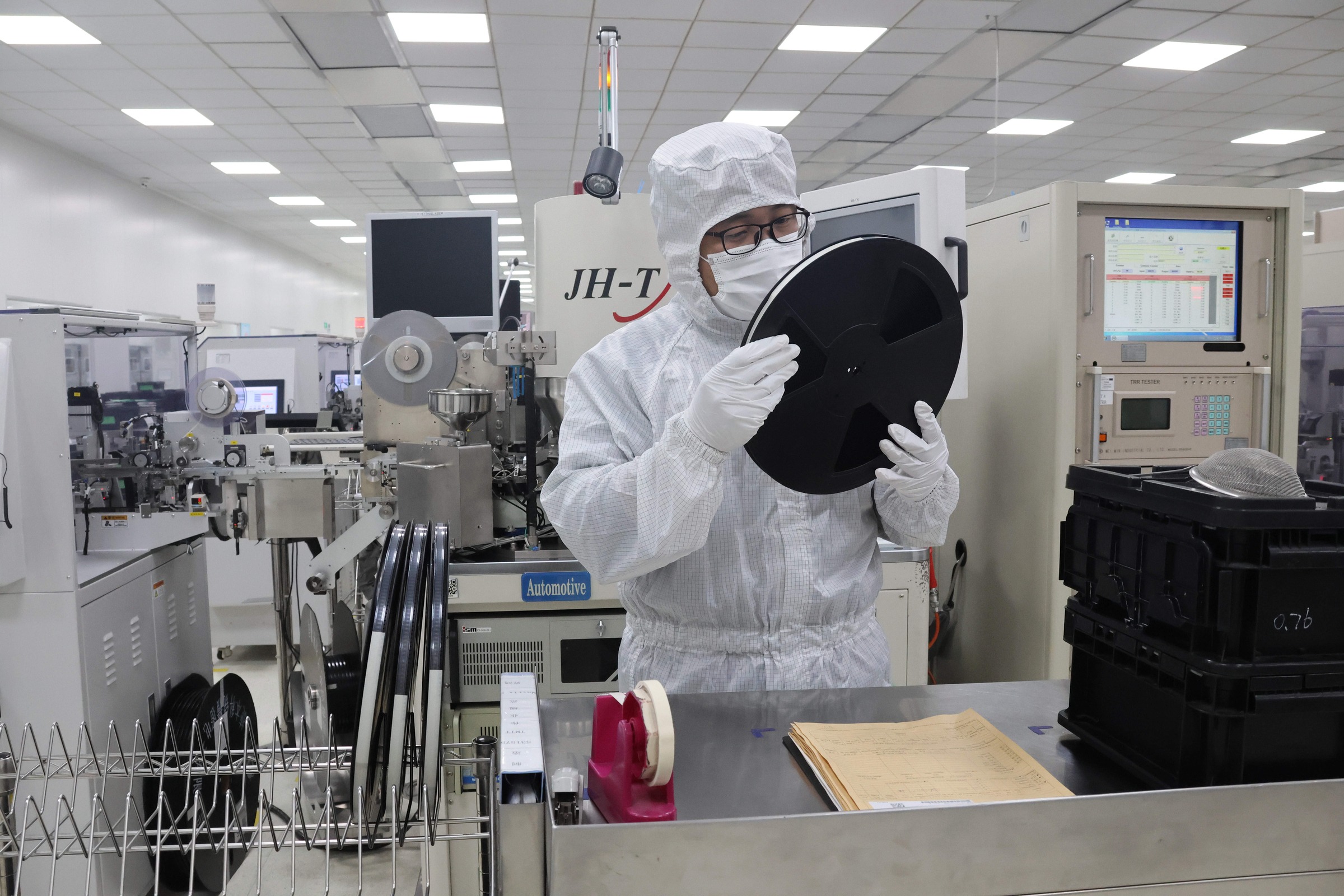 |
A worker at a semiconductor factory in Binzhou, Shandong, China, on 15/1. *Photo: Reuters* |
"We believe this is more likely to be a short-term rebound in economic activity, rather than the start of a sustained cycle", Julian Evans-Pritchard, chief China economist at Capital Economics, commented.
The overall picture still reveals numerous structural challenges, ranging from a prolonged real estate crisis to industrial overcapacity. These issues could persist into 2026.
Nevertheless, today's data might offer policymakers a brighter outlook. Chinese officials did not introduce additional major stimulus packages this year to achieve an economic growth target of around 5%.
However, boosting domestic production without further consumer support measures could exacerbate deflationary pressures. According to data released last week, profits for Chinese industrial firms in november fell by 13,1% compared to the same period last year. This was the sharpest decline in over one year, indicating that household consumption has not offset the weakness caused by the global economic slowdown.
Chinese consumers remain cautious in their spending. This is due to uncertain job prospects and the prolonged real estate crisis, which has diminished household wealth.
By Ha Thu (Reuters)