On 11/5, Brent and WTI crude oil prices both rose 3,3%, reaching 104 USD and 98 USD per barrel, respectively. This increase followed a climb at the end of the previous week. The surge comes as hopes for an end to the 10-week Middle East conflict diminish.
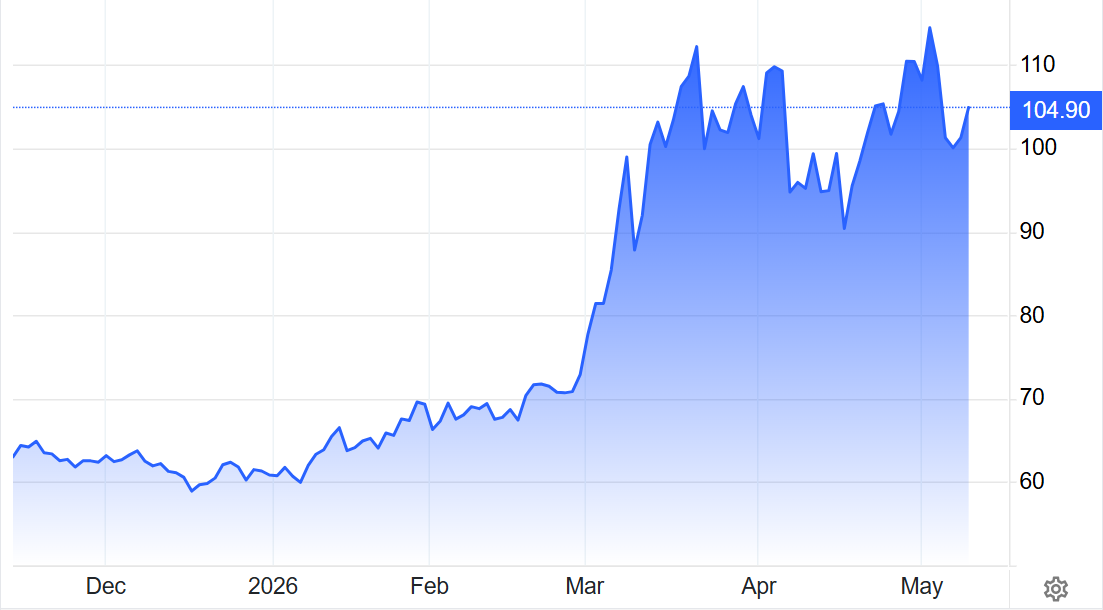 |
Brent oil price movements over the past six months. *Chart: Trading Economics* |
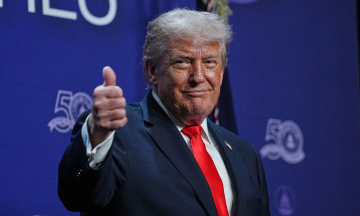
US President Donald Trump stated on 10/5 via social media that Iran's response to a US peace proposal was "completely unacceptable."
Iran's state television, IRIB, had previously reported that Tehran's counter-proposal focused on ending hostilities across all fronts. Iran also sought compensation for conflict damages, asserted its sovereignty over the Strait of Hormuz, and called for the US to end its naval blockade and lift sanctions.
These developments maintain the risk of tight global oil supply. The Strait of Hormuz, a crucial waterway through which 20% of the world's crude oil is transported, has been subject to blockades since the conflict began. This disruption has already caused world crude prices to increase by nearly 60% during this period.
This week, President Trump is scheduled to visit Beijing. There, he is expected to discuss the Iran issue and other topics with Chinese President Xi Jinping. Tony Sycamore, an analyst at IG market, commented, "The market this week will shift its focus to Trump's visit to China. Analysts expect Trump could persuade China to leverage its influence with Iran to promote a ceasefire and a solution for the disruptions at Hormuz."
The ongoing situation has already had a significant impact on global oil availability. On 10/5, Amin Nasser, CEO of Saudi Aramco in Saudi Arabia, stated that the world had lost approximately one billion barrels of oil in the past two months. He added that the market will require more time to stabilize, even if oil flow is restored.
Further underscoring the urgency, data firm Kpler reported last week that two oil tankers managed to pass through the Strait of Hormuz by turning off their tracking devices to avoid potential Iranian attacks. This action highlights the growing demand to restore oil exports from the Middle East.
Ha Thu (according to Reuters)